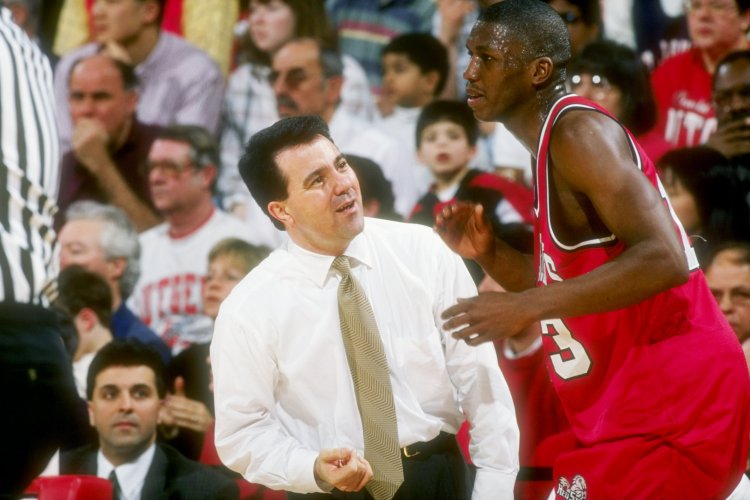

Baylor coach Scott Drew joined Seth and Andy on The Hoops HQ Show. Stream the full episode on YouTube or live on the Fubo Sports Network. This episode was recorded prior to season tip-off.
Seth Davis: Hello everybody, and welcome back to the Hoops HQ Show. We have had some big-time guests so far on season two — I’m sure you’ve seen all of them. Mark Pope, Kevin Willard, Fran Fraschilla. The president of the NCAA, Charlie Baker, was on with us for an hour. And now we have kicked up our game big time, because from the great land of Waco, Texas, we have Scott Drew, the head coach of the Baylor Bears, just hours after a root canal. That’s the type of toughness he is showing us. Scott, thanks so much for being on the show.
There’s an obvious reason why we wanted you on, because I am the king of overreacting to exhibitions. I think everybody should overreact to the overreactions when it comes to exhibitions. You beat Florida and Illinois, two consensus top-five teams, in exhibition games. Both were close games.
But obviously Baylor is the best team in the country, right? Is that the main takeaway from the last couple of weeks?
Scott Drew: Well, sounds good to me. Let’s put that on the record. We’re 2-0, and we’ll go from there.
Seth: We don’t really know what to make of Baylor coming into the season. You guys haven’t been where you were the last couple of years, when you won the championship in 2021 and had that great run.
How surprised are you by what you’ve seen from your guys in the preseason?
Drew: Well, each and every year, with so much more turnover than most of us are used to, you really don’t know what you’re going to have until you start playing opponents. In the summertime, the foreign tours are great, but the competition’s just not what you’re used to seeing in the Power Four conferences and Division I basketball. So the great thing is — and you had Charlie Baker on — the NCAA rule allowing us to play three of these.
We scrimmaged Oklahoma and after that, we felt like, man — because Porter (Moser) does a great job at Oklahoma, that’s a good team year in and year out — we’re better in some areas than we thought.
Then we went to Florida and played in Jacksonville. Again, these are exhibitions, but we wanted to challenge ourselves. We wanted to play against them because, with their returners, we knew it’s not like they’re going to be bad at the beginning of the year. They’re ranked No. 1 for a reason. And then going to Illinois, with their home environment and obviously what they returned.
So from that, we realized that, first and foremost, it’s a race of who can improve the most during the year. But if you ask me, would coaches rather win their exhibitions or lose them — we’re all competitive. We all want to win. And two things are for certain: The first is we do have more depth than we’ve had. I go back to the year we were a No. 1 seed and then COVID shut it down, and then the year we won it, the year after. We had really good depth. We were a No. 1 seed three times, and the third year we had two season-ending injuries when we were 15-0. Otherwise, I thought three years in a row we had a chance to win it. Now we have similar depth, and hopefully that’s something that helps us throughout the course of this year.
The second thing is we have multiple playmaking guards, and our best teams have always had that. So more guard play, more point guard play, better depth. Hopefully that equals better results.
Andy Katz: Well, I’m going to overreact, because I had the alt-cast on Big Ten Network plus BTN+, and I absolutely loved your team. Loved your guards. Kayden Mingo, Isaac Williams — they went off. It reminds me of the championship team, and I agree with you on the depth and the playmaking ability and the scoring ability — but not the size of the guards. If memory serves, those guards were bigger. They were stocky. Kind of Vinnie Johnson-esque — dating myself there, but not the two of you.
How would you compare your current backcourt to your 2021 Championship team?
Drew: The year we won it, we had five guards, and all five put on NBA jerseys. MaCio Teague played in the Summer League and had a 6-10 wingspan, so he was the longest guard we had. And then obviously Davion “Off Night” Mitchell won Naismith Defensive Player of the Year. He was built like a fire hydrant and very tough physically, like you said. What was amazing about him — even though he’s 6-1, 6-2, depending on his hair length — was his ability to battle and not be fronted and picked on inside, and to be able to block out on switches. That’s one of his qualities people don’t give enough credit to. And Jared Butler at 6-3. LJ Cryer was smaller, at 6-foot, 6-1. But all of them could pass, dribble and shoot.
The guards we have now are actually taller height-wise, and they’re younger. So they have a couple of years, especially with the fifth year, to get in the weight room and hopefully end up the same size. But Kayden Mingo is built, and Isaac Williams is built really well. Dylan Mingo’s long — like a 6-11 wingspan. And then Brett Decker Jr. is similar to LJ as far as shooting ability.
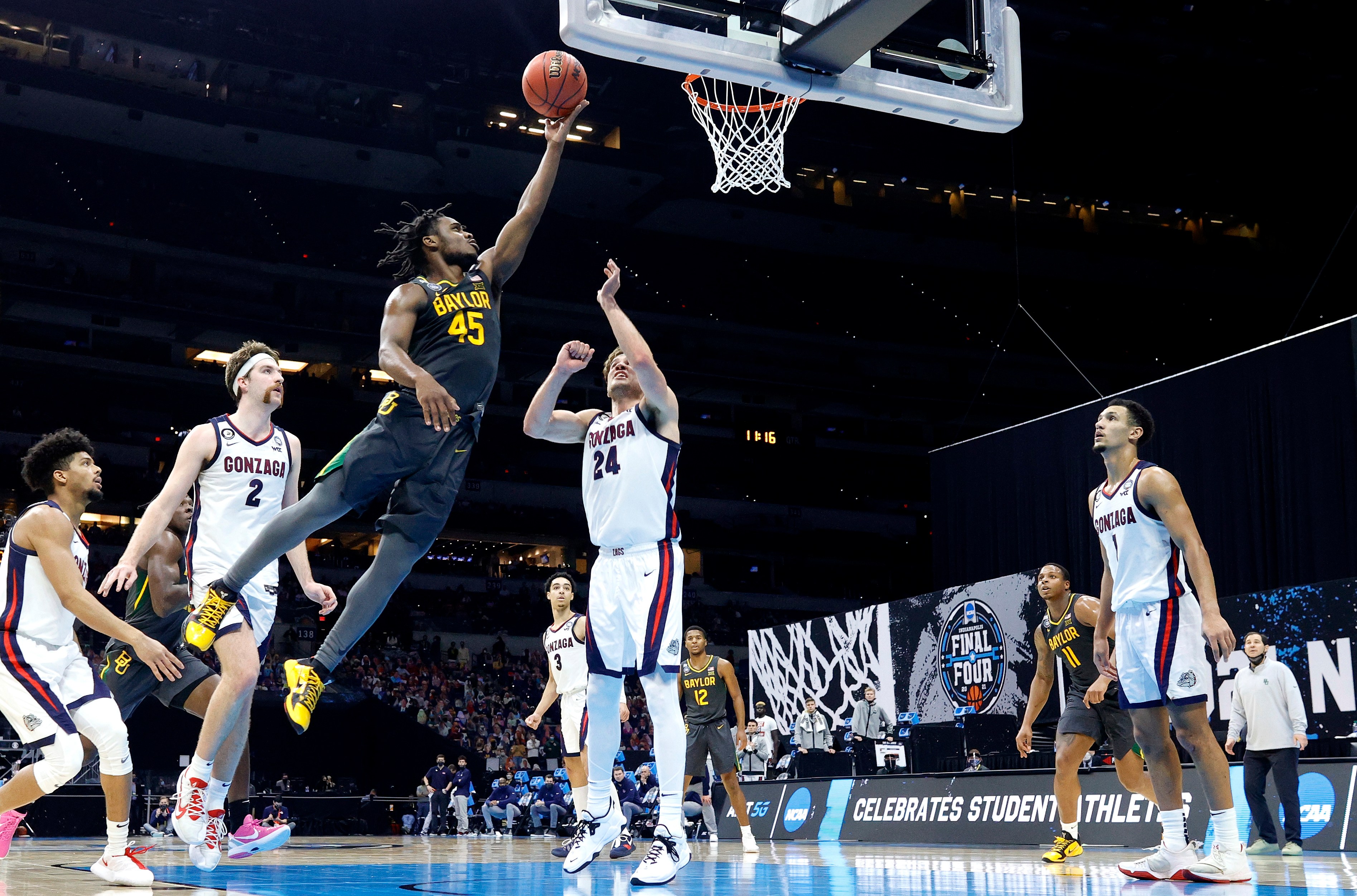
Seth: You mentioned the Mingo brothers. Dylan was one of the top freshmen coming into college basketball. He was going to go to North Carolina, and then they had a coaching change. I know he had an injury as a high school senior. We saw what Kayden Mingo was capable of doing at Penn State. I was a little more curious about what Dylan would look like, but Kayden obviously was your best player.
Give us a sense of what Kayden Mingo is going to bring, not only on both ends of the floor, but as an older player who’s been through the fire as a Big Ten transfer.
Drew: Well, Kayden went to LuHi, where VJ Edgecombe went, and they’ve had some really, really good basketball teams. Because of that, Kayden is somebody who’s used to playing against high-level competition — obviously, like you said, he played in the Big Ten — but he’s also used to playing with other good players around him. At Penn State, he had to do a little bit more. In high school, he had some other players he could defer to a little bit, and he didn’t have to take over.
I think you get the best of both worlds at Baylor right now. He’s somebody who can create for himself, but he can also create for his teammates. And that’s the strength again: our depth. Multiple guards who can all play well and can all do a variety of things. You saw Dylan at Illinois — eight assists, zero turnovers. Every one of our guards is capable of that. At the same time, I would think Kayden is excited, after Penn State, when a lot of people would key on him, to have some people around him that defenses have to respect a little more as well.

Andy: Scott, a lot of people wouldn’t normally think of Yale and Baylor as two schools in the same sentence. But it seems like every five years you go through this process where you take a student from Yale and bring him to Baylor. It happened with Makai Mason. Now, again, five years later, it’s Isaac Celiscar, who had a great game against Illinois.
Can you explain the pipeline from Yale to Baylor?
Drew: Well, first and foremost, academically, the schools are very similar. And the other thing is, Coach (James) Jones and I have a longstanding friendship and respect for each other. When they beat us in the NCAA Tournament — when Taurean Prince gave one of the best definitions of a rebound ever — you play against someone and you’re like, they’re really well coached. They’re really disciplined. They’re really good. Their players play the right way. Coach Jones is one of the best talent evaluators out there, and he’s always done a great job of recommending players from the Ivy League who would fit us. So anytime we can get a player from Yale, we know we’re getting somebody who’s really going to fit in well: very coachable, very fundamentally sound and a high-level player.
Seth: James Jones has been at Yale — what is it, like 21 years now? It’s incredible.
Drew: Oh, yeah. He’s been there a long time.
Andy: I think he was there when you were covering him in New Haven, Seth.
Seth: Very possible, very possible. Scott, we talked about Baylor as one of those programs that was hurt, maybe more than some others, during this very, very quick transition into the true professionalization of college sports. You’re a very charming guy, it’s a great campus and a great school, and you’re a great coach and all that. But the bottom line is, at some point you’ve got to have that money. And we had Fraschilla on — of course, he knows the Big 12 very well — and the impression is that you don’t have that Mark Pope money just yet, but you have more, and your roster reflects that.
Fast Times In the Big East with ESPN’s Fran Frascilla
The former fan-favorite coach of St. John’s talks Rick Barnes, international recruiting, life on the carousel and how to game the new system
Explain to us as much the process of getting more money. Is it about finding one or two wealthy donors with a big-time checkbook, or are you selling cookies on your front lawn?
Drew: Well, I’ll show you how we do it. Seth, would you like to make an initial contribution?
Seth: I’m sorry, my internet’s going out. I didn’t hear you.
Drew: Andy, would you like to be the owner of the Baylor bank?
Seth: Well, Andy is definitely well funded.
Drew: He’s a member of the Drew family, right? So he’s part of the Drew family. I love it.
So to answer the question, though, Seth: Some people pivoted quicker to NIL, others didn’t. The reality is all of us are excited to get more guardrails and rules related to college basketball. I think everybody agrees student-athletes need to make money, need to get paid. At the same time, everybody appreciates that you just want to know what the rules and guardrails are, so we can all operate accordingly.
With that, a couple of things stand out for us. I joke with you about Duke, but us and Duke have been really successful with first-round picks — the only two programs to have a first-rounder in each of the last six years. Because of that, I know great players want to come here, and agents want their players here, because at the end of the day, they want them to have a chance to play in the NBA. In fact, Jon Scheyer and our staff have the most current NBA players from a head coach at their schools. So as long as the money is in the ballpark, programs where you can reach long-term goals are going to be in a great position.
Seth: I want to follow up, because that was your way of not really answering the question, which I respect. But what I’m asking is, do you have to spend more time on this, or is it a university thing? Is it one or two people who can make up this difference? Because you need to have more money than you’ve had, right? Baylor has not been where it was for a reason. You didn’t get dumber as a coach.
Drew: So, two ways. One, you get a lot of people. Many hands make light work. Or two, you get a few people — like a lead gift, a champion gift — someone who steps out and really, really helps out with things.
Andy: And maybe someone who has an HGTV show.
Scott: Exactly.
Andy: So let me go macro here on the Drew family. For those who don’t know, the Drews are some of the nicest human beings you will ever meet. I’ve done this long enough that you meet the whole spectrum in our sport. And there really is no nicer human being than Homer Drew, Scott’s father, or Bryce, his brother. You all went into coaching. Obviously, Bryce had a successful career, collegiately and professionally. He’s coaching at Grand Canyon now.
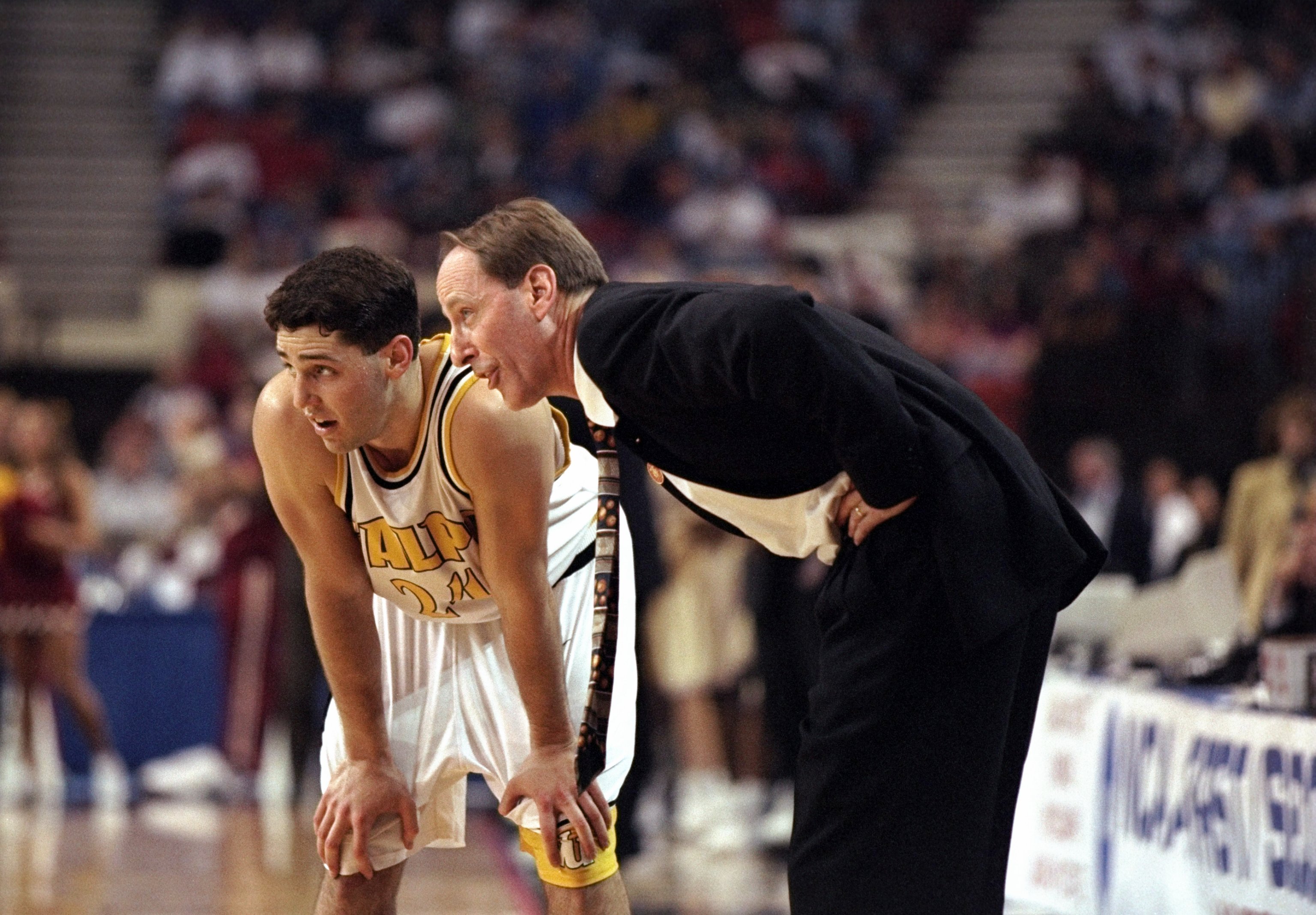
Take me back to when you were running around Valparaiso, Indiana. How much did you know then that you wanted to be in the same profession as your father?
Drew: Well, what was great about my dad — my first memory was going on a recruiting trip with my dad. Actually, he got pulled over for speeding, but I won’t go into that.
But my dad always involved us, so I was always around the sport. He took us recruiting. We grew up working in his camps, going to his camps. And to be honest, when he took the job at Valparaiso, Digger Phelps was coaching Notre Dame at the time, and he knew my dad from when he was at Bethel College — both were in South Bend-Mishawaka. He told my dad, “Don’t take it. It’s a dead-end job. You can’t win there.” And for the first four years, they didn’t win.
I knew I wanted to coach when I helped out with the Butler staff and learned from Jay John, Thad Matta and Barry Collier. But I also really wanted to help my dad. At the end of the day, they had a restricted-earnings spot open, because they didn’t have a coach in that spot. At the time, I made $600 a month, stayed at home, Mom cooked for us, and I worked 24/7, because I knew that if we didn’t get some players, my dad couldn’t show off any of his coaching abilities. So that’s where I got to cut my teeth, and I really wanted to help him win. I grew up with it. I loved it, because he always incorporated us and made us a part of it.
The Iba family’s the all-time winningest family (in college basketball). The Drew family’s No. 2, and we’re only a couple hundred wins away. So we joke with my dad that we might need to get him out of retirement if we want to get that record.
Seth: I’m curious, though, since we brought up Bryce. We knew he could coach. He just had a terrible situation that year at Vandy, when they went winless in the SEC, and then he gets another opportunity.
What was it like for you, as a close friend and a brother, to counsel him during one of the toughest years he’s had in the sport, wondering if his coaching career was going to bounce back?
Drew: Most parents would probably tell you this if they played: It’s worse watching your kids play and not do well than when you played. With my brother — first, he was really successful at Valpo. Second, they recruited unbelievable talent at Vanderbilt before NIL in those last two years. I don’t know if anyone’s recruited more pros than they did. Jake Diebler was a great recruiter. Roger Powell, Casey Shaw — they had a great staff.
What everyone forgets is Darius Garland was their point guard, and they were undefeated. Darius goes down with an injury, and all of a sudden you go from undefeated to not winning an SEC game. And then the athletic director who had hired him retired, not only retired — he actually passed away from an aneurysm. He had a tremendous amount of pull and respect at Vanderbilt. He’s one of the most well-thought-of people to ever come through Vanderbilt. A new AD was brought in, and we all know what happens when new ADs or new presidents come in and the predecessor who’s really well thought of is not there. That was like the perfect storm. But my brother’s a man of faith, and God had a different plan for him. He got into TV a little bit, did that at ESPN, loved that, liked coaching a little more, and then got an open door to go back.
Seth: But how did those conversations go when he was losing game after game after game and you were talking to him?
Drew: Sorry for not answering the question on that. At first, you try to give coaching perspectives or thoughts or ideas. And then after they try a couple of them and they don’t work, you shut up. And then you just support. At the end of the day, I wish I would’ve just listened more and let him vent more, rather than trying to give my opinion on how he should act, how he should respond or what he should do.
It’s always hard. But seeing my brother go through it — I’ve been a lot better at reaching out to coaches once they go through something like that and trying to offer a helping hand, support and words of encouragement. Because it is really, really hard when everybody calls you the first day, and then all of a sudden you don’t hear from anybody.
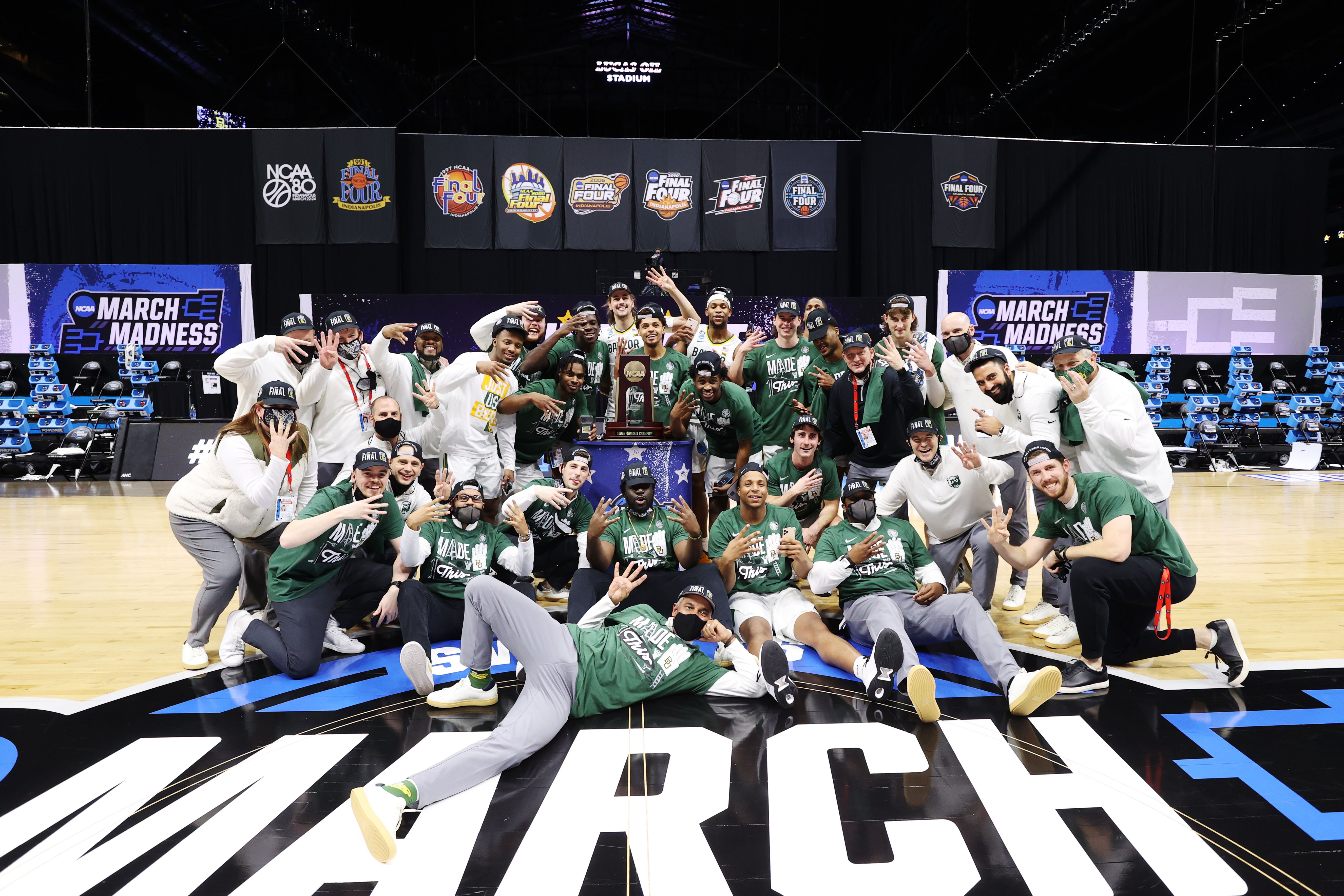
Andy: Scott, you mentioned Mitch Barnhart. Seth, you’re a great author, but I still say what Dan Gavitt, JoAn Scott and the staff pulled off at the NCAA in 2021 will go down in history, because it really could have crushed the sport if it went two years without a tournament. To pull off what they pulled off was absolutely remarkable. You were left there at the end with Gonzaga. It was like the Hunger Games. We started with 68, then it’s down to the final two, and ultimately you win.
Looking back, what was it like to spend that much time in that bubble and then ultimately win it in that environment?
Drew: You know, it’s amazing, because out of all the years, being the No. 1 seed and having a huge ballroom was the biggest plus of all. All the other teams who came by had small little meeting rooms, and they were like, “Oh, that’s what a No. 1 seed gets.” And the irony: us and Gonzaga, side by side. Our team rooms were right next door to each other. You go from having a packed house in our hotel and another hotel to all of a sudden it’s down to just two teams. It’s like a ghost town. You’ve got the convention center, you’ve got the two hotels, and we’re right next to each other.
I can’t thank the NCAA enough for the memories all those student-athletes were able to have that whole year. There was a chance, at one point, that there was going to be no football, no basketball, nothing. I can’t thank the NCAA enough for all the hard work everyone did to make those memories. And I personally want to thank them, too, because that was a great memory for me.
The Hoops HQ Shot Clock Challenge
Andy: We appreciate you coming on the show. We end this with the shot clock. We’re going to put 60 seconds on the clock, and I want you to just fire off these answers. You think you can handle the pressure?
Drew: I do.
Andy: Sixty seconds on the clock. No timeouts. Here we go. Favorite player when you were a kid?
Drew: Michael Jordan.
Andy: Best advice you got from your dad?
Drew: Have better players than the other team.
Andy: Perfect date night with your wife?
Drew: Dinner and a movie. No cellphone.
Andy: What is your wife’s biggest complaint about you?
Drew: Cellphone.
Andy: Best concert you’ve ever been to?
Drew: Oh, gosh. Forrest Frank — he’s from Waco. I saw him at Foster Pavilion. It was really cool.
Andy: Who would play you in a movie?
Drew: No idea. I thought Tom Cruise, back in the day.
Andy: What’s the last movie you’ve seen in a theater?
Drew: Well, I just watched The Terminal List the other day, the new one. It’s really good. Shout-out to The Terminal List.
Andy: What’s the one movie that makes you cry no matter how many times you see it?
Drew: Remember the Titans.
Andy: Finish the sentence: NIL is…
Drew: A headache.
Andy: How many cups of coffee do you have in a day?
Drew: Two to four.
Andy: Toughest player you’ve ever coached against?
Drew: KD or Blake Griffin. One of those two.
Andy: All right, last one. LeBron or Michael?
Drew: Michael. I’m old school.
Meet your guides