
College sports has undergone a seismic shift the last few years, but Purdue basketball remains unmoved. For starters, Matt Painter is one of the few power conference coaches who does not employ a general manager. This position didn’t even exist five years ago, but now it is considered vital for fundraising, evaluating and roster building. “It’s not something I’m turning my nose up to,” Painter told Hoops HQ. “We’re a team that doesn’t go in the portal a lot, doesn’t recruit a bunch of international guys. I’ve liked our rosters here the last three or four years.”
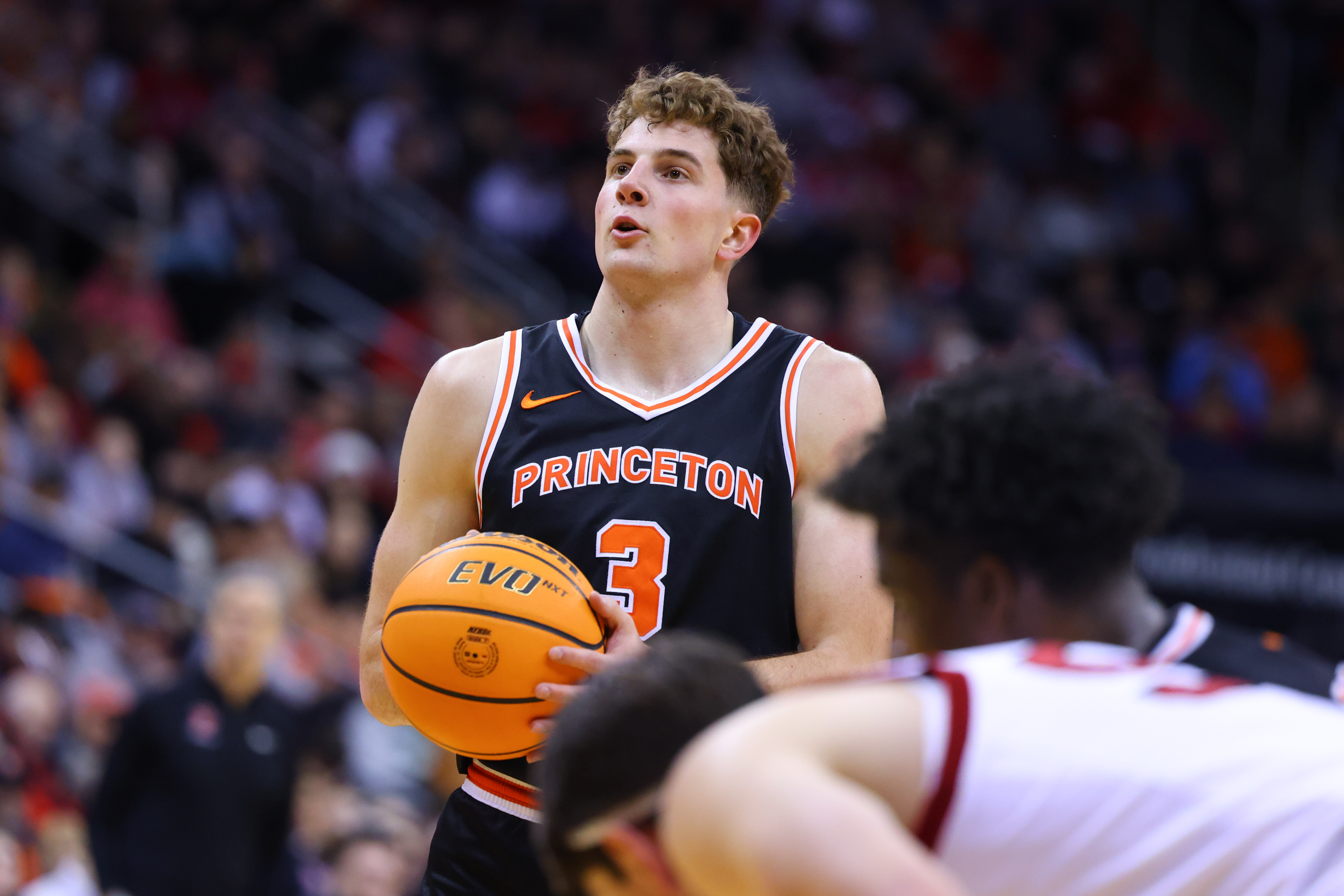
Indeed, Painter remains one of the few high-major coaches who values retention and continuity over quick fixes. He might have been tempted to deviate from that philosophy after Purdue graduated four starters from the squad that won the Big Ten Tournament and reached the Elite Eight. But once again, Purdue did not lose any players to the portal. That allowed Painter to stick with his tried-and-true template. The Boilermakers will return one starter plus four reserves who averaged at least 13 minutes per game last season. The returnees also include two players who redshirted last season for — get this — development reasons. Painter filled out his roster with five freshmen plus a lone domestic transfer in Caden Pierce, a 6-foot-7 senior forward from Princeton. The result is yet another team that has the chops to compete for championships, despite its increasingly old-fashioned blueprint.
Last season, the Boilermakers were ranked No. 5 in KenPom’s continuity metric. That will dip next season due to the graduations, but since the Boilermakers’ roster is on the younger side, it has the potential to develop into a group that sticks around for a while. “I wouldn’t say it’s old school as much as we’re just doing it the same way we’ve done it before,” Painter said. “It’s important for us to keep and develop our players. We’re in search of always having corporate DNA to where our older players are coaching our younger players. If you can get to where you have a player-led team, that’s special.”
It’s unusual enough for a program to be so dependent on high school recruits. It’s even more remarkable that almost none of them were highly-ranked coming out of high school. The biggest example, quite literally, was Zach Edey, the 7-foot-4 center out of Canada who was not even ranked among the top 400 high school seniors nationally and went on to be a two-time National Player of the Year. The same has been true over the years for foundational players like Carsen Edwards, Trevion Williams and, most recently, Braden Smith, who was ranked No. 198 in his class by 247Sports and graduated last spring as the NCAA’s all-time leader in assists. The highest-ranked recruit this season is 6-foot-1 point guard Luke Ertel, an Indiana native who is No. 42 in the 247Sports composite. “We haven’t gotten better in recruiting,” Painter said. “We’ve gotten better in evaluating.”
The key to making this formula work is finding players who fit into the holistic vision of the program. That includes — no snickering, please — finding players who prioritize their academics. “Education is still a big part of our deal,” Painter said. “We have guys that understand the big picture of it. They want to get their degree at Purdue and they want to have success playing basketball.”
To be sure, Painter would not be able to assemble such talent if his program didn’t have significant financial resources. The Boilermakers are not quite in the first tier of the $20-million roster club, but they’re not far behind. Purdue is one of just nine public universities whose athletic departments do not receive any financial assistance from the university or their state governments. The athletic department’s official booster fundraising operation, the John Purdue Club, has more than 10,000 members and has generated over $20 million. “We have good support,” Painter said. “We just have to keep trying to stay ahead of the curve.”
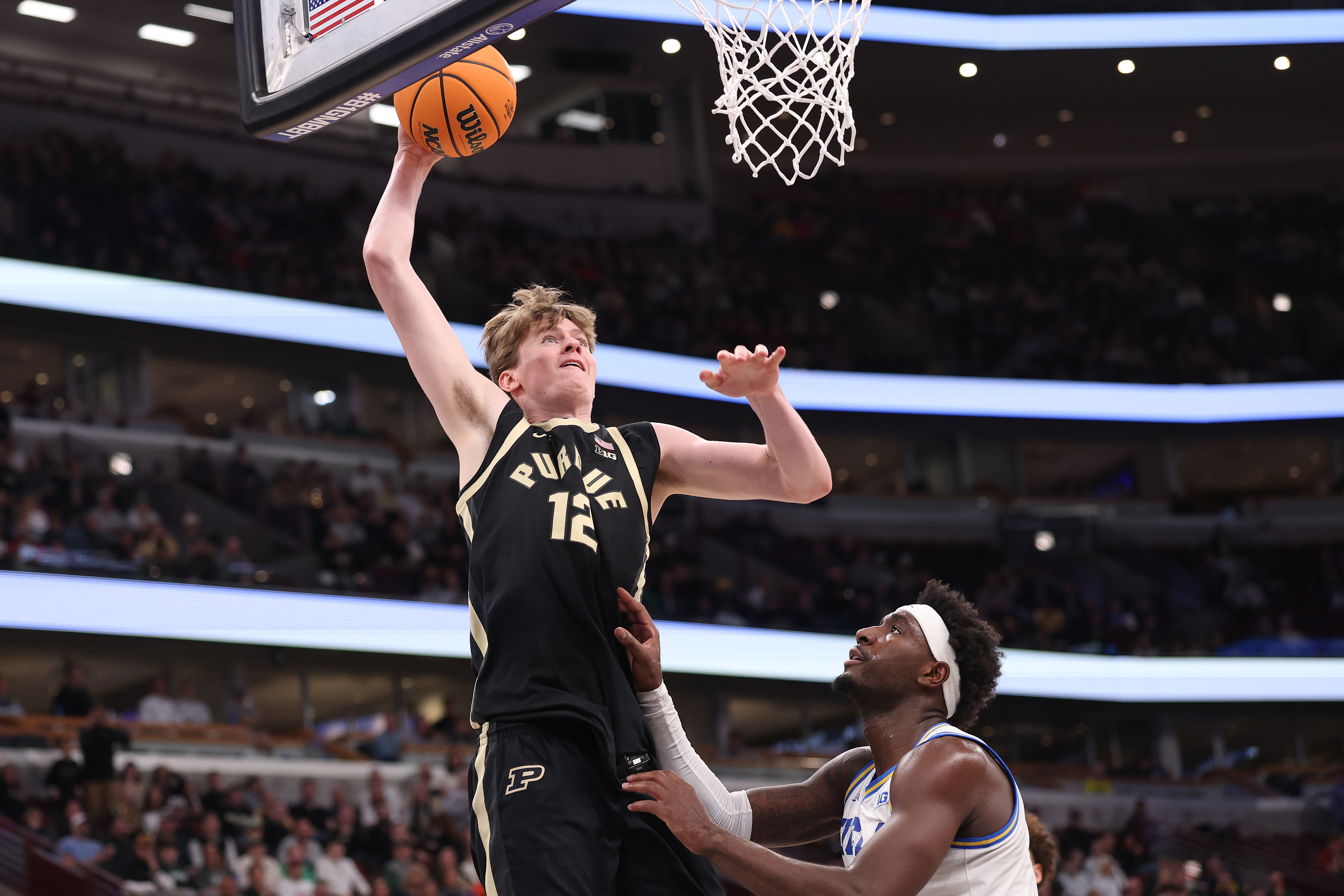
While most programs have moved towards an analytics-driven pace-and-space offensive system, Purdue remains one of the few that relies upon traditional big men. That’s why the most intriguing player this season will be Daniel Jacobsen, the 7-foot-4 junior center from Chicago. Jacobsen’s freshman season lasted just two games before he broke his leg. He showed promise last season while averaging 5.5 points, 3.0 rebounds and 1.2 blocks in 12.9 minutes, but his role was limited due to the presence of 6-foot-11 senior forward Oscar Cluff, who transferred in from South Dakota State. “It was frustrating for Daniel because he wanted to play through some mistakes, and that didn’t happen,” Painter said. Now that Cluff has graduated, the coast is clear for Jacobsen to have a breakout season.
Purdue will need improvement from all the veterans who, like Jacobsen, are moving into bigger roles. The lone returning starter, junior guard C.J. Cox, averaged 24.4 minutes and posted a 9.0 assist to turnover ratio in conference play. Israeli point guard Omer Mayer will take the reins from Smith after putting up 5.5 points and 1.2 assists in 14.3 minutes as a freshman. Sophomore guards Gicarri Harris and Jack Benter are likewise due for promotions after playing significant minutes off the bench last season.
Antione West, a 6-foot-3 guard from Ohio, took a redshirt season as a freshman because the Boilermakers’ backcourt was crowded and he would have had a hard time getting minutes. Raleigh Burgess, a 6-foot-11 redshirt sophomore forward, also sat out last season following leg surgery, but he’s healthy and poised to have a significant impact.
Painter is not averse to using the transfer portal to plug a hole here and there. His 2024 Final Four team was powered by shooting guard Lance Jones, who transferred from Southern Illinois. This year, Painter picked up a gem in Pierce, who announced his decision not during the spring portal season but in February. Painter also dipped his toe into the international pool and signed Enzo Shahrvin, a 6-foot-9 senior forward from France, but the NCAA has yet to declare him eligible because it tweaked its rules governing the compensation limits of international players after Shahrvin committed. “I’m not arguing the rule, I’m just arguing the timing of what they did,” Painter said. “We’ve given our word to this kid. Hopefully they understand that’s not fair.”
Here’s another new-school tactic Painter did not employ this summer: accepting a commitment from a fifth-year senior who gained temporary eligibility through a court order. The list of potential such additions includes Trey Kaufman-Renn, who started at power forward for Purdue the last three years and is eligible due to a temporary restraining order issued by an Indiana judge. But Painter turned him away, so Kaufman-Renn entered the transfer portal. “Our guys committed to us based on the opportunities they expected to have,” Painter said. “You give somebody your word, you can’t go back.”
Though all these methods have worked in the past, Painter insists he is not going to let himself get stuck in his ways. “The one thing you have to do is be ready to pivot,” he said. “You can’t sit there and say hey, this is the way we’re going to do this. We’ve yet to lose starters (to the portal), so we haven’t had reason to change so far. We’ve been winning with guys who weren’t the most highly recruited guys, and they’ve stayed with us.”
Nothing lasts forever, but with two commitments already in place from four-star players in the Class of 2027, there are no signs that Painter is due for any kind of course correction. “I think Purdue’s a special place,” he said. “We’ve had 108 straight sellouts. The education is tops in the country. Things are changing and we’re ready to shift, but it’s got to make sense for us to do that. For the time being, I like where we’re at.”
Meet your guide