
If you’re a college basketball fan, you probably follow a lot of college basketball accounts on social media. So you no doubt noticed that beginning on Thursday evening, dozens of members of the college basketball media, and many others from around the sport, have been paying tribute to a man named Kenny Klein, who passed away that evening at the age of 66 following a choking incident at a Louisville restaurant. You probably never heard of Kenny, which was okay with him. It was his preference, actually. But after reading through the outpouring, you probably wish you knew him.
I was among the many lucky ones who did.
Kenny was a true lifer, and a gentleman of the first order. He spent more than 40 years as the Sports Information Director at Louisville. He briefly retired in 2022, only to be coaxed back into action by former Louisville coach Rick Pitino after Pitino took over at St. John’s. Pitino claimed he needed Klein to help him manage the program, but that wasn’t the real reason. Like everyone else who knew Kenny, Pitino just wanted him around. His chronic good cheer was contagious, his benevolent energy addicting. You felt better just being in his presence.
It’s a tricky deal being an SID. Technically, you work for the athletic department and the coach, but it’s your job to help the media gain access. Many coaches are less than friendly to the proposition, and their SIDs rarely challenge them. But if you gained Kenny’s trust, he would go to bat for you. He did that often, for a lot of people. Kenny was the trusting kind.
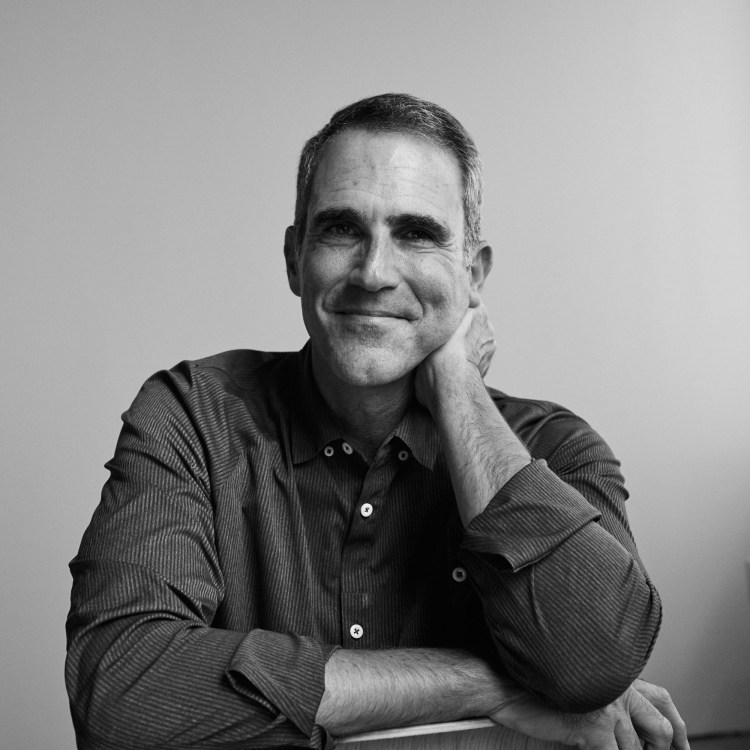
Kenny wore the very definition of a permagrin. I’m not talking about a slightly upturned lip, or a ruminative, pleasant aspect. I’m talking about a wide, toothy, goofy smile that seemingly never left his face. Kenny went through life always looking like he just heard the most hilarious joke. He spoke in a soft southern twang and never seemed flustered or annoyed. He was happy to be at the game, happy to be with you. Life can get complicated, but Kenny kept things simple. He enjoyed his job because he liked helping people.
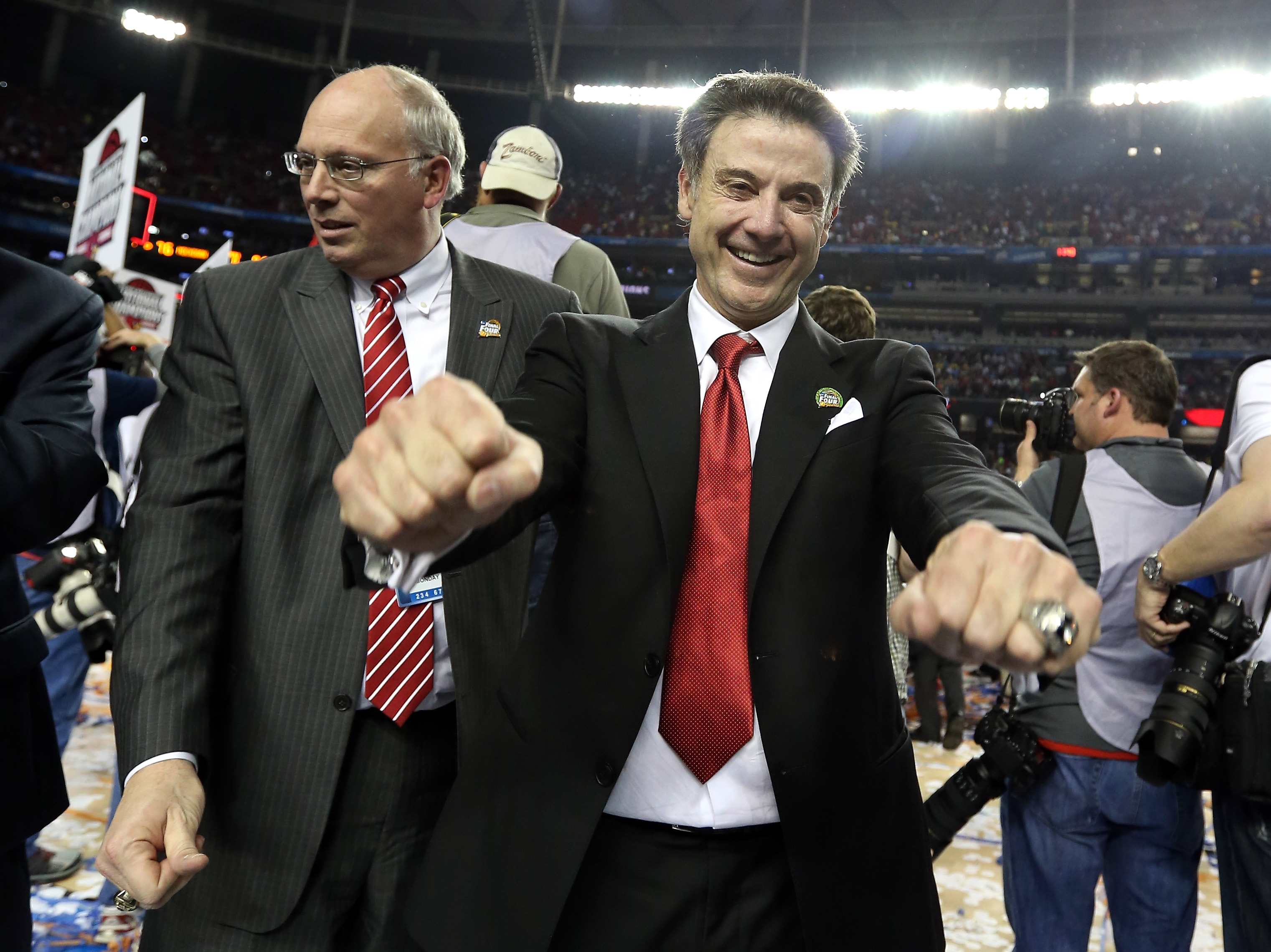
Kenny helped me in a major way in 2001. I was working for Sports Illustrated, and the magazine wanted me to do a story on Pitino, who had just gotten hired by Louisville. The problem was that Pitino was angry with the magazine for a brutal cover story that was published when he was at Kentucky. Kenny vouched for me — “I like you talking to him,” he told Pitino — and as a result Rick agreed to meet Kenny and me for dinner. Kenny understood I had a job to do. I asked Pitino some uncomfortable questions, which he answered professionally without any interruptions from his SID. The dinner was cordial, and I got my story.
Three years later I again asked Kenny to set me up at a time when the Cardinals were surging. Pitino was over his grudge, but his time was limited and he was not giving a lot of one-on-one interviews. Once again, he acquiesced because Kenny asked him to.
Kenny brought me to Pitino’s office and then left us alone. The coach and I sat at a circular conference table and the interview lasted about 45 minutes. I turned my tape recorder off, and Pitino and I kept talking. Thirty minutes later, Kenny came back in with a confused look on his face. “What the hell are you guys talking about for so long?” he said.
Whatever the differences Pitino and I may have had at that moment, the one thing we shared was an affection for Kenny Klein. That was enough.
Kenny never made you feel like you owed him anything, but after a while I felt a little guilty about the one-sided nature of our relationship. I was finally able to pay him back at the 2012 Final Four in New Orleans, where Jimmy Buffet was the featured performer at the Sunday music festival. Kenny was a huge Buffet fan, and I was able to get him access to a meet-and-greet with the Parrothead himself. I also got him a pass to watch the concert from the side of the stage. Kenny started the show beside me in the hospitality tent, and he was losing his mind as Buffet started playing his greatest hits. I realized that Kenny wasn’t going backstage because he felt bad about leaving me. Finally, I turned to him and said, “Kenny, go.” He did, and reminded me often over the years how grateful he was.
Along the way, Kenny was inducted into the College Sports Information Directors of America Hall of Fame and the Kentucky Sports Hall of Fame, and he was named the 2012 Katha Quinn Award winner for service to the media by the U.S. Basketball Writers Association. When he announced his retirement, I figured I wouldn’t see him much anymore. Two years later, I was calling a game at Louisville for The CW Network. I was standing on the floor about 30 minutes before tipoff, turned around, and there he was. “What are you doing here?” I asked. He smiled (of course) and said, “Oh, you know, just helping out.” The next year, Pitino brought him to New York, and Kenny was right back in the game. Seeing him was always a treat. We’d slap five, bro-hug, and I’d tease, “You suck at retirement.” He didn’t disagree.
Like most of my colleagues, I last saw Kenny at this year’s Final Four in Indianapolis. We were chatting in the press room, and I mentioned I might need his help to connect me with someone for a potential book project. I made a mental note to follow up the following week, but before I could, Kenny sent me a text message letting me know that he had already reached out on my behalf, and a woman from this person’s office would be contacting me shortly. He wrote: “Let me know if you don’t hear from her in the next few days. Thanks.” (Notice he’s doing me a favor, and still saying thanks.)
I let Kenny know the conversation went well. A month later he sent me another text from the Kentucky Derby saying he had seen the woman at Churchill Downs. “I pumped you up even more,” he wrote.
Needless to say, I was devastated to hear of the incident at the restaurant. A few colleagues and I were put on a text thread giving us updates on Kenny’s condition. We were holding onto any glimmers of hope, and at first there were a few of them. But as the days went on, the prognosis got worse. We braced ourselves for the inevitable.
That came on Thursday night, but before it did, Kenny was given an Honor Walk through a corridor at U of L Health as he was moved to an operating room where his organs would be harvested for donation. As Kenny was wheeled down the hallway, he lay under a Louisville blanket, flanked by photos, a bottle of bourbon, and a phone playing Jimmy Buffet songs. Many friends and family turned out for this final journey. It was not lost on any them — on any of us — that the last thing Kenny did was give whatever he had left to other people.
Kenny went through life always looking like he just heard the most hilarious joke. He enjoyed his job because he liked helping people.
Twitter is often a toxic place, but in the wake of this horrible event, it has been a balm for Kenny’s friends to be able to share our memories. I read of so many instances of his kindness. Going out of his way to make a young reporter get what he needed. Bringing cold beers into the press room late at night (or early in the morning). Reaching out with words of encouragement to someone who had gone through something unfortunate. Saving a piece of a championship net for one of his colleagues. Funny jokes, good cheer, tasty beverages, and always, always, always smiling. All of those stories moved me. None of them surprised me.
I hope it brings Kenny’s family some solace that through his organ donations, their tragedy will be someone else’s miracle. It certainly does for me. Those of us who knew Kenny will do our part to preserve his memory, but in the meantime, there’s not much we can do but grieve and mourn the passing of this very good man. Heaven’s gain is our loss. This one’s gonna sting for a while.
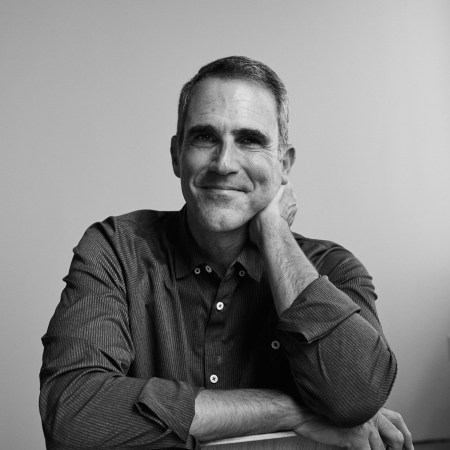
Meet your guide