Editor’s note: This story discusses sensitive subjects such as anxiety, depression and suicide. For more information on mental health services or to support the Jay’s Light foundation, please go to www.jayslight.org
COLORADO SPRINGS — When the gym doors opened on May 21, they filed into the building: thirty-five of the best high school players in America, all length and swagger and five-star expectations, gathering at the United States Olympic and Paralympic Training Center for USA Basketball’s U18 training camp in preparation for the FIBA Men’s AmeriCup.
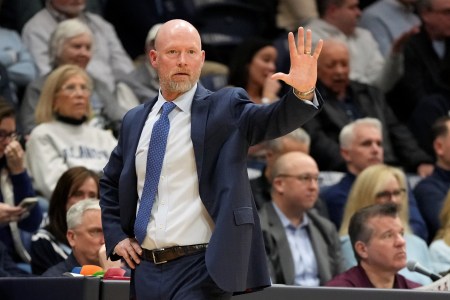
Standing at center court was the team’s head coach, Anthony Grant, who is entering his tenth season as the coach at Dayton, his alma mater. Grant’s resume is robust, but his record matters less than the respect and reverence attached to his name. In a gym full of ambitious energy, Grant has a sapient presence that is at once professorial, dignified and deeply human. At 6-feet-5 and still in muscular shape, he rocks a gray beard that gives him a gravitas and a weathered humility. His expression rarely changes, his voice rarely pitches; yet there is an unmistakable sense that he is in command.
This is Grant’s third go-around with the U18 team, his first as head coach. His composure and willingness to accept the responsibility feels even more remarkable knowing what he and his wife Christina endured. In May of 2022, the Grants lost their daughter Jayda to suicide at the age of 20 after a years-long struggle with depression and anxiety.
“It was four years ago this month that we lost our daughter,” Grant told Hoops HQ. “So if there was any hesitation about being here it’s because of the emotions we’re going through this time of year, which has been challenging. But once I talked to my wife and she was really excited about doing this, it just made sense.”
Jayda had three brothers, Anthony Jr., Preston and Makai. Grant recalled her as someone with much empathy and a genuine caring for others. “She thought deeply about how she related to people,” he said. “She really had a passion for animals. We had dogs and any time you were looking for the dogs it was ‘go to Jayda’s room.’”
While working on the anniversary of Jayda’s passing wasn’t easy, there was also a meaningful recognition that the USA camp was taking place during Mental Health Awareness Month. “For me and my wife it comes down to a level of faith,” Grant said. “Faith has carried me and coaching has helped me be able to deal with the grief because when you’re in between the lines coaching it’s a time when you can just get lost in the game. Selfishly it has helped me deal for little periods of the day, because for a long time it was, ‘Do I have the strength to get through the day?’”
Grant has built one of the most respected careers in college basketball. After graduating from Dayton in 1987, he returned to his native Miami to take a job as an assistant high school coach and math teacher. He later spent a decade as an assistant coach for Billy Donovan at the University of Florida before head coaching stops at Virginia Commonwealth University and Alabama.
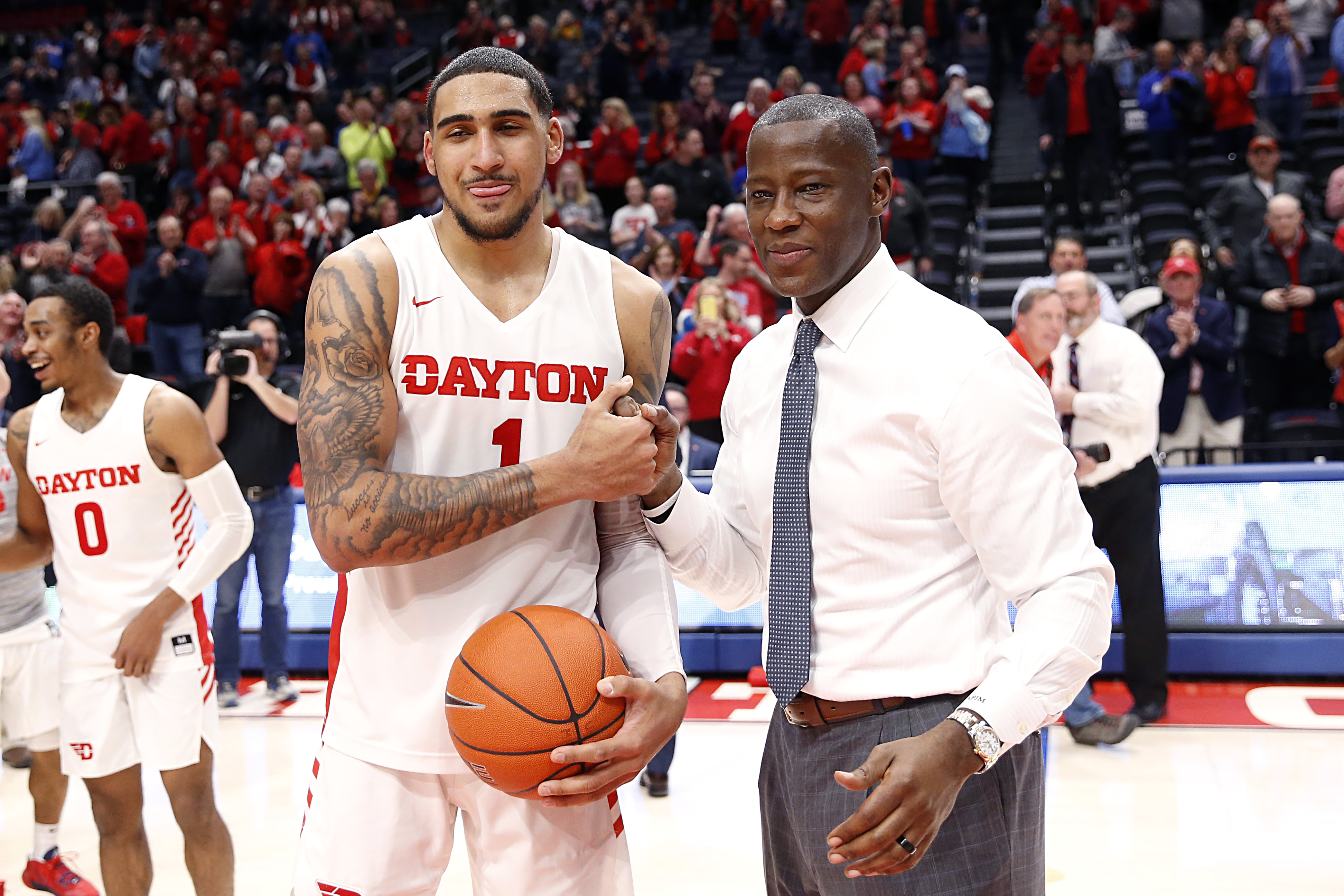
Grant returned to Dayton in 2017 and quickly engineered one of the great modern turnarounds in college basketball, leading the Flyers to a 29-2 record during the 2019-20 season. He won multiple National Coach of the Year honors before the NCAA Tournament was canceled because of the COVID-19 pandemic. Dayton, led by National Player of the Year Obi Toppin, would have been a No. 1 seed in the NCAA Tournament. The cancellation was a crushing blow, not only to Grant and his players but also to a Dayton community that reveres and supports its Flyers.
After 30 years in the business, Grant understands the burden that coaching puts on families. “Jayda was really young when I got the job at VCU and then three years later we’re in Alabama,” he said. “Six years later we’re in Oklahoma and a few years later we’re in Dayton. They had to move a lot as young kids and it’s really challenging for kids that age to have to make friends, move and start over.”
Grant paused and added, “I don’t think I understood the impact of that at the time.”
Grant’s approach to leadership reflects a willingness to acknowledge vulnerability not only in himself, but in the elite athletes he coaches. “It’s pretty universal amongst coaches how well-respected Anthony is, and that’s not easy in this competitive profession,” DePaul head coach Chris Holtman said. “He and his wife, Chris, are special people. They’re so real and authentic. Our game, our profession needs more Anthony Grants, guys who are really good coaches, who do it the right way and who are about the right stuff.”
The Grants called Jayda “big sister” because of her maturity and protective instincts. Athletically she loved flag football, softball, basketball and track. She also had a love for reading, writing, learning and supporting causes that were important to her.
No one, however, could describe Jayda more poignantly than Jayda herself did in an essay she wrote in 2018 entitled This I Believe:
I was kind of shy as a kid, and I still am kind of quiet, but I am learning how to put myself out there more. I would say that this would be my biggest weakness. My strengths are my compassion, empathy, and insight, all things my mom says I get from my dad.
Over the next 10 years I hope to change and become the best version of myself. Hopefully I’ll be doing whatever makes me happy whether that be still running track or working at a real job. Most importantly though I hope I am happy with myself and not as introverted.
A quote that best explains what I believe is a quote by Mother Theresa: ‘If we have no peace, it is because we have forgotten that we belong to each other.’
I hope one day the world will be able to put aside all of its differences and see that we are all one and the same, called to love each other unconditionally.
After Jayda’s death, the Grant family chose to share her story and establish a non-profit organization called “Jay’s Light.” The mission, as Grant puts it, is to “shine a light on mental health and break some of the stigmas around it, particularly for children and young adults who are impacted by mental illness.” Jay’s Light reflects Jayda’s compassionate spirit and the family’s commitment to ensuring that others facing similar struggles know they are not alone.
“For me, when our daughter was going through her struggles, I didn’t know who to talk to,” Grant said. “It was an uncomfortable conversation to tell someone that your child was battling depression and anxiety. Where do you get help? The way the system is set up is once they turn eighteen, you’re not allowed to get answers or ask questions. So for us, it was about how do we help other people?”
One of the organization’s signature initiatives is an annual exhibition basketball game that brings together former Dayton players, coaches, community members and supporters. The event combines the community-building power of sports with the foundation’s mission of hope, healing and suicide prevention. What started in 2023 as one game between Dayton and Ohio State, grew into three games in 2024 and six in 2025. “The operative word is ‘hope’ and using the platform we have through basketball and these games provides that,” Grant said.
When you agree to coach a USA basketball team, you understand that the only acceptable outcome is a gold medal. Grant’s team fell just shy of that goal, losing by two points to Canada in the final game. The result was disappointing, but Grant has learned the hard way that there are bigger things in life than a basketball game. The pain that he and his family feel from Jayda’s loss will never go away, but their faith, combined with the work they do to keep Jayda’s memory alive while helping others, have helped them heal and serve forward. “The Bible tells us God never gives us more than we can handle,” Grant said. “Everything we go through could be for good. How can we find something good in this bad?”
Meet your guide