
Jonathan Wasserman joined Seth and Andy on The Hoops HQ Show Tuesday morning. Stream the full episode on YouTube, Spotify or Apple Podcasts.
Seth Davis: We are joined by one of the premier NBA Draft experts, Jonathan Wasserman. Some people only answer to one name. There’s Madonna, and there’s Wass.
Wass, thank you for taking time out of your busy schedule as an NBA Draft expert and a dad, of course. Let’s start with the key question. I don’t know if it’s a debate, but it is an interesting conversation as to who should go No. 1. I think for most people, leading up to a certain point in the season, the consensus really was building around Darryn Peterson. And now there seems to be a very strong consensus around AJ Dybantsa. I’m wondering, first of all, if you agree that that’s true — that it’s pretty much dead set going to be Dybantsa to the Wizards barring a trade. But also, if that is because of the physical questions and the physical challenges that Darryn Peterson went through.
If Peterson’s physical challenges are behind him, why haven’t we returned to the original consensus that he should go No. 1? Where does all this stand with you?
Jonathan Wasserman: Yeah, I put out a mock draft today and I have AJ at one. It really comes down to there was consistency with AJ and there was inconsistency with Darryn and not just his play, but obviously the availability. I think when you have inconsistency, you have uncertainty, and when you have the No. 1 pick, you can’t mess up, right? You have to get this right.
With AJ, there’s just — you know of all the top guys that we talked about with AJ and Darryn and Caleb and Cam, I think AJ has the fewest holes in his resume and his game. It’s hard to imagine something going wrong with AJ. The positional size, the shot making, he was a good passer and he’s a competitive kid, he’s a plus character. There’s just — it’s hard to find an outcome where it doesn’t go right with AJ.
So I think that’s why everybody is saying AJ at No. 1. Now, I don’t know what Will Dawkins is thinking. I don’t know exactly what the Wizards are thinking. I think on paper, maybe Darryn Peterson is the better fit just because Trae Young is such a high usage guy. And AJ is a high usage guy, where we saw Peterson at Kansas play off the ball a lot. And he was very comfortable as a spot-up guy running off screens. I think that kind of, on paper, meshes well with Trae Young’s game. But again, people are a little bit iffy on Peterson, what happened with the legs and is he gonna be able to bring it every night?
Again, AJ is such a lock — and the Wizards cannot get this wrong — that everyone just kinda assumes it’s gonna be AJ at one.
Andy Katz: So Jonathan, let’s put him at one. Let’s move him to the side. What are the chances that the debate actually could be among Peterson, Wilson, Boozer when you’re looking at the Jazz, Grizzlies and Bulls as one goes off?
Will those three go in some order? Or are each of those three franchises having its own, internal debate?
Wass: Yeah, definitely. One of the most popular questions I ask, of course — and I’ve been doing this for three, four months now — is, who’s your No. 1 guy? And I’ve heard three different answers. I haven’t heard, I know there’s a lot of Caleb Wilson buzz, I’ve never heard Caleb Wilson at one. I haven’t even heard Wilson two. I’ve heard Wilson three a couple of times, but you hear a lot of different answers. And again, I don’t exactly know who the Wizards have one. I don’t know who’s No. 1 for the Jazz, or whatever.
Obviously, Carlos (Boozer) is on staff with Utah, which throws an interesting wrinkle into this whole equation. Then there’s the idea of trading up. Like, if the Wizards really like Peterson, they don’t want to make that known. Everybody kind of assumes that Utah would like AJ because of the Utah connections: Utah Prep, BYU — would they trade up? I mean, there’s a lot of different variables here and things that can happen from now until draft night.
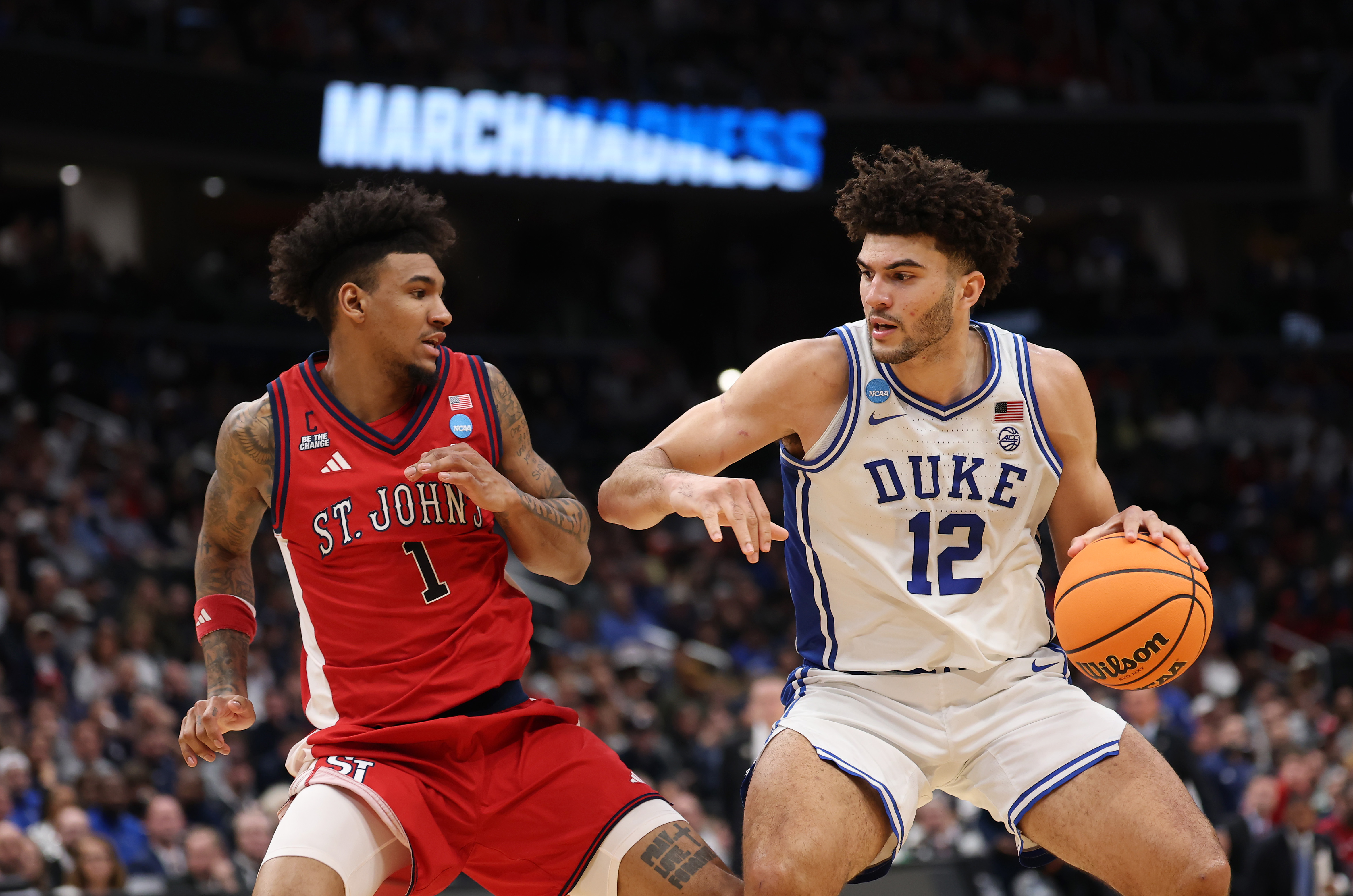
But yeah, everybody could like somebody different. I have my personal board. And by the way, I’ve been back and forth for a long time now — I think I’m going to finalize this: Cam Boozer No. 1 for me. I think he’s the best player in the draft and I’m not going to overthink some of the athletic question marks and stuff like that. We can talk about that later in the pod.
Katz: No, follow up, tell us why.
Wass: Okay, the pitch for Cam Boozer No. 1. I mean, I don’t think we needed the athletic test to know that Cam Boozer was not going to have a 40-inch vertical and he wasn’t going to have the fastest sprint time or whatever. By the way, he did have better lane agility time than Caleb Wilson, who is considered the higher upside guy because he’s got all this athleticism. I think there’s a way to use your feet better. I know when you’re looking at the screen, he doesn’t jump off the screen and he doesn’t have these high flying dunks.
But he’s a very functional athlete. He knows how to use his body really well. And if you look at the top players in the NBA, I mean, there’s so much evidence that athleticism is not what drives upside anymore. I mean, Jokic can’t jump over a phone book and he’s the best player in the NBA. You got Steph Curry, who’s not an athlete. You got Luka, who’s not an athlete. Shai is not a great athlete, relatively.
Athleticism is not what makes Shai the MVP of the NBA, right? It’s footwork, it’s processing, it’s shot-making — those are all things that Cam Boozer excels in, by the way. Six-foot-9, 40-percent three-point shooter on good volume. He was a better shooter on more volume than AJ, who’s a wing. He’s, first of all, a full year younger than Caleb Wilson.
Darryn Peterson could certainly be the best player in the draft as well. It’s just tougher to have confidence based on what we saw this year at Kansas because of the on-and-off stuff. And by the way, that archetype — the two-guard archetype who’s not a playmaker — it’s like, Devin Booker is maybe the best guy and there’s only so far he takes a team. So this question is about that archetype.
But Cam Boozer to me is — he’s still 18. Every single year from his freshman year of high school till his freshman year at Duke, he’s the best player on the floor. His team always wins. It’s like, how long are we going to go on with this, making up excuses of why he’s not going to be this great NBA star because he’s what — 6-foot-9 and not 6-foot-10? Or because he has a 36-inch max vertical and not a 38-inch max? I just think there’s a lot of overthinking when it comes to Cam Boozer.
Hot Takes: Summer Recruiting, Dusty May, Eligibility and the 2027 NBA Draft
Seth Davis and Andy Katz discuss Dusty May’s jump to the NBA, the proposed 5-in-5 rule, the future of high school recruiting and more
Seth: Well said across the board. This is primarily a college audience, and so there are interesting questions about certain players, whether they’re to stay in the draft or they’re going to come back. I want to ask you about two. First of all, by far the most fascinating is Koa Peat from Arizona. It’s interesting to me — OK, he didn’t shoot well in the drills. The scouts have been watching him all season. They know what he can do and what he can’t do. I, personally, have a hard time believing that a poor shooting performance, even with no defense, at the combine is going to be that drastic of a change. But some speculation is building that maybe he comes back to Arizona. I’m doubting it. I want your point of view on that.
The other one is Andrej Stojaković from Illinois. I talked to Brad Underwood this week about it. He said he genuinely doesn’t know what that kid’s going to do.
What are your thoughts on Koa Peat and Andrej Stojaković?
Wass: Starting with Koa, everybody says the same thing: He’s got to go back to school. Just from a financial standpoint, from a development standpoint, from a draft stock standpoint. I mean, if he stays in the draft, yeah, he could probably go in the 20s.
Just think, right? He measured 6-foot-7. He’s obviously a power forward, but a power forward who’s not a three-point shooter, who’s not a ball handler, who’s not going to block shots, there’s just not many pathways to upside for that type of guy. And sure, he can maybe be like a Wendell Carter type or maybe a Rui Hachimura type if he becomes good enough from outside. I don’t think anybody is going to reach on Koa Peat at this point.
And then he changed his form, I was told, for this combine. And of course, the numbers were awful during the shooting drills. I don’t think anyone’s going to put too much stock into shooting drills and they’ll bring them in for workouts and they’ll put the mechanics under the microscope. But I think at this point, the 2027 class, everybody knows, is considered much weaker, and if you come back and just shoot a little bit better there’s an easy pathway to go to the lottery. So I just think all these things combined, it makes sense for him to come back. I don’t know what he’s personally going to do.

And then Stojaković — again, he could be the best player in college basketball next year. Or, he can maybe be a pick in the 40s. To me, he should come back. He’s a wing who’s not an explosive athlete. He’s a very crafty, skilled scorer inside the arc. But a wing who’s not a plus three-point shooter and not a playmaker. Again, it’s just, what’s gonna be his role in the NBA right now? I think he needs to come back, be All-American next year, take Illinois to the Final Four. Raise the three-point shot a little bit and he has a much better chance to go first round next year.
Andy: I want to get your opinion on what you thought of these guys that are not going to be, I don’t think, in your first round. What has changed dramatically this year is the players that are on the fence. One, they obviously can make more money going back if they’re not one-year deals. They can make more money off a three-year guaranteed deal, I get that. But going back for one year, certainly they will make more money.
The other thing is that with the portal, in a lot of these cases, they’re going back to teams where they can win a title. That is different, too. So Jeremy Fears Jr., he goes back, Michigan State’s right there, Big Ten title, Final Four. John Blackwell, transfer to Duke, goes back, they got a chance to win the title. Matt Abel, transfer to North Carolina, got a much better team than he had last year at NC State. Another one: Jacob Cofie, talked to him, USC, he goes from the G League to the regular combine, USC is going to be loaded next season. He knows that.
So that’s another sort of incentive to go back and compete at that level. The one guy that still left a crack in that window, but played so well — and I want your comment on him — is Morez Johnson Jr. I don’t see him going back because, even though they could compete for another title, he is higher up in the draft and it might be his time to go. But a lot of these guys, you can see that they’ve got great options to go back. That wasn’t the case years ago.
Your take on those players teetering between a return to college and the NBA Draft?
Wass: I think the guys that you mentioned, other than Morez, are going through the process to get the experience. I mean, John Blackwell played excellent, right? He was great. He’s not going to be a first-rounder. So go back, go to Duke, be a star of college basketball, go far in the tournament.
Again, I think there’s definitely value in going to the combine, getting feedback, getting that experience, playing with all these other great players. Even though, in the back of your head, you know you’re going back, you don’t really tell everyone that.
Katz: Jonathan, one other name I forgot was Tyler Tanner. He could go back and be SEC Player of the Year. And Rueben Chinyelu, same deal. These are all guys that can have great seasons next year and compete for titles.
Wass: Yeah, Chinyelu is an interesting one because Florida brought back their two big guys and you wonder with him, does he want to go back and be the third offensive option again among that frontcourt, or does he want to test his luck? He did play very well in Chicago.
Tanner is an interesting one. I’ve heard all season, I’ve heard from agents and scouts, that he’s going to go back. And then he kind of created some waves when he made comments publicly that he’s got two feet in the draft.
By the way, these guys are so coached up. I’ve heard 15 guys say two feet in the draft. They can’t possibly all have that same exact phrase in their head. But Tanner, yeah, Tanner did not play well. And I really like Tanner as a prospect.
Obviously there’s a lot of questions about being 5-foot-10 and three quarters. And it wasn’t great during these scrimmages. But if he goes back to college basketball again, he has huge potential.
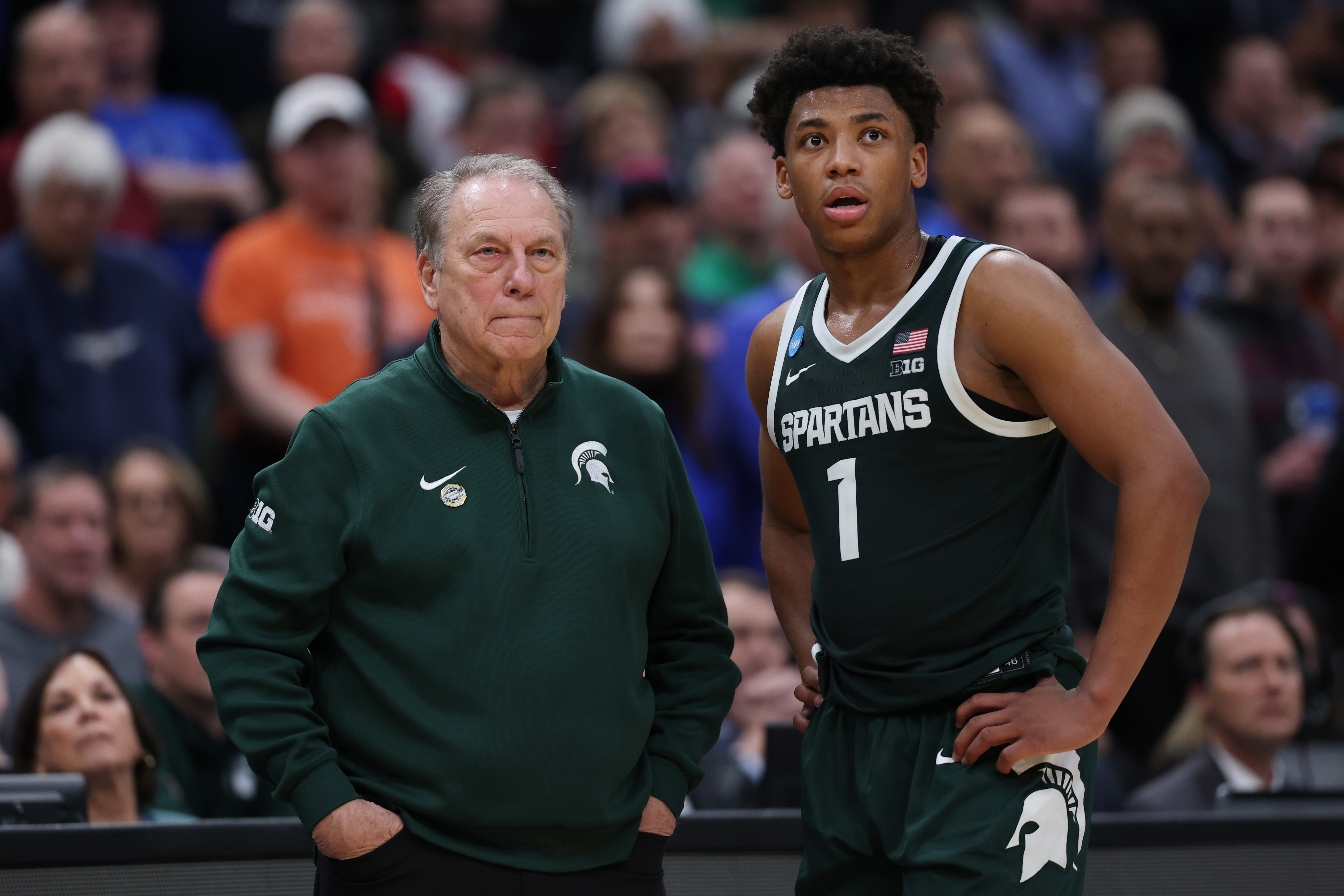
Katz: One other curveball: I’m curious, Jonathan, your thoughts on Jeremy Fears Jr.? Because there are plenty of interesting factors with him. You’ve got a dad there that wants both boys in the NBA. Jeremiah, the younger brother, wasn’t expected to be one-and-done. And so he’s ahead of the game. It was supposed to be Jeremy, and yet, he gets shot in the calf. I mean, all these things happened to him which were unfortunate. And so he really wants to be in the draft — and I’m sure Tom Izzo was sweating — but I don’t see it. You’re the expert on this.
What do you think about Jeremy Fears Jr. as a prospect? Is he headed back to Michigan State?
Wass: No, he’s going to come back. There’s this other variable that we don’t talk about a lot: Like, maybe guys just don’t want to go to college anymore. You’re in college for three years, some guys are just done with it, the money is not that important. They would rather — they’d happily be in the G League for a year. We’re always like, what are you going to do, spend the next year in the G League? Well, some guys might want to do that. They might be tired of college.
On paper, without knowing what’s going on behind the scenes, yeah, it makes a lot of sense to go back. He’ll be one of the best players in college basketball and he won’t be a first-round pick this year.
Seth: Real quick, what player at the combine helped himself the most and what player hurt himself the most?
Wass: I mean, Cameron Carr was, since they reinstituted these scrimmages — I remember Kyle Kuzma’s year, he had a great scrimmage, and that was the first year they brought the scrimmages back. Cam Carr just had the best scrimmage I’ve seen since they put it back. Everybody knew he was a first-rounder before, but he bet on himself and played in it. I was talking to his camp before, and they’re like, there are spots to be taken in that first round and he’s going to take them.
He made himself 100-percent money on that first day with four threes in the first three minutes. He finished with 30 points. He just genuinely looked like an NBA starting wing playing against little kids. So to me, the eye test, the production — and he measured a seven foot wingspan — everything is going for Cam Carr right now. I think he’s going to be a lottery pick.
I don’t know if anybody really hurts themselves at this. Like if you shoot poorly in drills, nobody’s going to just knock you off their board, right? I’d say Kingston Flemings measuring 6-foot-2.5 in socks was a little bit underwhelming because the narrative was that he was the bigger guard and Darius Acuff was the undersized guard. But they measured the same and then Acuff came in four inches longer. So technically, Kingston is the undersized guard comparing the two. I think that might have hurt him, even though Kingston did test really, really well athletically — maybe one of the top-five athletes based on the agility, leaping, sprinting and all that stuff. But I think from an optics standpoint, him coming in at 6-foot-2 in socks was a bit disappointing.
Meet your guides