The 2026 NBA Draft is one of the most anticipated in the last decade, with a lot of teams putting themselves in a favorable position to land a top spot this season — or, in other words, “tanking.”
The Washington Wizards, Indiana Pacers and Brooklyn Nets all finished with the worst records and each have a 14 percent chance of landing the No. 1 pick when the draft lottery is held on May 10. That will be followed by the NBA Draft Combine May 10-17 in Chicago. The Utah Jazz will keep their pick and currently have a 11.5 percent shot at the top spot while the Oklahoma City Thunder have control of the Los Angeles Clippers’ lottery pick due to the 2019 blockbuster Paul George trade.
Who’s favored to go No. 1? Is there room for players to jump into the top 5? And which players should return to school after testing the NBA Draft waters?
Here are seven storylines to watch before the draft combine and NBA Draft on June 23.
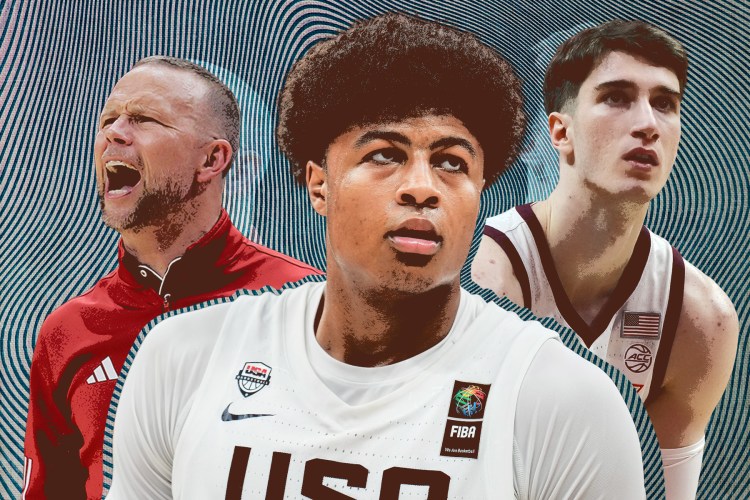
AJ Dybantsa separating himself as the clear No. 1 pick
Although some mock drafts still have Kansas guard Darryn Peterson over AJ Dybantsa, the general consensus around the league is Dybantsa will be the first player off the board. His intangibles at 6-foot-9 and what he does with the ball in his hands at just 19 years old is unmatched.
Dybantsa was the No. 1 recruit coming out of high school and averaged 25.5 points, 6.8 rebounds and 3.7 assists during his one year at BYU. He broke the Big 12 tournament scoring record (previously set by Kevin Durant) when he put up 93 points in three games in front of several NBA general managers.
Dybantsa officially declared for the draft last week at his childhood elementary school in Brockton, Mass., with his parents Ace and Chelsea by his side. “My mom wanted me to stay in school to graduate, but I told my mother that I’m going to declare for the draft but I’m also going to finish and get my degree online,” Dybantsa said.
Tier one draft prospects
After Dybantsa, things could get interesting. For the majority of the year, any iteration of Dybantsa, Peterson, Caleb Wilson and Cameron Boozer has existed as the top four prospects. Peterson dealt with injuries all season long at Kansas, Wilson broke his wrist in February after a tremendous start to conference play, and Boozer’s ceiling is lower than the other three projected top players. The draft lottery will matter when it comes to picks No. 2 through No. 5.
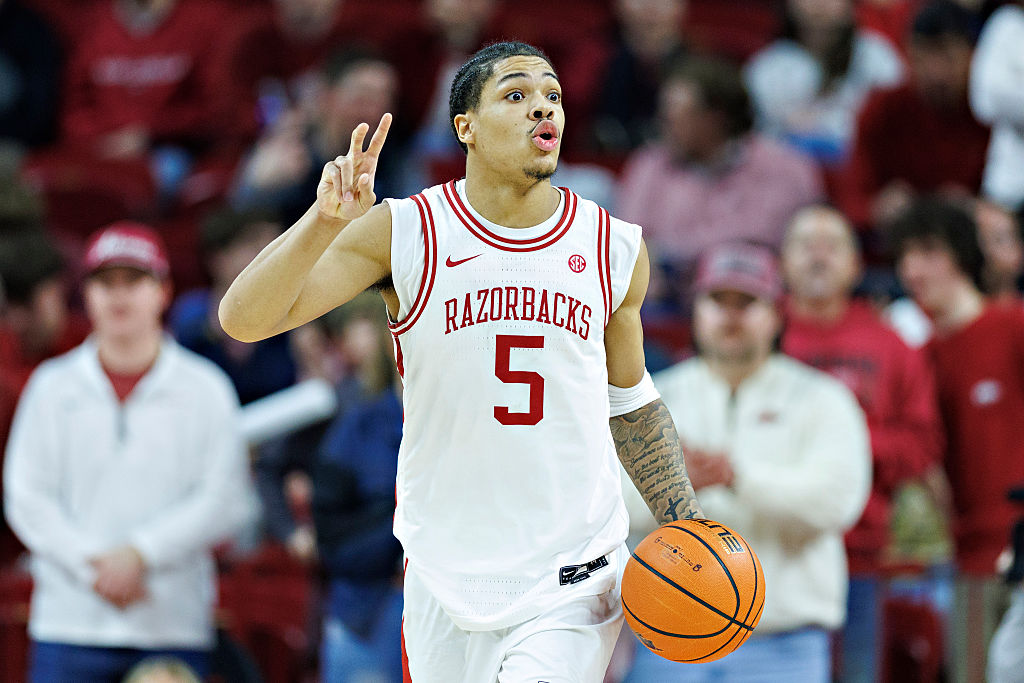
Another name entering the mix as a tier one prospect that could sneak inside the top four is Darius Acuff Jr. What the freshman point guard did at Arkansas this season was incredible. He averaged 23.5 points and 6.4 assists per game for John Calipari’s squad and showed NBA scouts and executives that he could coexist in the backcourt with other lead guards like Maleek Thomas and DJ Wagner. “In my time of 34 years coaching, I’ve never seen a point guard better,” Texas head coach Sean Miller said during the season. “If you look at Arkansas, the best thing they do is, they don’t turn the ball over and that’s because he has the ball in his hands 80 percent of the time. Greatness is how I would describe his game and guys like him don’t come into college basketball very often. He’s a generational player.”
Point guard lottery
The lottery is loaded with not only elite one-and-done talent, but also several talented lead guards. Some might consider Acuff the top of the list, but he lacks size (listed at 6-foot-3) and isn’t a great defender. Illinois’ Keaton Wagler had a great freshman year and came out of nowhere after being unranked in high school and exploded on the college hoops scene early in the season. Wagler, a 6-foot-6 guard, averaged 17.9 points and 4.2 assists per game and was instrumental in the Illini’s Final Four run, particularly in the Elite Eight game where he posted 25 points against a tough Iowa team. He still needs to grow into his frame but there are early similarities to Tyrese Haliburton that have teams intrigued, and he should be in the running as a top-five pick.
The other lead guards projected in the first half of the first round are Kingston Flemings (Houston), Mikel Brown Jr. (Louisville), Brayden Burries (Arizona), Labaron Philon Jr. (Alabama) and Christian Anderson (Texas Tech).
Alijah Arenas returning to USC for sophomore season
Arenas missed half of the season with a knee injury and even though there were glimpses of his NBA potential late in the season at USC, there were still lingering questions and scouts feel like they didn’t get a huge sample size.
Arenas only played 14 games during his freshman year and averaged 14.1 points, 2.9 rebounds and 2.1 assists. The 6-foot-6 guard has great positional size and handles the ball well. He only shot 21.3 percent from three-point range on four attempts per game and averaged three turnovers per game. His additional year will help with development; he’ll add some strength to his frame and will likely be a projected lottery pick in the 2027 NBA Draft.
Also joining Arenas next season are incoming five-star recruits Christian Collins, Adonis Ratliff and Darius Ratliff.
First international player off the board
In the past five years, there has been at least one international player taken in the lottery. Because this draft is so loaded at the top with American talent, there might not be an international player taken off the board in the first 14 picks. Hannes Steinbach is from Germany but he played one year at Washington, so technically he would be the first one off the board. The other player is Karim Lopez, who played in Australia’s National Basketball League this season. The 6-foot-8 wing is originally from Mexico but played one year with the NZ Breakers, where he averaged 11.9 points and 6.1 rebounds per game.
Who should stay in? Who should go back to school?
Each year there are several players who test the NBA waters and participate in the combine and individual workouts to get feedback from teams and see where they match up with other players in the draft. Because of the lucrative NIL market and next year’s draft being perceived as a weaker draft collectively, there should be a lot of players that elect to return to school for one more year. Lower first-round salaries range roughly from $2.1 million to $2.7 million. Many players that are projected late first round picks can make more money if they return to school.
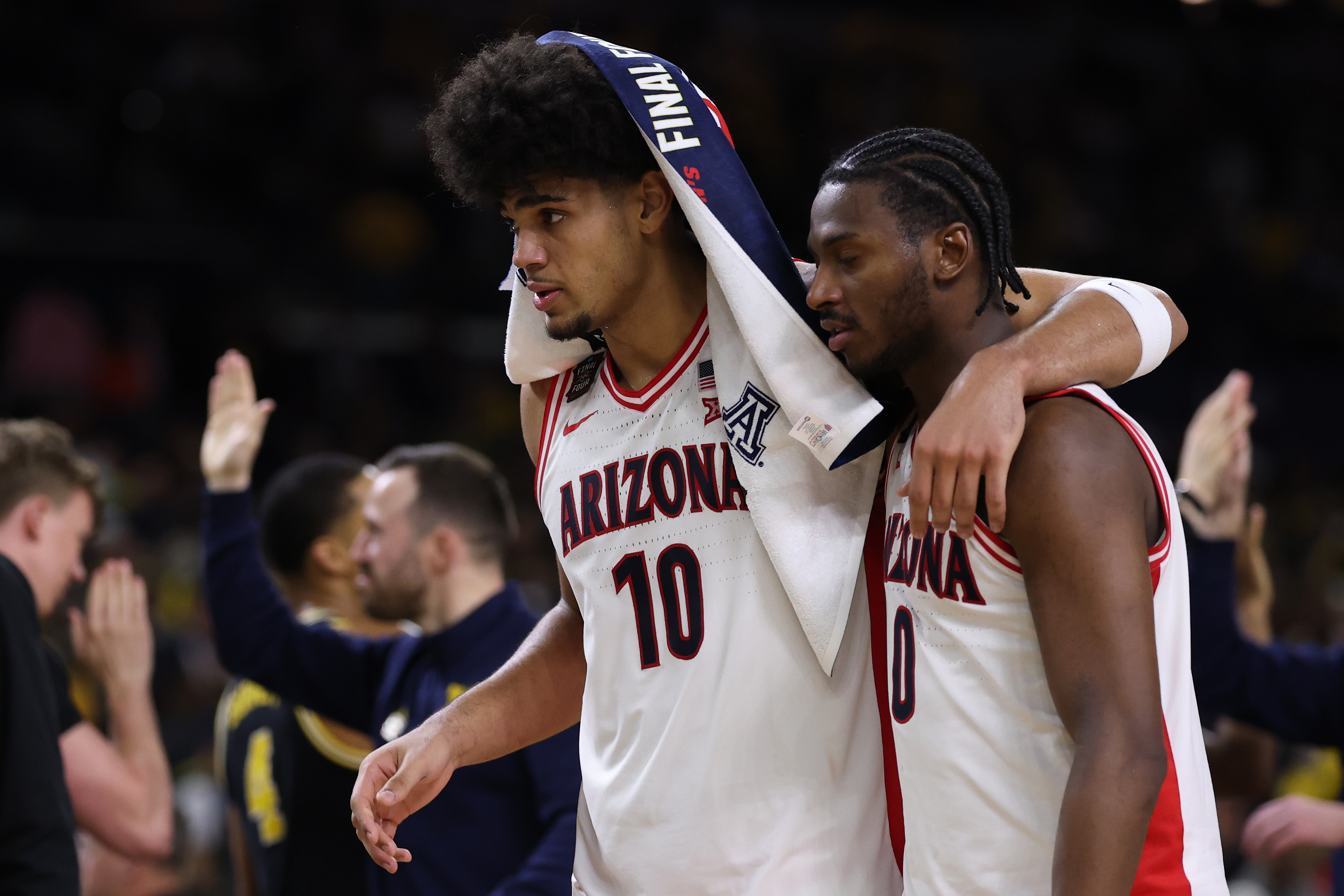
Koa Peat: Stay in the draft. He had a fantastic year at Arizona and although his outside jumper from behind the three-point arc still needs some work, his physical tools translate to the NBA and he can contribute right away to any secondary unit.
Tounde Yessoufou: Go back to school. It’s crazy that any player that averaged 17.8 points and 5.9 rebounds playing in the Big 12 is a fringe first rounder, but Baylor didn’t have a great year and Yessoufou still has questions surrounding his three-point shot and overall shot selection. He can make more money returning to school and will benefit from one more season of development playing against his peers and not fighting for minutes in the NBA.
Dailyn Swain: Stay in the draft. Things really started to connect for Swain in the back half of the season at Texas. He has great size as a wing and has the potential to be a very good 3-and-D guy in the NBA. Texas has five-star recruit Austin Goosby coming in next year and signed Mikey Lewis, Amari Evans and Elyjah Freeman in the portal.
Tyler Tanner: Go back to school. Tanner had an excellent year, and because this is such a heavy lead-guard draft, he could really help his draft stock if he returned for his junior season. Tanner, a 6-foot point guard, averaged 19.5 points and 5.1 assists per game at Vanderbilt.
Is next year’s draft really considered “weak?”
The short answer is, yes, but it’s not as bad as people think. NBA fans have been spoiled with last year’s draft and this year’s draft with young talent like Cooper Flagg, VJ Edgecombe, Kon Knueppel and Dylan Harper entering the league and performing at a high rate. This year, there will be a bit of the same with Dybantsa, Peterson, Boozer, Wilson and Acuff. Next year’s draft still has some incredible talent projected at the top with Tyran Stokes, Bruce Branch III and Jordan Smith Jr., but there’s plenty of room for players to move up and improve their stock in next year’s draft. It’s the reason why we’re seeing so many players elect to return for one more year, notably Arenas and UConn guard Braylon Mullins.
Meet your guide