The transfer portal is closed and the NBA playoffs have begun. That also means the NBA Draft is fast approaching. This year’s draft will be held June 23 and 24 at the Barclays Center in Brooklyn and there will be much to track between now and then, especially after the league holds its annual draft combine in Chicago next month.
You know all about the high-lottery picks like A.J. Dybantsa, Darryn Peterson and Cameron Boozer, but there are many other prospects who will try to move up draft boards over the next two months. Here is a list of players who are undervalued as the predraft season gets underway:
Hannes Steinbach, 6-foot-11 freshman forward, Washington
Steinbach had many fans in front offices before he even played at Washington. His stretch-five and rim protector archetype is in vogue, and he’s the perfect example of someone who will excel in a professional environment.
Steinbach produced in a primary role at Washington, averaging 18.5 points and 11.8 rebounds while shooting 34 percent on three-pointers. The German stretch big turns 20 years old next month, so he’s just scratching the surface of what he will become.
Before officially declaring for the draft, Steinbach was being chased by multiple blue-blood programs with NIL offers exceeding $5 million annually. The power of being paid to play in college athletics makes decisions like this have real thought behind it. That’s why UConn’s Braylon Mullins stayed another year instead of declaring.
Steinbach flew under the radar due to Washington’s mediocre season, but he could fly up draft boards if he showcases a consistent three-point shot in predraft workouts.
Christian Anderson, 6-foot-2 sophomore guard, Texas Tech
Many were waiting to see Anderson in a bigger role this season for the Red Raiders, and he showed enough to warrant staying in the draft.
Anderson’s analytical profile really stands out as a 6-foot-2 lead guard. Even as his usage went up almost 10 percent, Anderson’s efficiency rose. He averaged 18.5 points and 7.4 assists for the Red Raiders with a 62.6 true shooting percentage, a very respectable mark for a three-level guard creator.
One of Anderson’s underrated qualities is his footwork, especially in stop-and-start in one-on-one situations. Often, the sophomore guard was able to get his defender a step off for the easier look. Add in Anderson’s speed and there’s a super enticing prospect who could help an NBA team immediately.
Anderson likely will be fighting to sneak into the lottery range, but a top-20 lock is certainly in the cards here. And for a prospect like Anderson, being drafted to an immediate contender will allow him to properly slow-play his development learning behind veterans.

Tounde Yessoufou, 6-foot-5 freshman wing, Baylor
Yeesoufou originally was billed as a top-five pick in 2026 when he arrived at Baylor. After excelling at the Nike Hoops Summit, Yeesoufou was even receiving Anthony Edwards-lite comparisons from NBA scouts.
Once at Baylor, Yessoufou struggled with inconsistencies on a team that fell well below expectations. And unfortunately for the freshman wing, his stock took a hit.
Yessoufou will not come back to school, but he’s a prospect who might have benefitted most from it in the NIL era at a new power school. Yessoufou will now become a mid-to-late first-round selection as an athletic three-level wing scorer with tons of upside if placed in the right system.
Yessoufou averaged 17.8 points, 5.9 rebounds and 2 steals per game while shooting 29.3 percent on threes. If he becomes a consistent three-point threat, there’s no doubt Yessoufou will be one of the draft’s biggest steals.
In the NBA’s pace-and-space environment, Yessoufou could thrive much earlier than expected. However, he’s a prospect who will need to ripen before reaching his full two-way impact down the road.
Cameron Carr, 6-foot-5 sophomore wing, Baylor
Standing 6-foot-5 with a near 7-foot-3 wingspan, Carr already has NBA scouts talking due to his sheer physical traits. Add in the fact that Carr’s shooting mechanics are smooth — 37.4 percent on six three-point attempts per game — there’s a strong possibility he ends up being picked ahead of his Baylor teammate Yessoufou.
Transferring in from Tennessee, Carr shined in Scott Drew’s system, averaging 18.9 points on a 62.2 true shooting percentage.
In the NBA, Carr’s size, athleticism and shooting provides him an instant impact role. A modern wing in space-heavy offenses for added gravity, Carr can shine off-ball next to high-volume scorers.
Carr can be a fireball scorer, and he’s a prospect who could shine in predraft workout settings to raise his stock even further.
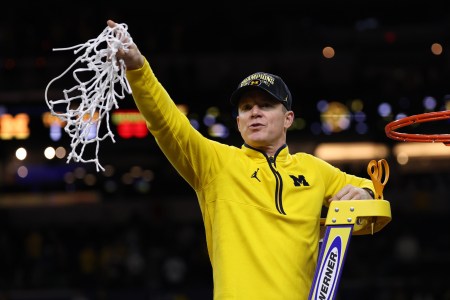
Hot Takes: Summer Recruiting, Dusty May, Eligibility and the 2027 NBA Draft
Seth Davis and Andy Katz discuss Dusty May’s jump to the NBA, the proposed 5-in-5 rule, the future of high school recruiting and more
Allen Graves, 6-foot-9 freshman forward, Santa Clara
Maybe no prospect blew up their stock more than Graves, who produced two eye-opening numbers to NBA scouts: 61.3 true shooting percentage and a 41.3-percent three-point mark. Efficiency is the name of the game nowadays, and Graves’ two-way profile slots him immediately into a potential second unit role.
Graves also does all the little things well – a connector with immense poise under pressure, secondary facilitation when necessary, energetic rebounding, innate instincts on and off-ball on defense.
Graves provides Glue Guy attributes in spades, which led to him winning the WCC Sixth Man of the Year and Freshman of the Year awards.
Graves could decide to go back to a bigger school, resulting in a higher payday. (Imagine the possibilities if Graves ended up somewhere like Purdue or North Carolina, for example.)
However, if Graves shoots well in Chicago, there’s no denying he will be a first-round pick this summer.
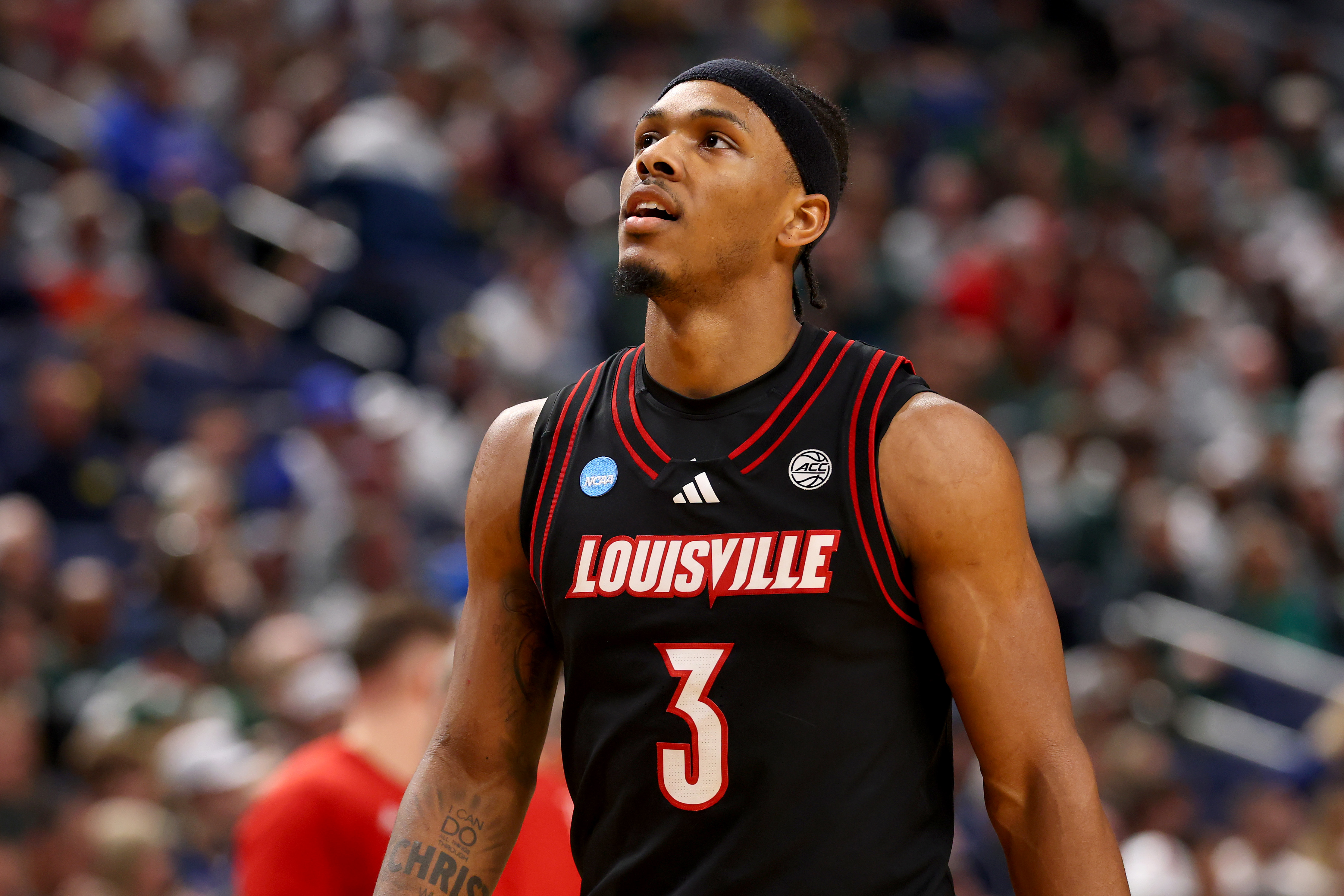
Ryan Conwell, 6-foot-4 senior wing, Louisville
I am higher on Conwell than the consensus. On my board, he is graded as a late first-round pick because he fits the billing for upperclassmen who can contribute immediately on the next level.
Conwell had a well-traveled collegiate career from South Florida, Indiana State, Xavier and Louisville. Along the way, Conwell consistently showcased his ability to be a spark-plug player due to his three-level scoring ability and length, which makes up for his rather inconsistent defensive abilities.
Whether it be movement, screens, handoffs or one-on-one, Conwell can get himself a bucket from anywhere. The Indianapolis product averaged 18.8 points, 4.8 rebounds and 2.7 assists for a talented Louisville roster also featuring lottery pick Mikel Brown Jr.
Conwell will fit seamlessly into the NBA, which is why he’s graded higher on my board. Conwell would be a fantastic fit on a team ready to win now who only needs to add scoring creation juice off the bench.
Possessing a highly translatable skillset and vast experience, it’s hard to envision Conwell failing as a professional.
Braden Smith, 6-foot senior guard, Purdue
One of the most decorated players in Purdue’s illustrious history, Smith is another prospect who falls into the bucket of top-tier production being held back in NBA circles by something he can’t change: size.
Smith answered every question possible as a four-year starter with the Boilermakers. An elite table-setter for big men like Zach Edey who then added more onto his plate as a scorer along the way, Smith slots right in as a future second unit patroller. In a similar ilk as TJ McConnell, that feels like the pure professional ceiling for Smith in that environment due to his 6-foot stature.
Smith averaged 14.3 points, 8.8 assists, 3.5 rebounds and 1.7 steals this season while shooting 36.2 percent on threes. Across 149 career starts at Purdue, Smith shot close to 40 percent from deep, a great indicator for him being able to fit into a short-term spot-up role off the bench for an NBA team.
The two-time All-American will end up being a late second-round pick or potentially undrafted, but he will end up a steal wherever he lands.
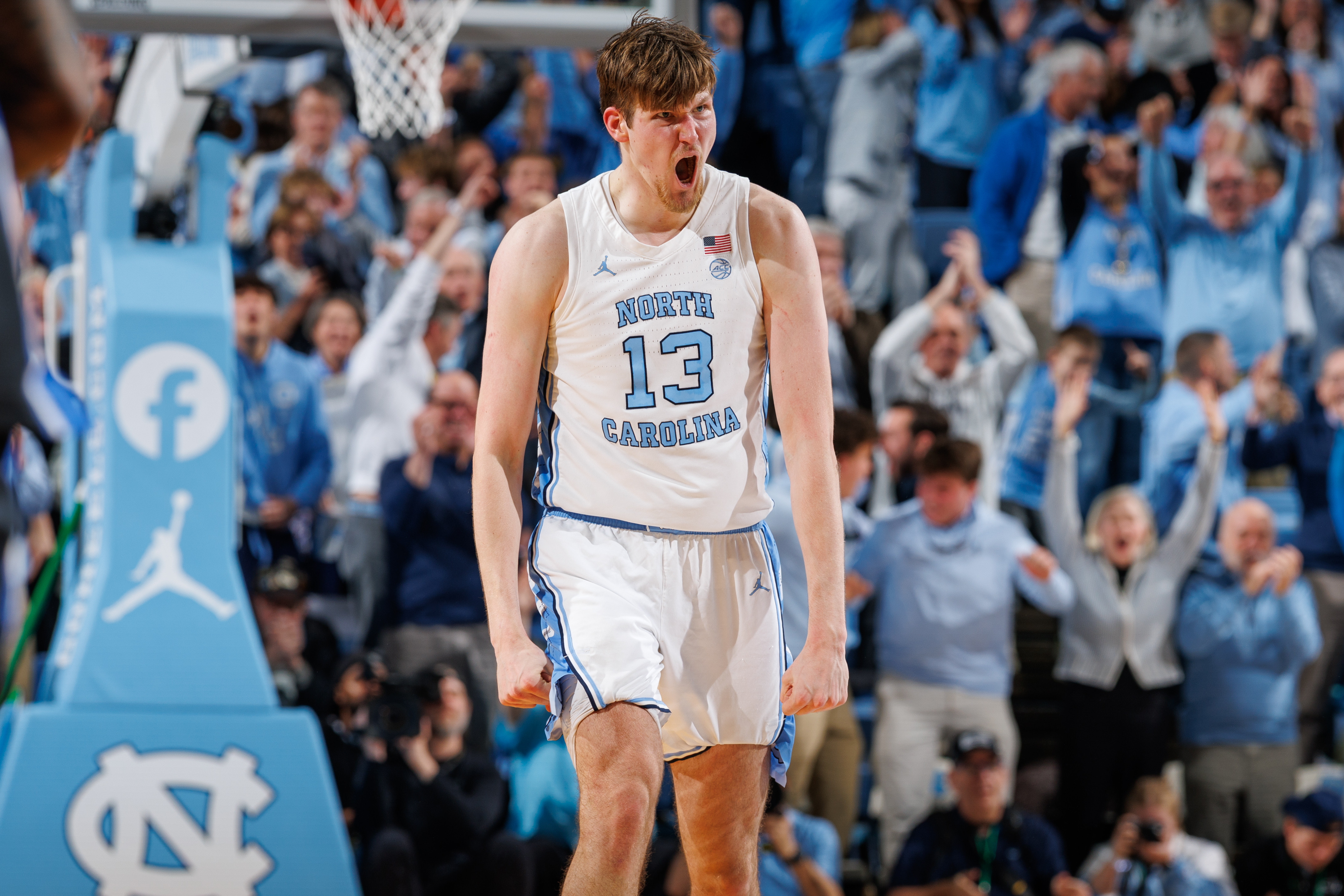
Henri Veesaar, 7-foot junior center, North Carolina
Veesaar, who officially declared for the draft over staying another year at North Carolina with new head coach Mike Malone, flashed plenty of intriguing upside for NBA scouts in a fully unleashed role.
Veesaar averaged 17 points, 8.7 rebounds, 2.1 assists and 1.2 blocks per game while carrying a 66.4 true shooting percentage.
Veesaar’s most intriguing contribution was the 40 threes he hit this season, adequately showcasing floor-stretching capabilities to go along with his plus rebounding and rim protection. Offensively, he excelled as a connector — screening, popping for threes, rolling hard and passing out of double-teams with a strong basketball IQ.
Veesaar enters the 2026 NBA Draft as an underrated prospect due to some scouts flagging his frame and inconsistent free-throw shooting, which can overshadow his elite efficiency and feel. As a seasoned upperclassman, however, he already offers skills many bigs develop over years in the league: legitimate stretch shooting, fluid mobility, high-post passing and the ability to finish through contact.
As teams prioritize skilled bigs, Veesaar’s blend of size, efficiency and versatility gives him a high floor as a plug-and-play second unit big who can space the floor, rebound and protect the rim without needing real usage.
Veesaar currently projects as a second-round pick, but a solid showing at the combine will push him up the board.
Emanuel Sharp, 6-foot-3 senior guard, Houston
Sharp closed out a decorated collegiate career with his strongest scoring season yet, averaging 15.5 points on a 58 true shooting percentage.
Sharp thrived as an off-ball specialist in Kelvin Sampson’s system, relocating constantly, running through screens and punishing closeouts with his quick-release jumper and deep range. Defensively, the physical guard applied point-of-attack pressure, navigated screens well and forced turnovers through anticipation and hustle.
If one thing is for certain, Sharp’s development at Houston is a solid sign he can be an instant contributor in an NBA rotation.
NBA teams constantly seek 3-and-D wings who stretch the floor, guard multiple positions and avoid mistakes, and Sharp checks every box. He offers instant rotation minutes with no long developmental curve.
Evan Sidery has covered the NBA in a national role since 2017 for various outlets such as Forbes, SB Nation and BasketballNews.com. You can follow him at https://x.com/esidery and TK
Meet your guide