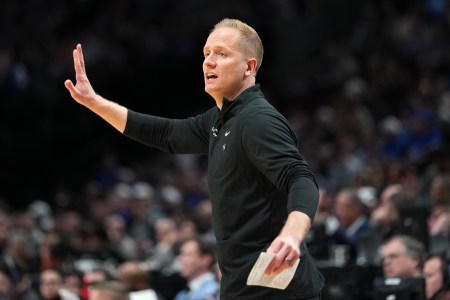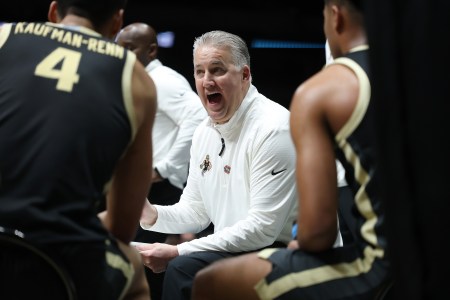

SAN JOSE, CALIF. — One of Arizona’s two losses this season came in overtime at home against Texas Tech on Feb. 14. The Red Raiders also played Arizona’s opponent in Saturday’s West regional final, Purdue, on Nov. 21 in The Bahamas, losing 86-56. Thus, Texas Tech coach Grant McCasland is uniquely positioned to answer a question that is hovering like a specter over the West Regional and increasingly the NCAA Tournament in general:
How do you solve a problem like Arizona?
The Wildcats have been part of college basketball’s Big Three all season, along with Duke and Michigan, both of whom advanced to the Elite Eight on Friday night. Lately, though, the Wildcats have been looking more like a Big One. They’re the only team that ranks in the top four on KenPom in both offensive and defensive adjusted efficiency. They carved up a quality Arkansas team Thursday night en route to a 109-88 victory, a laugher that stood in contrast to the more competitive games that Duke and Michigan survived against St. John’s and Alabama, respectively. Given that Purdue struggled to put away 11th-seeded Texas 79-77 in the earlier game Thursday night, it would appear the Boilermakers now face an all-but-impossible task. Arizona enters the game as a 6.5-point favorite.
So, then: How do you solve a problem like Arizona? “It’s all about paint points,” McCasland told Hoops HQ. “You’ve got to decide how you’re going to protect the paint. They get there in so many different ways. Only about 10 percent is post play. They do it through transition attacks. They do it through high-lows. They do it through penetration. And then they get there through offensive rebounding.
“They have literally every advantage to get paint points, and when they become unguardable is when they’re making threes.”
Gee, coach, thanks for the pep talk.
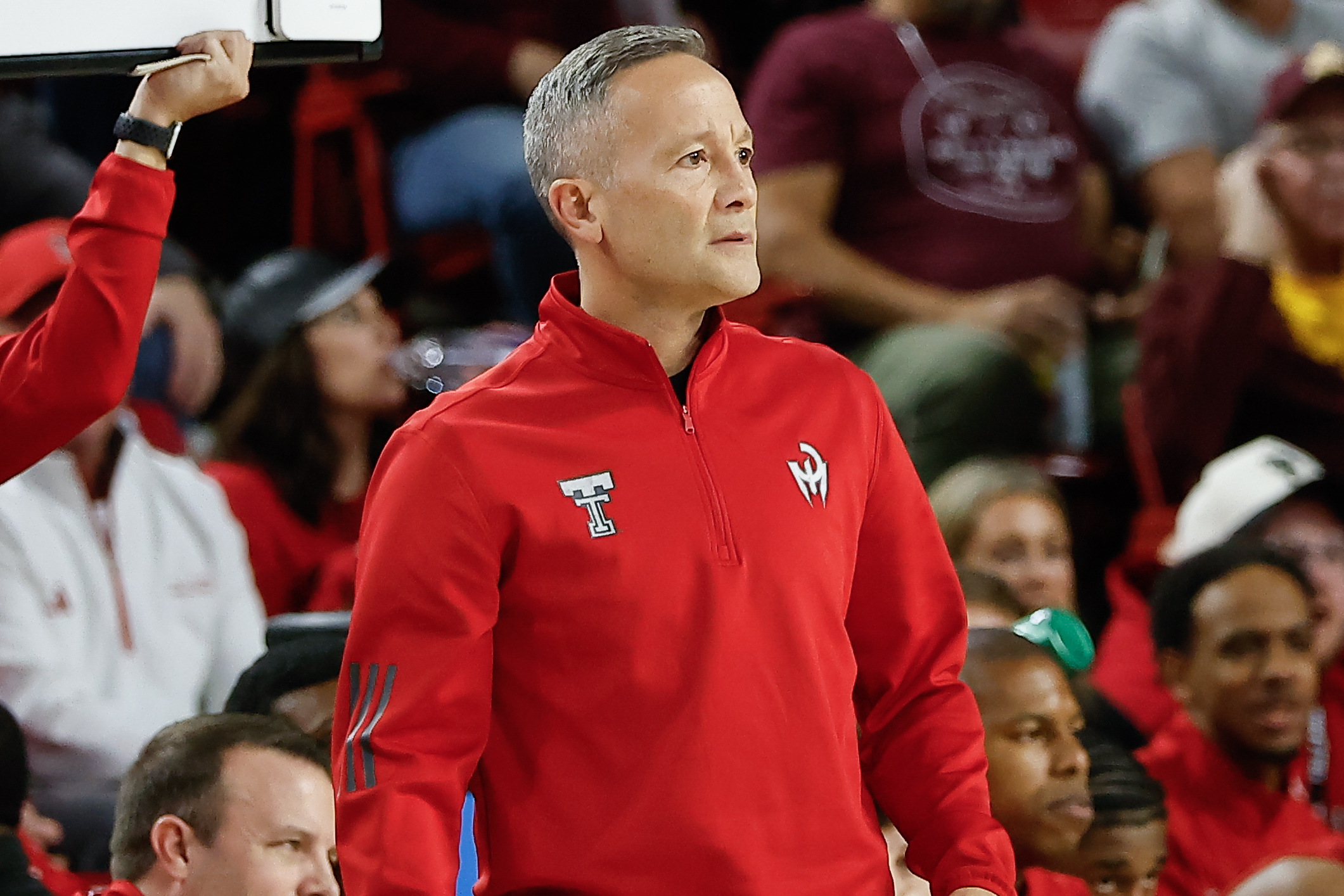
Arizona averages 42.4 points in the paint, the fifth-highest total in the country. Opponents score just 26.9 points in that area. When Texas Tech knocked off the Wildcats in Tucson, it was even in the paint, 26-all. Arizona grabbed two more rebounds, but Texas Tech got 12 offensive boards on 39 missed shots for a respectable 30.8 percent clip. Arizona made 10 more free throws, but only converted 4 of its 16 three-point attempts. Perhaps most significantly, Arizona freshman forward Koa Peat sustained a lower body injury late in the first half and did not return. Red Raiders junior forward J.T. Toppin went off for 31 points and 13 rebounds. And the Red Raiders still needed overtime to win by four.
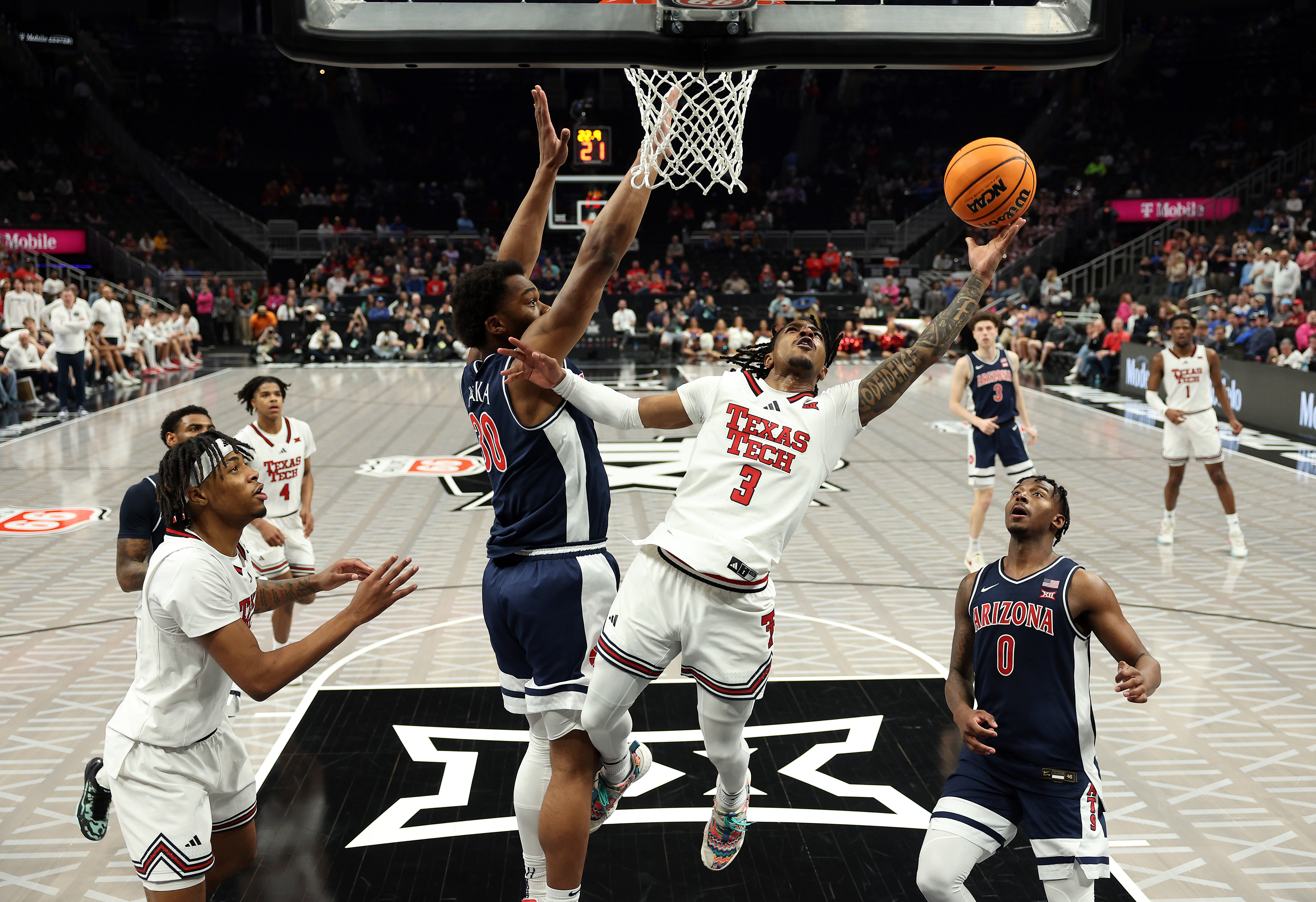
A big reason Arizona scores so prolifically in the paint is because it ranks fourth in the country in offensive rebound percentage, per KenPom. The glass attack is spearheaded not only by behemoth 7-foot-2 junior center Montiejus Krivas but also sixth man Tobe Awaka, a 6-foot-8 250-pound senior who plays just 21.2 minutes per game but leads the nation in offensive rebound percentage. “Awaka is a different deal,” McCasland said. “We played against everybody and fought them on the glass, but Awaka is unbelievable at it.”
Keeping the Wildcats, and especially Awaka, in check will be a group effort for Purdue, but the burden will fall most heavily on the team’s leading rebounder, 6-foot-9 senior forward Trey Kaufman-Renn, whose tip-in with 0.7 seconds to play was the difference in the Sweet Sixteen win over the Longhorns.
“Coach said (Awaka) could play for the Bengals right now,” Kaufman-Renn told Hoops HQ. “The plan is to block him out. Simple. It’s not so much a scheme thing. Either you want the ball or you don’t. I feel a little bit more pressure on me, but I’d rather have it that way.”
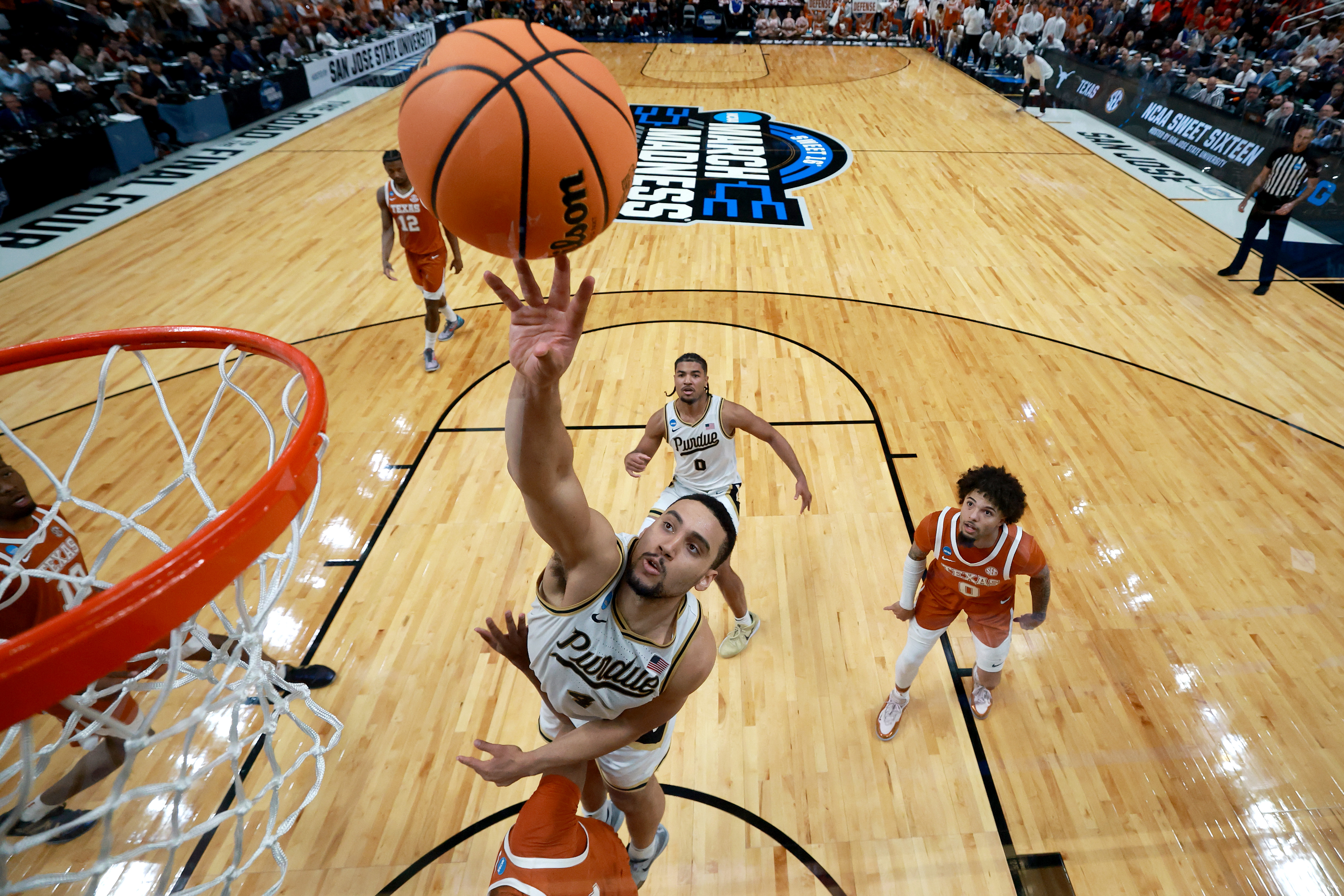
That’s not to say that Purdue doesn’t have a chance Saturday. The problem is that, much like Arkansas, the Boilermakers are not good at defending the paint. Purdue’s opponents are shooting 53.3 percent on two-point field goals, which ranks 249th nationally. Unlike the Razorbacks, Purdue does have a starter who can come close to matching Krivas’ size in 6-foot-11 senior center Oscar Cluff. He ranks fifth nationally in offensive rebound percentage and is effective at finishing around the rim. Protecting the rim, however, is another story: Cluff ranks 213th nationally in block percentage.
The Boilermakers are No. 36 on KenPom in adjusted defensive efficiency, but they are No. 1 in adjusted offensive efficiency and No. 19 in offensive rebound percentage. So if they can’t stop the Wildcats, perhaps they can outscore them. “Both teams are comfortable playing fast,” McCasland said. “You’ve got to be able to score to keep up with Arizona. And Purdue can score. That’s the one thing they can do, and that’s where I think they actually have a chance to win.”
The X factor with Arizona is its three-point shooting. The Wildcats make a respectable 36.8 percent from behind the arc but only attempt 26.4 percent of their shots from there. Only two teams in the nation hoist threes at a lower rate.
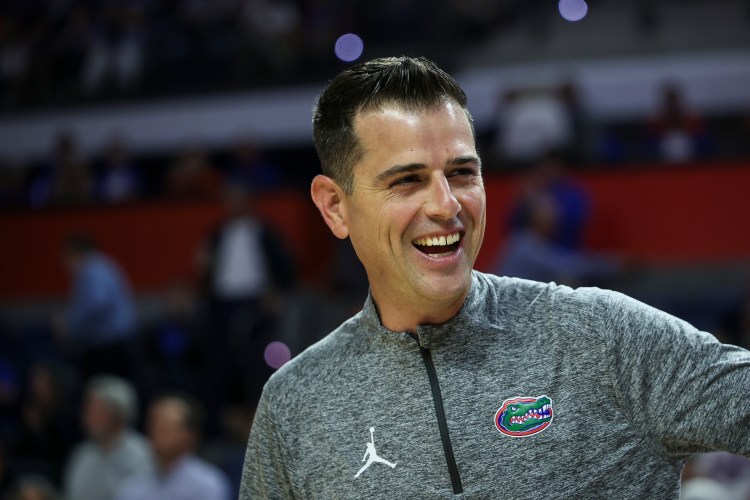
“The only way to beat them is make them settle for threes and hope they miss them,” said Auburn coach Steven Pearl, the only other coach whose team played Purdue and Arizona, losing to both. “They made like 12 mid-range jump shots against us, which were all shots we were really happy with them taking. It didn’t matter what we did because if they miss shots, they get half of their misses back. They’re just really good.”
There’s another reason it is becoming increasingly harder to beat Arizona, and that’s fifth-year coach Tommy Lloyd. McCasland knows Lloyd well. They have taken several international trips over the years and came up through the coaching ranks together. McCasland also was Lloyd’s assistant the past two summers with USA Basketball.
“He’s got a system, but he can adapt it according to each game, and he’s got an elite feel on knowing how to do it,” McCasland said. “He’s having fun with it. It’s a basketball game. He’s like Mark Few in that it means a lot to those guys and they spend their lives dedicated to it. But they do care about people more, and it comes across.”
It would be foolish to count out Purdue, of course. The Boilermakers are one of the most seasoned and talented teams in the country. The Big Ten has shown during this NCAA Tournament that it is an elite conference, and Purdue rose to the occasion by winning four games in four days at the Big Ten tournament. That included an 80-72 win in the final over Michigan, another team with prodigious size and paint prowess.
So it’s up to Purdue to try to solve this problem where so many others have failed. The Boilermakers may be the underdog, but they’ve been in this situation before and they’re not shrinking from the challenge. “They’re the No. 1 team in the nation for a reason,” senior point guard Braden Smith told Hoops HQ. “We’re just going to stick with the same plan. We can score at a very high level, and we’re very efficient doing so. We’ve improved on that the four years I’ve been here. Nothing’s going to change offensively; it’s just making or missing shots. They’re pretty good, but we’re good, too.”
Meet your guide