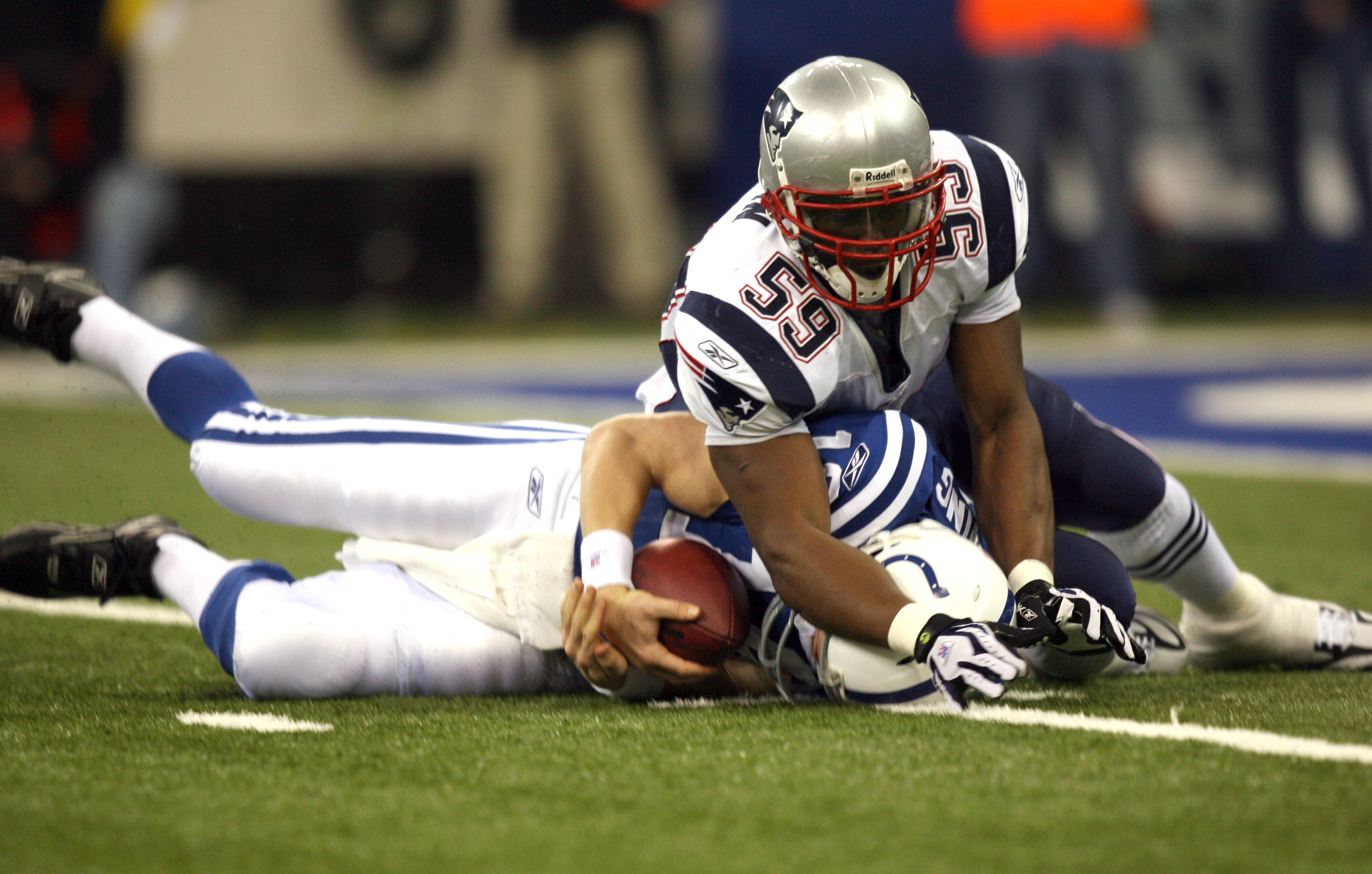
Like any proud father, Rosevelt Colvin hoped that one day his son might follow in his footsteps and pursue a career path similar to his. It’s a dream that ended the moment the two-time Super Bowl champion realized his son wasn’t physically suited for a future in football.
Myles Colvin was in the eighth grade at the time.
“He was going to have to be a receiver or a running back because he wasn’t an aggressive kid at that age, and I felt like it was going to be a detriment to him from a physicality standpoint,” said Rosevelt, who played 10 NFL seasons as a linebacker for the Bears, Texans and Patriots. “I didn’t want him in practice or in a game going across the middle or running the football and some 19-year-old kid that had four years of weight lifting and was ready to go to college hit him and hurt him in a way that was irreversible. After his eighth grade season of football I broke the news to him: ‘I hate to tell you this, but I’m going to shut down from football.’”
As disappointed as the younger Colvin was about the decision, the blow of being removed from the gridiron was softened by his ability on the basketball court. That and the fact that he was still able to carry on at least one family tradition by attending Purdue.
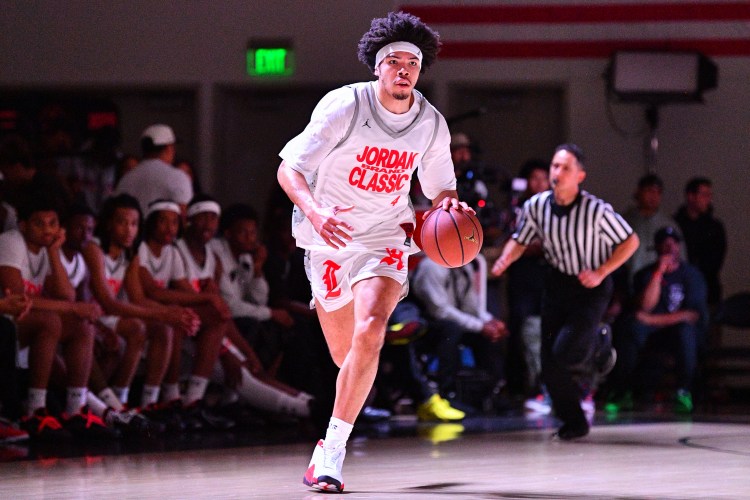
Myles was born to be a Boilermaker. His father is a member of the school’s athletic Hall of Fame. His sister Raven played volleyball at the school, earning first-team All-Big Ten honors as a senior. For his part, Myles participated in Purdue’s elite basketball camp from the time he was 13 and eventually accepted a scholarship to play for the Boilermakers.
Allegiance to the alma mater only runs so deep, however, which is why after two seasons coming off the bench, including a 12-minute run in the 2024 national championship game against UConn, Colvin made what he called “a business decision,” by entering the portal and transferring to Wake Forest.
“My family is big on loyalty and sticking with who you are, so leaving was really hard,” Colvin said. “All my people are at Purdue. But at the end of the day, I had to do what I felt was best for me and my future in basketball.”
The change of scenery made sense from a basketball perspective. With the return of Braden Smith, the nation’s top point guard, Colvin’s prospects for growth would have been limited had he stayed at Purdue.
But Wake Forest?
It might not have seemed like the obvious choice to leave a program with national championship potential for one that’s ended up on the wrong side of the NCAA Tournament bubble in each of the past four seasons. That wasn’t as important to Colvin, a former four-star recruit with NBA aspirations, as the Deacons’ recent history of transfer success.
Coach Steve Forbes has had a knack for finding hidden gems on the portal and providing those under-utilized players with an opportunity to blossom. Alondes Williams was the ACC Player of the Year in 2021-22. Tyree Applebee led the ACC in scoring a year later and Hunter Sallis, like Williams, used his time at Wake as a springboard to the NBA. All three are combo guards with similar profiles to the 6-foot-5, 212-pound Colvin.
“Those guys were all low volume at their previous schools,” said Colvin, a junior with two seasons of eligibility remaining. “To see them come here and thrive and play their game in the system Forbes has built was motivation that I could be one of those guys to show my talents and realize my dream to play at the next level.”
So far, so good.
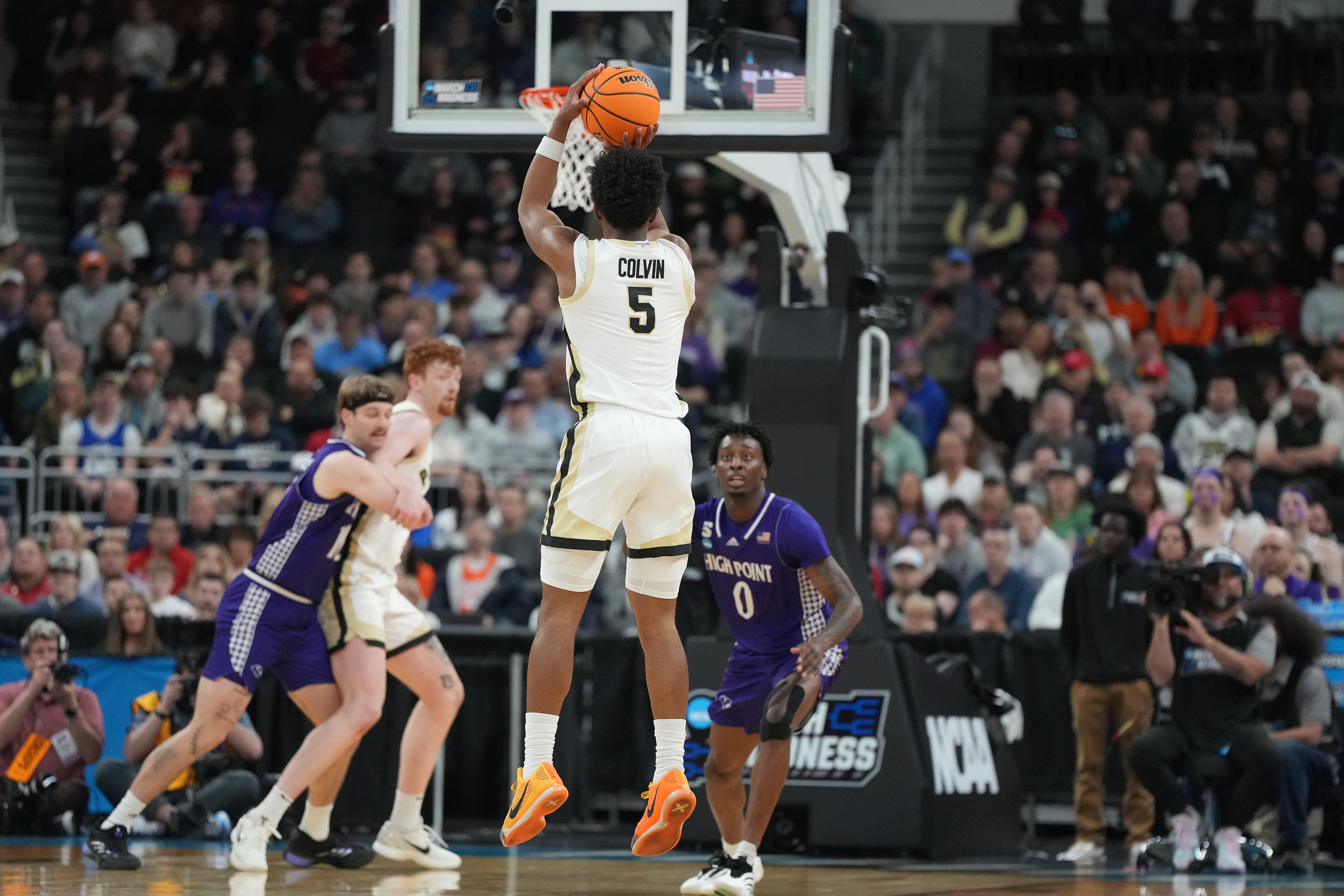
Through the first two months of the season, Colvin is averaging 13.5 points – eight more than his previous career high – to go along with 4.6 rebounds in just under 27 minutes per game. He’s produced a SportsCenter Top 10 highlight dunk in a one-point loss to Michigan, hit a buzzer-beating three-pointer to beat Memphis and on Dec. 14, he made his first 11 field goal attempts in a 33-point effort against Queens that earned him Oscar Robertson National Player of the Week recognition.
Success, however, didn’t come right away. Colvin found himself in a familiar role as an energy guy coming off the bench to start the season. Though it wasn’t exactly what he signed up for, you never would have known it the way he handled the situation. His extra work and effort in practice quickly paid off into his preferred starting role.
“I just thought he kept plugging in practice,” Forbes said. “There was no bad body language, no excuses, no ‘poor, poor me,’ because he was playing 27 minutes. That’s what I kept saying. There wasn’t much difference. I knew Myles is such a good kid, (coming off the bench) wasn’t going to affect him. He comes from different stock than a lot of kids.”
Colvin is hoping that the worth ethic he learned as the son of a professional athlete, combined with his talent and the experience gained as a member of a Final Four team, will be the intangible that helps Wake Forest finally get over the hump onto the right side of the NCAA bubble and catapult him on to a professional career of his own.
Even if it’s not in the sport he once dreamed it would be.
“I played football all the way up to middle school and it hurt me a little bit when my dad told me to focus on basketball because he played in the NFL and all that,” Colvin said. “But I think it was the best decision I could have made.”
Meet your guide