
One week into the 2026-27 season, we’ve already seen some real surprises and disappointments in the early games.
Ultimately, there’s plenty of time for those disappointing teams to improve and be in the NCAA Tournament picture in March. For now, here are 10 glaring warning signs which have emerged at the start of the season.
1. Purdue’s rough backcourt play
Losing to Gonzaga on opening night was understandable but falling to Valparaiso in overtime was a five-alarm fire for the rebuilding Boilermakers. Perimeter play is the biggest issue, with 6-foot-3 sophomore guard CJ Cox (12 points per game) the lone double-digit scorer so far. Even more concerning is the combined 20-percent shooting from three-point range, good for bottom 15 in the entire nation.
2. Dayton’s Anthony Grant back on hot seat
Flyers fans have gotten restless with head coach Grant, with many wanting the program to make a change. Falling to Northern Illinois in overtime — a team ranked around 300 in KenPom — was the worst case scenario. It’s early and Dayton has a history of getting signature wins in the nonconference, but this Quad 4 home loss could ruin their at-large hopes — which could be too much for Grant to overcome.
3. Tennessee’s depth chart and pecking order
Tennessee flashed a big warning sign during the preseason, and it continued early on, as the Vols were up just three against Wofford at the half. They did go on to win by 41, but larger questions remain. Two of the team’s biggest offseason pickups, 6-foot-3 junior guard Terrence Hill Jr. and 6-foot-7 junior forward Juke Harris, came off the bench on opening night, and questions concerning point guard play and the frontcourt against high-major opponents is something to watch. We’ll get a great look at the Vols on Nov. 17, when they face Michigan State.
4. Villanova’s point guard play
Ball control was a major issue for Villanova in the season-opener loss to Notre Dame. The Wildcats turned it over 20 times, compared to just 12 assists. Six-foot-4 senior guard Tyler Perkins is the new lead guard but he’s not an elite facilitator. They’ll need 6-foot-5 senior guard Elijah Crawford to have a major impact as arguably the lone true ball-handler on the roster against high-major opponents.
5. Illinois overall health
Illinois scored at least 112 points in both of its easy games to start the season. But the schedule heats up soon, with road contests at Texas Tech and Duke in the next 14 days. They’ll be without two key players in 6-foot-9 sophomore David Mirkovic (foot) and 6-foot-6 senior forward Jake Davis (shoulder), both out indefinitely with injuries. If the Illini can’t get these key wins in the nonconference, it’ll impact their chances of getting a high seed in the NCAA Tournament. Plus, it’s still unknown when they’ll get Mirkovic back.
6. Arizona’s depth outside of key trio
The Wildcats falling 84-75 to UCLA on opening night wasn’t a warning sign in itself. But it was the way it occurred that caused concern. Two players, 6-foot-7 sophomore forward Ivan Kharchenkov and 6-foot-3 sophomore guard Derek Dixon, combined for 37 of the team’s 60 field goal attempts, with 6-foot-5 freshman guard Caleb Holt and 7-foot-2 senior center Motiejus Krivas struggling. From what we’ve seen, depth is a concern for an Arizona squad that needs all four starters to have a big outing for them to win against top-25 opponents. They need someone from the supporting cast to emerge soon.
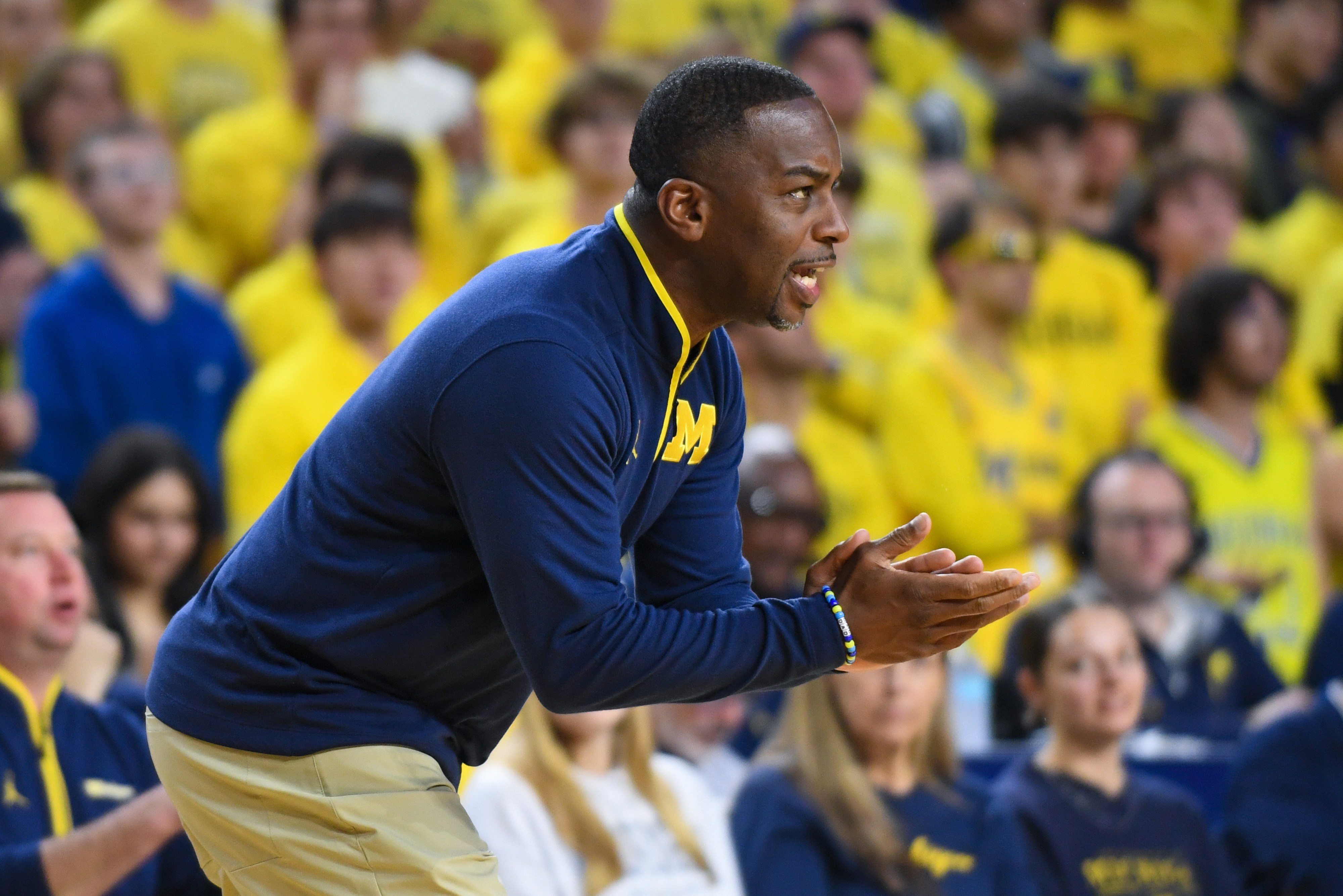
7. Mike Boynton’s path to 24 wins at Michigan
Michigan losing to UConn to open the season is understandable, but Boynton’s reality still makes him an early loser. He needs to win 24 regular season games and finish in the top four of the Big Ten standings to earn another year, barring a surprise postseason run. The good news is that the next trio of key games comes against worse Big East opponents (Creighton, Marquette, Villanova).
8. Oklahoma’s brutal Quad 4 defeat
The Sooners were without last year’s leading scorer, 6-foot-3 senior guard Xzayvier Brown, on opening night, but it still doesn’t excuse their 68-64 home loss to East Texas A&M. It’s a Quad 4 defeat that’s going to affect their at-large metrics for the rest of the season, without a real chance to make up for it in the nonconference. This makes getting multiple Quad 1 wins in SEC play not just a necessity, but a requirement to feel good about making the Big Dance.
9. Missouri’s defensive woes
Losing to a Saint Louis squad with top-25 talent isn’t a big deal. But the Tigers’ defense in the 90-84 defeat was downright bad. They allowed 52-percent shooting from the field and 14 of 26 from three-point range. Plus, as bad as 6-foot-4 freshman guard Jason Crowe Jr. was on offense (3 of 18 from the field), a case can be made he was even worse on the defensive end. Missouri will have to clean that up to be an SEC contender.
10. Oregon’s hopes of being competitive
With head coach Dana Altman stepping down right before the start of the season, the Ducks were effectively written off as a threat in the Big Ten. Instead, they are 2-0 with wins over Montana and Eastern Washington, but 6-foot-6 junior wing Tyrone Riley, who scored 17 points in the first game, is out for the next 4-6 weeks with a hand injury. After next week, the Beavers’ schedule heats up in a big way, taking on UCLA, USC, and St. John’s. Without Riley, it’s hard to envision them winning many of those contests.
Meet your guide