
Win or lose, the notes pour in, a bombardment of direct messages and comments varying from light jabs like “You suck!” or “You lost me money!” to alarming death threats.
“Some of them are pretty crazy,” Virginia senior guard Dallin Hall told Hoops HQ. “Just random people saying, ‘I hope your plane crashes or you die or your parents die.’ There are a bunch of crazies out there.”
“You hear from people threatening you by saying, ‘You need to send me money or else I’m going to kill your family,’” added Hall’s teammate Malik Thomas. “Or you got people saying, ‘Go kill yourself.’ It’s all types of different things. I saw a DM yesterday saying, ‘You need to send me my money back.’”
In the age of legalized sports betting and NIL, the harassment of college athletes has dramatically increased. Fans feel entitled to be more critical and hateful now that college players are being compensated like professionals. Look no further than the intense backlash Duke players have faced in the wake of their collapse in the Elite Eight against UConn on Sunday. A simple scroll through the comments of freshman Cayden Boozer’s latest Instagram posts reveals all, as sprinkled among encouraging remarks are scathing critiques (gifs of trash bags and choke signals) and requests for money (“What’s your Venmo?”).
Sports betting undeniably boosts fan interest, but there is clearly a dark side. Much of that dialogue has centered on threats to the integrity of sports, and rightfully so. A gambling scandal rocked college basketball earlier this season, with at least 39 players allegedly taking part in fixing games. But many believe not enough public attention has been paid to protecting the mental health of athletes, particularly those who are still young and developing their senses of identity. Betting-related abuse can do serious harm to college kids, and unless there are substantial changes made to the gambling landscape, the issue will only worsen in the coming years.
In the NCAA’s latest Student-Athlete Needs, Aspirations and Perspectives (SNAP) survey, which was filled out by more than 7,000 Division-I student-athletes, nearly 60 percent of the college basketball players polled indicated that sports gambling has contributed to “unfair public scrutiny of athletes.” Men’s basketball players reported the highest rates of betting-related abuse among the athletes surveyed, with one in three receiving direct blame by fans for betting losses. A more expansive study conducted in 2025 — featuring responses from more than 20,000 student-athletes — found that 51 percent of Division-I men’s basketball players had received social media abuse based on their performance.
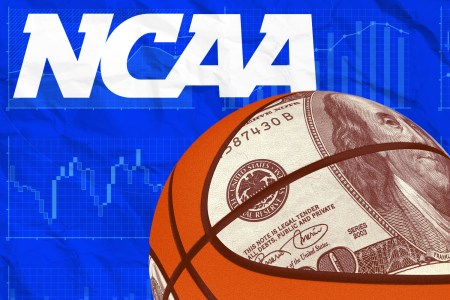
During March Madness, fan harassment rises to another level. The American Gaming Association estimated that approximately $3.3 billion will be bet on the NCAA men’s and women’s tournaments with U.S. sportsbooks this year. On March 12, a week before the tournament began, the NCAA launched a PSA as part of its “Draw the Line” campaign to bring awareness to the harassment that student-athletes are facing due to sports gambling.
Why the Protect College Sports Act Is Good For Athletes
It’s unfortunate that student-athletes did not have more say in the negotiations, but the PCSA would still give them a big win if it becomes law
“When we’re looking at the harassment, the pressure and the social media backlash, it is easier for an adult who is very secure in themselves to be able to separate that from who they are as a person,” said Dr. Marc Cormier, an associate professor at Kentucky who coordinates all counseling and performance psychology services for the UK athletic department. “It’s really challenging for an 18-year-old impressionable kid to look at the media and what people are saying about their performance and say, ‘Oh, that’s not me. Those are just people who are saying things, but I’m not going to internalize that.’”
“I’ve been dealing with it since freshman year, so it’s whatever to me now. But it definitely can take a toll on a person,” UCF senior Riley Kugel told Hoops HQ. “And it definitely doubles during March Madness.”
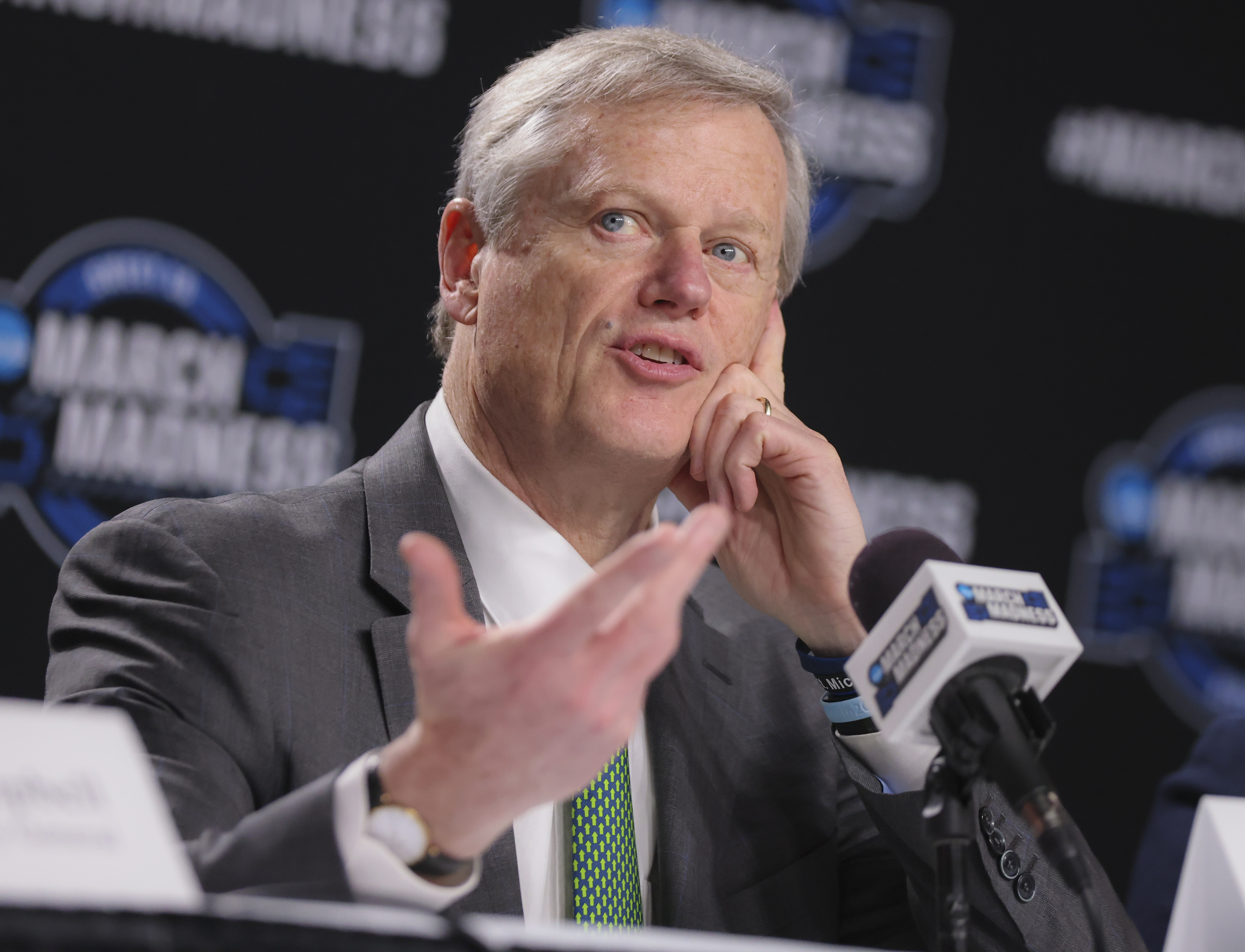
One of the biggest drivers of betting-related abuse is player prop bets, which enable gamblers to wager on individual statistics, such as Kugel’s points or Thomas’ rebounds. Those sorts of wagers are available in more than half the states that have legalized sports gambling. The NCAA has repeatedly called upon state regulators to adjust laws to eliminate player props at the collegiate level. NCAA President Charlie Baker wrote an open letter to state gambling commissions regarding the subject in January, which also pointed out that prop bets increase the risk of spot fixing and insider information being solicited.
“This time of year can be magical for so many players, but it also can quickly become a nightmare due to abuse from fans engaging in sports betting,” Baker said in a statement. “The NCAA is actively working to protect college athletes by monitoring abuse through our collaborations with Signify and Venmo, and we are doing everything we can to prevent student-athletes from experiencing this type of abuse. But sportsbooks and regulators in some states can do more now by eliminating the prop bets we know are leading to harassment.”
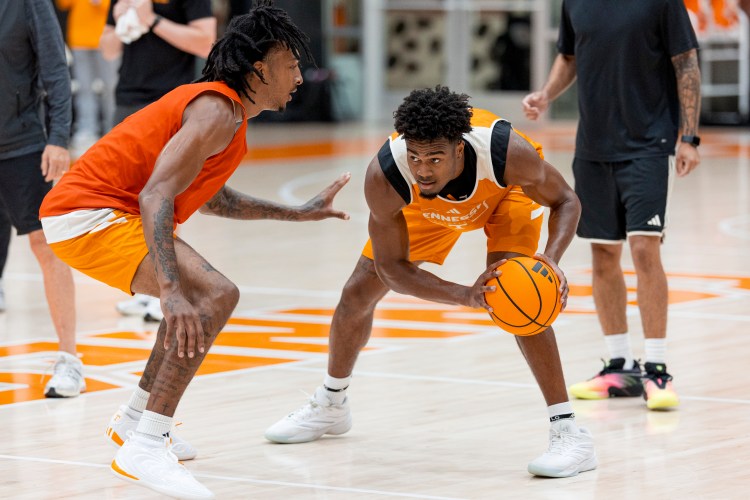
The advice from coaches and upperclassmen to players experiencing March Madness for the first time is straightforward: Stay off social media as much as possible. Of course, that is much easier said than done. “They’re young. It’s fun. They want to see what’s being said,” Tennessee assistant coach Gregg Polinksky said. “They’re following players on other teams, and then something pops up.”
In the days of NIL, there’s also pressure on college athletes to cultivate followings on social media. More followers can lead to more sponsorships and ultimately more money. Once players secure NIL deals, they have to be on social media to carry out the terms. Amid the tournament, UConn senior Alex Karaban — whose Huskies are playing in the Final Four this weekend — usually has his agent handle brand-related posts. “You just want to limit as much noise as you can,” Karaban said.
Other players keep burner phones to avoid unwanted messages while still being able to communicate with family and friends.
Head coaches often address the issue of fan harassment directly, warning their players about what’s to come, even though most of them have grown accustomed to it by March. Tennessee junior Jaylen Carey told Hoops HQ that it ramped up during the Players Era Festival in late November, a new multi-team event held in Las Vegas that’s set to expand for the 2026-27 season.
Carey’s teammate Cade Phillips, also a junior, said that he deleted Twitter (now X) immediately after his first big college basketball game on Nov. 29, 2023. It was a nationally televised matchup with North Carolina and Phillips struggled, finishing with zero points and two turnovers in a 100-92 loss. Afterward, he was scrolling through Twitter when a post caught his eye. “There were some expletives in it, but it was like, ‘Why in the world is Cade Phillips on the court right now?’” Phillips recalled. “I deleted Twitter that day and have not gone back on it since.”
That is the best method to avoid the avalanche of abuse, although not all of it is contained to online platforms. Of the men’s college basketball players who reported betting-related harassment in the recent SNAP study, 26 percent said they had received verbal or physical abuse. “I’ve been in games where I’ve heard guys yell out, ‘Come on, I need the over!’” said Polinsky. “It really is a new era in which we live.”
Since college athletes are still in critical developmental phases, a major concern is that they will have difficulty separating their self-worth from the outcomes of games. According to Cormier, there is a higher risk of athletic identity — “I am my performance, as opposed to I am X who performs” — among college kids, and that can be dangerous.
Proactively educating student-athletes about the issue is essential to minimizing potential harm. “The goal of that is not just to outline that this is going to happen, but outline why it’s happening,” Cormier said. “Teaching them how betting culture actually works and why the reactions are so extreme.”
Thankfully, there are more mental health resources available to student-athletes today. Over the past decade, athletic departments have employed significantly more sports psychologists and mental health professionals. Players also lean heavily on each other for support, since they’re all exposed to similar abuse. The bonds between teammates make dealing with the constant flood of messages — however cruel and obscene — a lot easier.
All of those tactics are especially important during March Madness, when perhaps the only predictable outcome is that there will be plenty of outside noise from disgruntled gamblers.
“People are always going to have something to say, no matter what you do. If you play well or you play badly, they’re always going to have something to say,” Thomas said. “Those things are hard when you’re dealing with them by yourself, but we have a community.”
Meet your guide