
Kelvin Sampson joined Seth and Andy on The Hoops HQ Show. Stream the full episode on YouTube, Spotify or Apple Podcasts.
Seth Davis: Hello, everybody, and welcome to the Hoops HQ Show. Seth Davis, along with my friend and partner Andy Katz, who is joining us all the way from paradise — Maui — at the Maui Invitational, Andy’s annual boondoggle in paradise. And the only reason he’s actually on the show is because the all-you-can-eat buffet just ended, and any member of the media is going to take advantage of a buffet. So, Andy, great to be with you.
Joining us from H-Town, Houston, Texas, the young, up-and-coming rising star in the coaching profession: Kelvin Sampson, head coach of the Houston Cougars. And yes, your eyes are not deceiving you. Kelvin is in his version of a good mood. So happy advance Thanksgiving to you, Kelvin.
In full disclosure, we are recording this on Sunday afternoon. The AP Top 25 poll is going to come out sometime on Monday, and this show is airing on Tuesday. So I fully expect that by the time the show airs, the Houston Cougars will be the No. 1 team in the country after beating Florida and Kansas at the Players Era. I’m an AP voter, so they’re definitely No. 1 on my ballot — and I can tell you Kelvin does not care about my opinion.
But, Kelvin, let me start with this. Remember the old Charlie Brown cartoon, when Charlie Brown would go to kick the football and Lucy would pull it away every time? I keep waiting for your program to dip a little bit, and maybe you’ll have your time this season. You made the Sweet Sixteen last year. You lost a lottery pick and a great player in Kingston Flemings, plus three other starters. So you lost four starters and brought back one starter plus two reserves, and if my math is correct, you added five transfers and three freshmen. And you just beat the No. 1 team, Florida, and another top-five team, Kansas, to presumably become the No. 1 team in the country.
How is Houston this good this soon?
Kelvin Sampson: Well, most media is attracted to shiny pennies. There are a lot of shiny-penny names out there, and we’re not one of them. It doesn’t matter who we have coming back or who we’ve got coming in. There are like 10 schools where you keep shuffling the deck and landing on one of those every year, because they’re the mainstream basketball programs — and rightfully so. When I was growing up, it was Dean Smith and North Carolina, and then it was Mike Krzyzewski and Duke. Norm Sloan and David Thompson. UCLA with Coach Wooden. Indiana with Coach Knight. The traditional schools. We’re not traditional. We were in the desert, wandering around, living off mirages and dust for a long time. But we just keep doing what we do.
I’ve known you and Andy for a long, long time. We don’t seek attention. We don’t really need it. It’s not really that important to us — I think it’s probably more important to other people than to us. I just like to work in anonymity.
I knew in June that we were going to be good, because of how we recruited this team and put it together. I think the idea came after the Florida game in ’25. With eight minutes left in that game, we were in pretty good shape. And then JoJo Tugler gets his fourth and fifth fouls, Ja’Vier Francis gets his fourth and fifth fouls, and they still had Alex Condon and Rueben Chinyelu and Micah Handlogten and Thomas Haugh. They had four monsters, and no matter who was on the floor, they had two. When the game started, we were fine. We weren’t in foul trouble. We had J’Wan Roberts and JoJo, and we could sub in Ja’Vier. But we didn’t have a fourth. And I learned a valuable lesson that day.
Now, we won 35 games, so it’s not like we made some huge mistake. We won the Big 12. I think we went 19-1 that year, 10-0 on the road. So it’s not like, “Well, you guys made a bad —” No, we were fine. But foul trouble is something that can get you, especially on the road. So that night, or the next day on the road back from San Antonio, I was making notes on the areas I thought we needed to improve in the offseason. And one of the things I wrote down was depth up front.
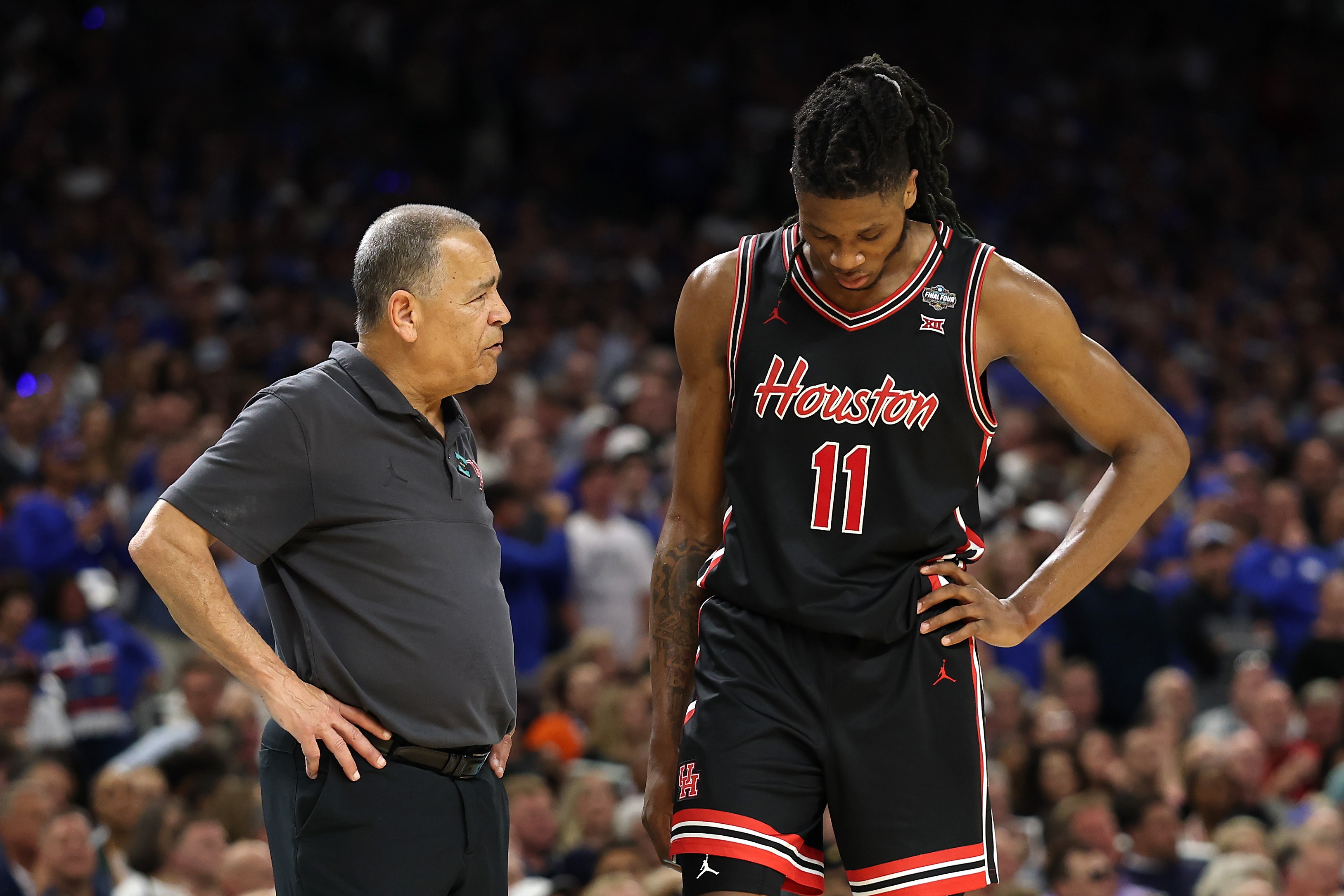
But we couldn’t do anything about it that year, because we’d already signed Chris Cenac, we knew JoJo was coming back, and we kind of knew we were going to sign another big, and it wound up being Kalifa Sakho. So last year we were just kind of biding our time, I guess. We had a good year — a great year. Any time you go to the Sweet Sixteen. But the thing about last year wasn’t the two freshmen who were starting. It was that the other two freshmen were in our top eight, Isaiah Harwell and Chase McCarty. So we were playing four freshmen in our top eight, and that didn’t sit well with me. We were coaching things in late February and March we shouldn’t have had to coach, just because of inexperience.
Once we got to April and May — I had never really bitten down on the transfer portal, because we always raised our food in the backyard. We’d go out there, pick it, clean it, put it in the pot and cook it. That was just the way we did it with freshmen. Marcus Sasser was a freshman. Jamal Shead was a freshman. JoJo, a freshman. J’Wan, a freshman. All of our main players, we’d had for four or five years. Emanuel Sharp, freshman. Kingston, Chris. We always had freshmen. We didn’t really do a whole lot with the portal.
But we didn’t think we would lose Kingston after one year. I thought we’d have him for two. I knew we would lose Chris. That accelerated things with the portal. We had a lot of kids calling us, and we had to shuffle through: OK, who’s a fit? We don’t take statistics here. We take character. You could average 25 points a game, and I’d rather coach against you.
It helped that Delrecco Gillespie played for Rob Senderoff at Kent State. Rob and I were together at Indiana, and Rob is not just an unbelievable human being, he’s a great coach — the all-time winningest coach in Kent State history. So that really helped us. And then Braden East played for Alvin Brooks, another of my former assistants, at Lamar. When we started watching film of those two guys, we got excited, because they both had a nose for rebounding.
At the guard position, we were lucky that most of our guys don’t transfer. Most guys in Mercy’s position would have left after his freshman year. That’s what guys do today. And for sure he wouldn’t have come back after his second year. Same thing with Chase. I redshirted Chase, and then last year he started coming along, but most guys would leave. That’s what they do today. But they both came back. So we were looking for a guard who could start but had the wherewithal to come off the bench, and we settled on Corey Hadnot II. I think Corey’s best days are ahead of him. He’s a good player; he just hasn’t shown it yet.
Then late in the summer, Chendall Weaver’s name came up, and there was some discussion over that. But we said, “You know what? That kid was put on earth to play in this program.” He looks like us, acts like us, comes from a great family, is a hard worker, and he wanted to come. So we have the kind of kids we’ve always worked with. That’s why I thought we were going to be this good.
I always think we’re going to be good. I always think we can win our next game, no matter who we play and no matter where it’s at. If we just do the right things, prepare the right way and our kids have the right attitude, I always think we’re going to have a chance to win the next game.
Andy Katz: I have Houston as my March Madness team of the week and the No. 1 team in my Power 44, after everything they just accomplished. I’m going to go back to 2025, since you brought it up. I’ve been doing this a long time, 30-plus years, and I will tell you that when I talked to you after that game for Westwood One in the locker room, I thought it was one of the hardest postgame interviews I’ve ever done after a loss, because I felt so bad for you. You were so close. I know how hard you’ve worked for this, and you were right there. And there was a part of me that thought, “Does he walk away on top, even though he came up just that short?” Now, coming up on two years later, I can’t believe I even thought about that for a second, because there’s no way you look ready to stop anytime soon.
Was there any point where you thought, “We’ve reached the title game, we’re this close, I’m ready to move on?”
Sampson: That was a tough locker room. It was a big locker room, and a bunch of guys were consoling each other. Our kids weren’t crying; they were wailing. It was an extremely, extremely hard locker room. Very rarely am I at a loss for words, and I wasn’t sure what to say.
But my father taught me a valuable lesson. He was always a simple man; his greatest strength was his common sense. He said, “Don’t ever forget to give the other team credit. And don’t ever forget to take the blame. Never blame your players.” I had so many thoughts running through my mind, but I had to get them together, because I wanted to make sure people understood that we didn’t lose the game. Florida beat us. I didn’t want to take anything away from Todd and his staff — they have an awesome coaching staff — and those big donkeys they had up front, with those three guards. It was the best team we had played. We had just played Duke and Purdue and Tennessee, but Florida was the best team we played that year, and I wanted to make sure people understood that. They had just won the national championship. I was not going to go in there and talk about how we should have won. Nope, that’s not the way I was raised. Florida won that thing.
And number two, the seniors: J’Wan Roberts, Ja’Vier Francis and LJ (Cryer). I knew Milos and Emanuel and those other guys could come back, but my heart went out to those three because of what we went through that year. Think about it: We played 20 Big 12 games and went 19-1, and 10-0 on the road. That 10-0 is never going to be beaten. I know that.
So I had so many conflicting thoughts. It was almost like I was deliberately avoiding reality, because I wanted to think about other things. My mind was on congratulating Florida. My mind was on consoling our seniors. You look over there in the corner, and there’s Lauren, there’s Kellen. There were so many things that kept me from thinking about me. And in those situations, that’s a good thing, because it wasn’t about me. It was about the program and everything those young men had accomplished.
As a coach, you’re always driven by your next game, practice, scouting report, drills, preparation. And something that’s never failed to amaze me is the finality of the season. It wasn’t just that we lost the national championship. I lost the ability to coach one of my favorite teams I’ve ever had the next day. So you have all these thoughts flying through your head.
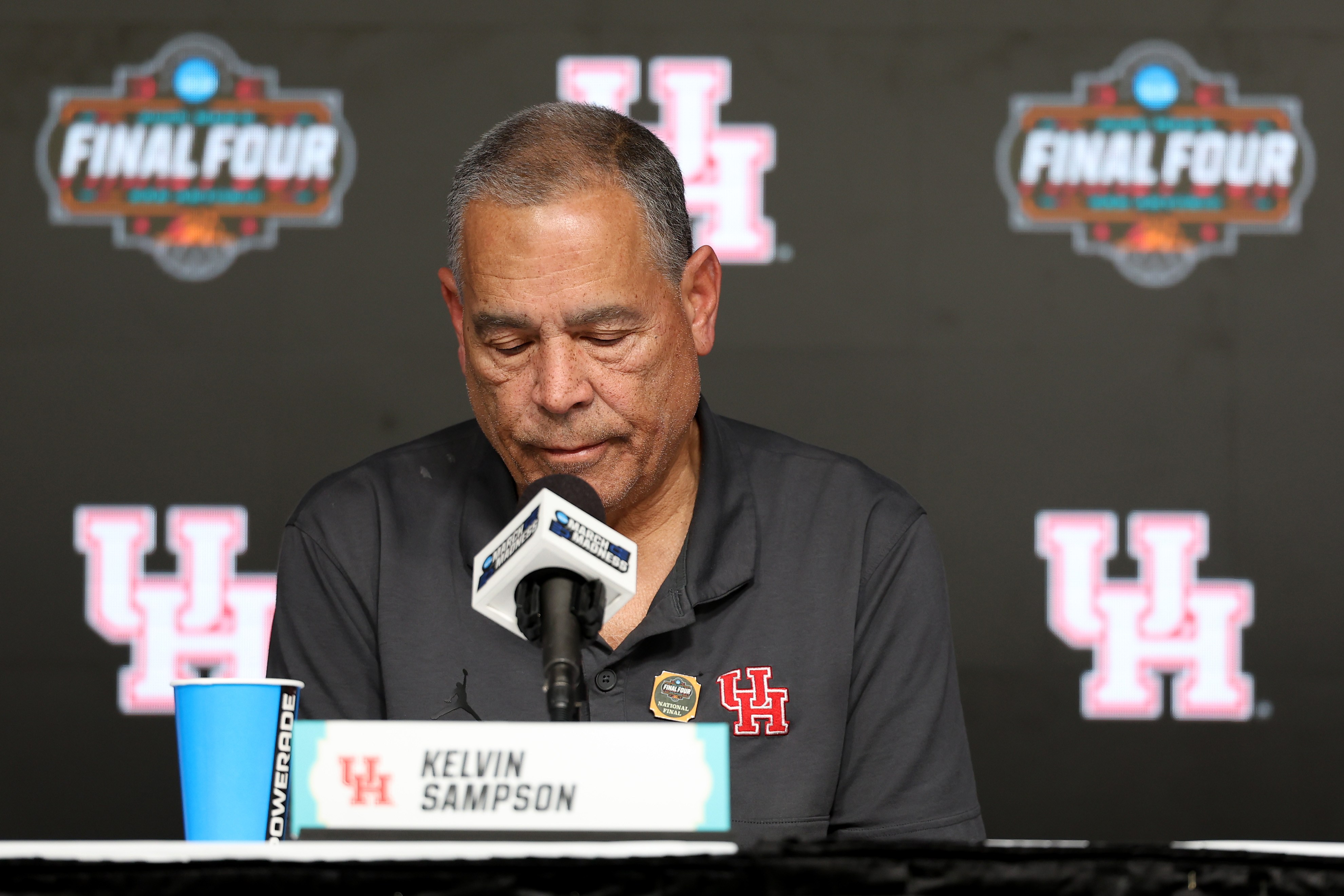
I don’t think I really thought about it until that night, when I got back to the hotel and it was just Karen and me. When she wants to ask a question, she knows how to get me to focus on something. She said, “What do you think?” And you know exactly what she means. She wasn’t talking about the next game. She said, “Have you put any thought to this?” I said, “No.” She said, “Well, you need to.” That was the first time I ever heard her say that. I wanted to say, “Well, why do you think I need to?” But the next day, we had to get up and drive 210 miles back to Houston, and in between making notes, yeah, I thought about it. I did.
But I’m never going to make a decision like that, or get really serious about it, unless I have Kellen and Lauren and Karen in the room with me. I’m not going to tell you the team, but we have a lake house in North Carolina we go to in the summer, and one summer we spent four days there, and I was so upset about this — meeting with an NBA team that desperately wanted to hire me to coach. We had to go through that on vacation. I remember at one point I’d just gotten off the phone with Pop. He was in Italy at the time — it was when they were drafting Wemby. I remember talking to him about it. And then Karen and Kellen and I talked, and we made a decision and moved on. So unless Kellen and Lauren and Karen and Kelvin get in the room and have the conversation, it ain’t serious. We never got to that point, so we just moved on down the road.
Seth: So, Kelvin, earlier this year you were named a finalist for the Naismith Hall of Fame, which is the next-to-last round of actually getting in. There’s an honors committee that does the final vote, and you were not inducted. Now, you can be renominated. I don’t know if you want to make a case for yourself, but I’m curious where your head is on that topic — whether it’s something you feel you deserve, something you obviously want, or something that, if it didn’t happen, would leave you feeling slighted or incomplete. To go through that process and be real close — not quite losing on the last possession of the championship game, but maybe with some similarities to that.
What are your thoughts on the Naismith Hall of Fame? Do you want to plead your case?
Sampson: I was never a mainstream guy. I was a nobody. Most of my life was anonymity. I grew up in a little country town, Pembroke, North Carolina. I stayed and went to college at my hometown school because they let me play basketball and baseball. I was pretty good at both, not real good at either one, but I got to play because I loved to play. When you go to a small high school, you get used to playing three sports. I played football, basketball and baseball and loved all three. My best friend in life — I was the quarterback our junior year, and he was the center. He went on to graduate from law school at Duke, and he’s an attorney. I see him twice a year. I don’t think he and I ever thought about this. For guys like me, from where I’m from, that’s not reality.
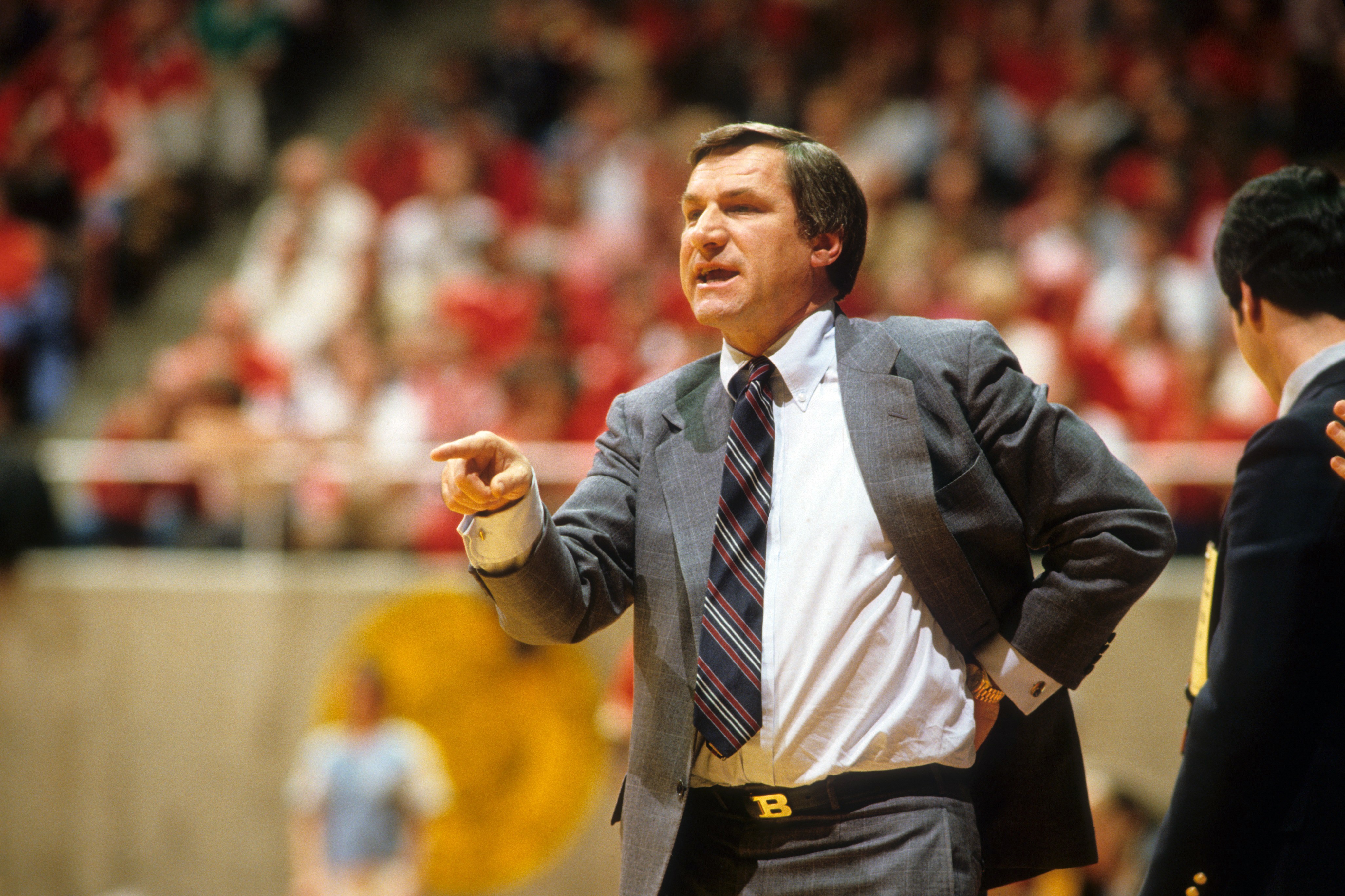
Growing up, my two heroes were my father and Dean Smith. I liked North Carolina because with Coach Smith, everything seemed to be family. The thing that sold me on Coach Smith was that every fall he would have a basketball clinic, and if you won the 1A, 2A, 3A or 4A state championship, those high school coaches got to be the speakers at his clinic, which I thought was unbelievable. So when I was 10, 11, 12, 13 years old, I wanted my father so badly to win the state championship so he could be one of those speakers. And when the clinic was over, they would have a Blue-White game. That was the only time I ever got to see players like that. Growing up, I never went to an ACC game. I never saw anything like that.
I played in an NAIA conference. Tubby Smith, myself, Rick Barnes, Calipari — at one point, all four of us played in that conference. Rick and I played against each other, believe it or not. So I was a small-town guy. I was a small-college guy. I didn’t think real big. I married my high school sweetheart. We dated six years before we got married, and we’ve been married 47 years. So that’s me.
I don’t need the Hall of Fame. If they think there’s another person out there who’s more deserving, they should give it to him, because he deserves it. If they think it’s me, then that’s fine too. But it’s not going to change my life one way or the other.
Andy: Kelvin, I just want to spin forward with this group. Now, of course, you’ll go from being the hunter to being the hunted, because you’re going to be the target. You guys are used to that, but this group may not be.
What could potentially derail this team?
Sampson: If we don’t get better. On what you just said, Andy: We have an analytics thing I really believe in. There were certain things I took from the NBA that I didn’t know about, and they really helped me. Working with Daryl Morey for three years was an education. He would have analytics for days. I didn’t know what they were, but there were two or three guys who worked upstairs, so one day I just asked, “Can you guys explain this to me? Why is this important?”
Then, when I came back to college, I started thinking about it. I took offensive rebounding, for instance, and thought, “How can I turn this into a measurable evaluation — something we can touch and try to get to on a daily basis?” So I came up with this thing called tips. When the ball is shot, if we can go tip it 27 times a game, and convince our kids that it takes two people to get an offensive rebound — one person to tip it and one person to get it — and then set a tangible goal every game for what percentage of the misses we want to get and how many points we’d like to score off our misses. The other night against Kansas, I think we had 16 offensive rebounds, and we scored 22 points off them.
Those points are unscripted, and our team is unscripted. That’s why nobody picks us for anything. That’s why nobody thinks of us as a team that’s going to be really good next year. Because we don’t play the way people want the game played. They want it to be free-flowing, averaging 90 points a game with five guys who can all make threes. Well, we don’t play that way. So all of a sudden the season starts, and we do what we do. Our team is made the way I see the game.
I think being a small-college guy, and being a young coach having to come up with different ways to win when you don’t really have the talent — that stays with you. I’ve never really had a lot of teams that could beat people with their first shot. We had to beat them with our second shot or our third shot. We had to be the first one on the floor. We had to be willing to take a charge. We had to be willing to think of something bigger than ourselves. All those things have made our program what it is.
So I’ve used the analytics for offensive rebounding, for deflections, for transition defense. I’m in our film room right now — I don’t know if you guys can see it — and we just had a meeting. They look forward to seeing where we’re ranked nationally in offensive rebounding, where we’re ranked in this or that. When we left on this trip, I think we were 12th. After those games, we moved up to fourth in the nation. I think we’re No. 1 in defense. And our guys chase those things. They’ve adopted it, and they get excited about it. Hollis Price or Kellen or somebody will say, “Hey, you have two offensive rebounds. You need three to sign the bubble.” So we’ve got all these things geared around stuff that isn’t going to get us picked as being good in the preseason. But they matter. They matter in winning, man. Those are winning things.
Andy: For sure.
Seth: I can imagine you spend a lot of time with the bubble. People don’t know: The bubble covers the rim so the ball never actually goes in. There’s a reason why things happen.
The Hoops HQ Fast Break
Seth: So listen, Kelvin, we thank you for your time. We’re going to end the show — we used to call it the shot clock, and we’re still kind of playing with it, but we’re going to call it the fast break. I’m just going to fire some rapid-fire questions. Andy and I have taken turns on it, but I’ll be honest with you, Andy’s so bad at this that I think I’m going to take it over. And by the way, it’s not just that he’s bad. He’s not coachable.
Andy: No, no, no. It’s clock management. The content is good. It’s clock management.
Sampson: Well, you don’t have to worry about clock management if you shoot fast.
Seth: That’s exactly right. So keep your answers tight, so you can go back to what you really love to do, which is cussing out your players.
Sampson: Fussing at them. Not cussing — fussing.
Seth: Fussing at them, of course. OK, here we go. Quick answers. Favorite player when you were a kid?
Sampson: Oscar Robertson.
Seth: Perfect date night with your wife?
Sampson: Go to a movie, and then go to McDonald’s afterward.
Seth: Movie and McDonald’s — I like it. What’s the one movie that always makes you cry?
Sampson: It used to be Love Story, with Ali MacGraw. That one always did. I don’t watch a lot of movies, but yeah, Love Story.
Seth: That’s a good one. OK, this one might be hard to answer quickly. What’s your wife’s biggest complaint about you?
Sampson: I’ve got a laundry list of those. I don’t wake up in the morning in a lovable, kissable mood.
Seth: I’m shocked at that, but OK. Speaking of which, how many cups of coffee do you have in a day?
Sampson: I don’t drink coffee. Never have.
Seth: Interesting. Person, living or dead, you’d most like to meet?
Sampson: My mom and dad.
Seth: That leads me to my next question, because I knew your parents. I knew Mr. Ned. What’s the favorite piece of advice your dad ever gave you?
Sampson: If you start listening to those people sitting up there behind you, pretty soon you’ll be sitting with them.
Seth: That’s definitely me and Andy. One coach you’d love to have played for?
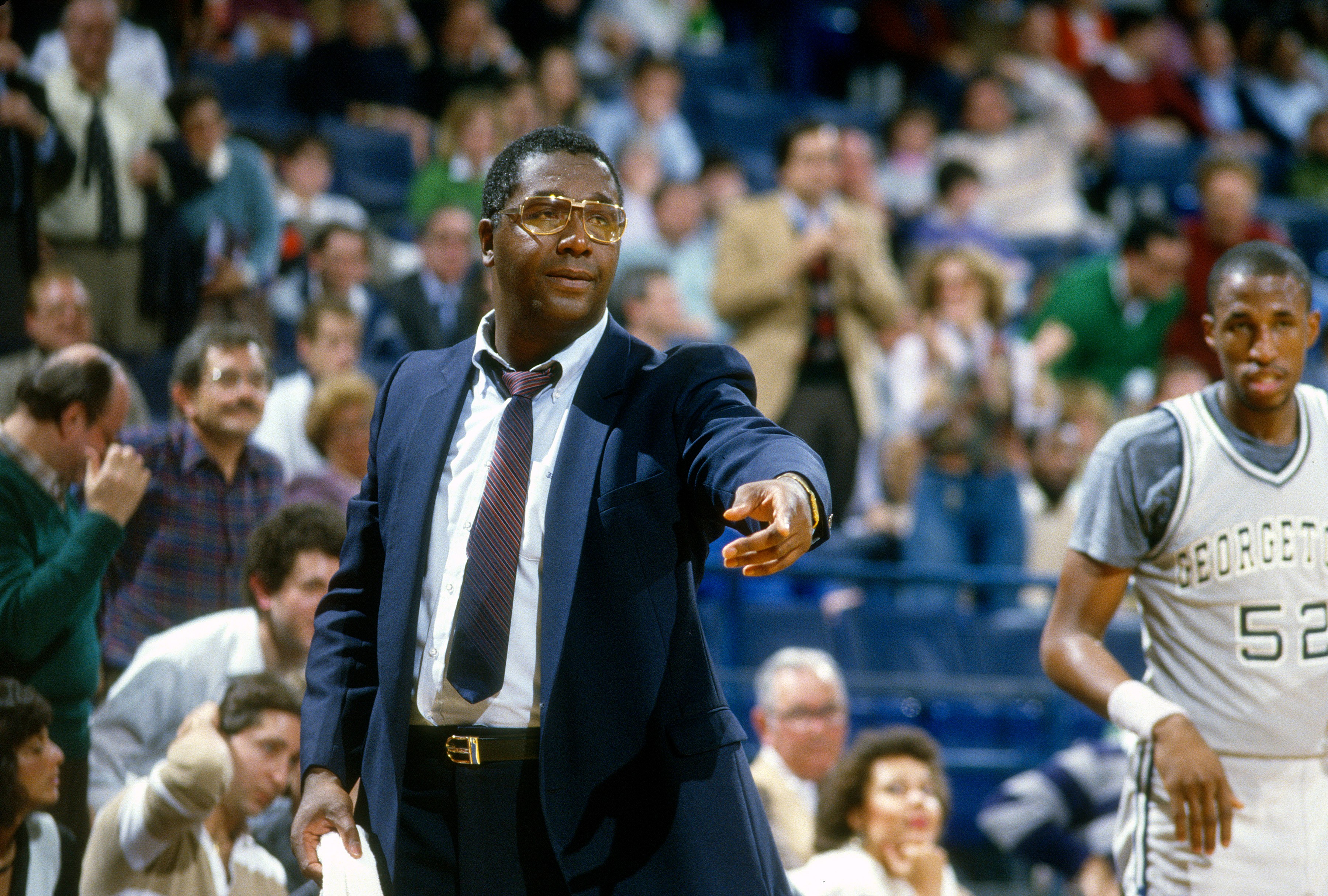
Sampson: John Thompson.
Seth: What’s the worst job you ever had?
Sampson: Working at a tobacco market in the summer, with tin roofs. The temperature in those things was 121 degrees, with tobacco dust so thick you could cut it with a knife.
Seth: LeBron or Michael?
Sampson: Michael.
Seth: North Carolina guy. Last thing: What do you want to be remembered for?
Sampson: Helping my players become the best they could be while they’re with me, and impacting their lives when they leave.
Seth: I thought you were going to say this appearance on the Hoops HQ Show, but that’s a pretty good answer, so we will accept it. And most of all, we’ll thank you for your time. I may bother you again, so this is not going to be it. We may have to have you back as we get closer to March Madness. But most important, have a happy Thanksgiving with your family and your players. I know you’re grateful for all the blessings in your life. So thanks for joining us, Kelvin, and best of luck the rest of the season.
Sampson: Thanks, Andy and Seth. You guys are awesome. Thank you.
Andy: Thanks, Kelvin.
Seth: OK, that’s going to wrap it up for this edition of the Hoops HQ Show. I want to wish everybody a happy Thanksgiving and remind everyone to go on over to hoopshq.com. Subscribe to our content, get behind our paywall and help us out, so we can bring you great interviews like this one with Kelvin Sampson and all the writing you see from me and Andy covering men’s and women’s college basketball — the best college basketball content you’ll see anywhere on this here internet. Andy, roughing it in Maui, you can go back to that early-bird buffet. Bye-bye, Kelvin. For Andy Katz, I’m Seth Davis. Thanks for watching the Hoops HQ Show. Happy Thanksgiving, everybody.
Meet your guides