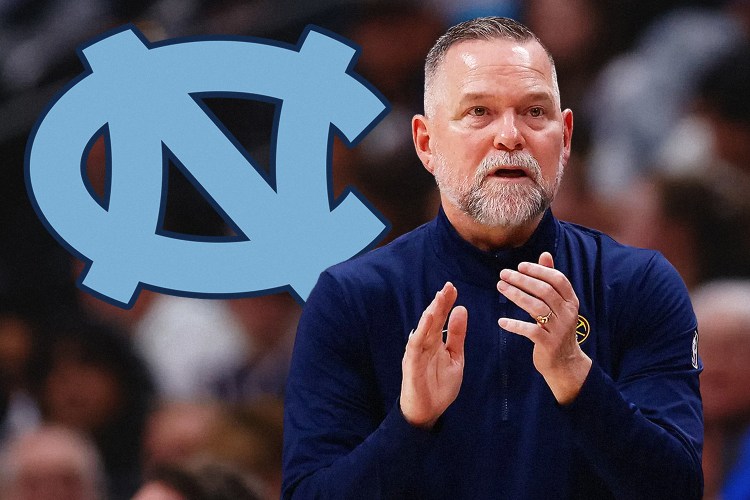
CINCINNATI – Aside from the couple gentlemen who arrived at the Shoemaker Center wearing Boston Celtics T-shirts, and they had their reasons, the occasion of the Cincinnati basketball 2026 Tipoff Dinner was all about resurrecting a once-luminous brand that faded through the course of this decade.
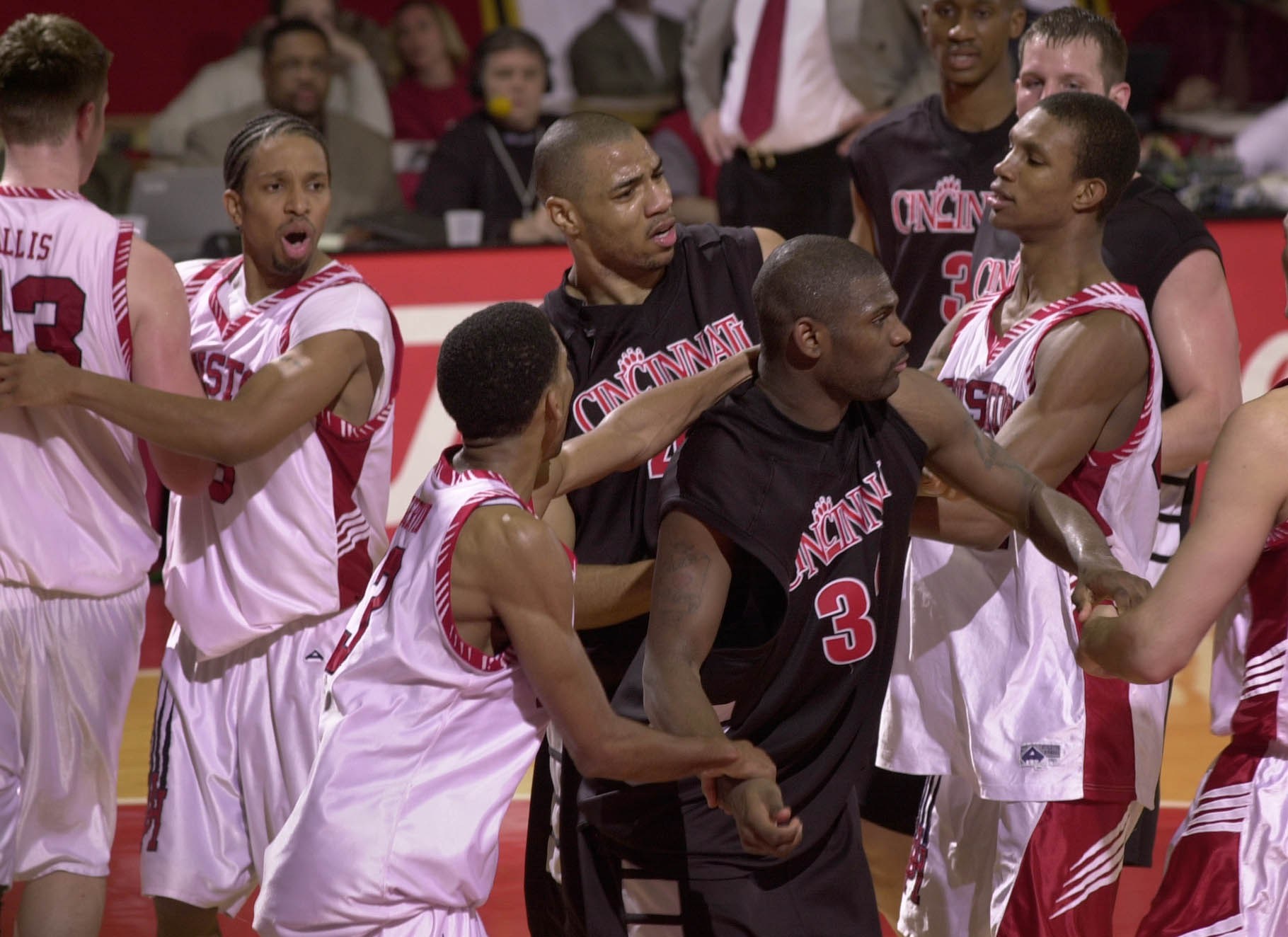
There was a time when Bearcats basketball was about Nick Van Exel and Corie Blount and Danny Fortson and Kenyon Martin and Steve Logan and Sean Kilpatrick. It was about making the Final Four or Elite Eight or Big East final or sweeping the American regular season and tournament. It was about muscle. It was about energy. For three decades that began with the arrival of coach Bob Huggins in 1989 and ended with the departure of Mick Cronin in 2019, it was about, more than anything, collective tenacity.
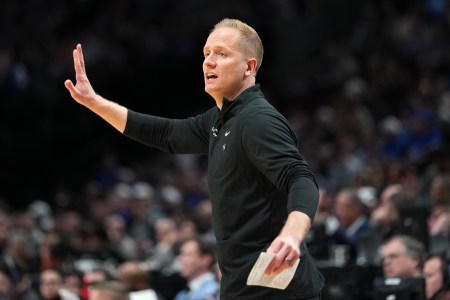
This is the legacy Jerrod Calhoun embraced upon being hired in March as the new Cincinnati head coach, but it is not the reality he inherited. Seven seasons and six NCAA Tournaments have passed since the Bearcats last participated in March Madness. The conference record over the past half-dozen years is eight games under .500. They’ve not had a losing season, but neither have they genuinely been winners.
“Cincinnati has a brand. The brand has been missing in college basketball for a little while. We’ve got to get the brand back,” Calhoun told Hoops HQ. “When kids were coming out in the 2000s, and even when Mick (Cronin) was here, it was cool to put on the Cincinnati uniform: the red, the black, the Jordan brand – I’ve got to get guys to understand, we’re trying to bring the brand back.
“There’s a responsibility with that. Day in and day out, you’ve got to perform. There’s going to be pressure situations. There’s going to be big atmospheres. And we’ve got to rise to the occasion.”
Calhoun, 44, was hired on March 24 to succeed Wes Miller, who’d been charged with navigating the transition from the American to the Big 12 Conference but only was .500 in league play before the move and managed no winning league seasons in three years after.
The Bearcats have not appeared in March Madness since 2019, when they won a second consecutive American tournament. That was their ninth appearance in a row; at the time, only Duke, Gonzaga, Michigan State and Kansas had longer streaks.
The goals are obvious.
The path forward is not.
Except to Calhoun and the UC basketball staff.
Calhoun arrived on campus needing to replace an entire roster and with minimal time to do it. It was like one of those halftime shows where an artist comes onto the court and fires paint onto a canvas in no obvious pattern for the few minutes available but ultimately turns out a dazzling depiction of a team mascot or star player.
It helped that Cincinnati already had a general manager in place, Corey Evans, whom Calhoun believed to be a good fit for his program. Evans explained how he made his existing collection of potential Bearcats fit what the new coaching staff would want assembled in the locker room.
“I’m fortunate that Jerod and I see the game similarly as far as philosophies, how you play basketball, basketball IQ, basketball character, shooting, size,” said Evans, who previously spent five years as a scout with the Oklahoma City Thunder. “All winter long, you’re creating this potential transfer list, and they’re guys for Wes but also for Cincinnati men’s basketball. Luckily for me, Jerod favored a couple of those guys when he came in.”
Cincinnati managed to assemble a roster of apparently significant depth but obvious size and length. Six players stand 6-foot-9 or taller. Not all of those big bodies will be tasked to play along the baseline or near the bucket.
“Our team is very different than most in the country. We’re one of the longest teams, I think, in the country,” Calhoun said. “We have guys from 6-6 to 6-10 who can shoot, pass, dribble. We really shoot the ball.
“I think we’ll be a program nobody will talk about, which is great. And then we can surprise some people.”
Everyone involved will be making a significant step forward in level of competition, though, starting with the head coach. In 14 total seasons at Fairmont State in Division II, then at Youngstown State and Utah State, Calhoun owns a 297-159 record with nine 20-win seasons, a Division II runner-up finish and March Madness appearances the past two years.
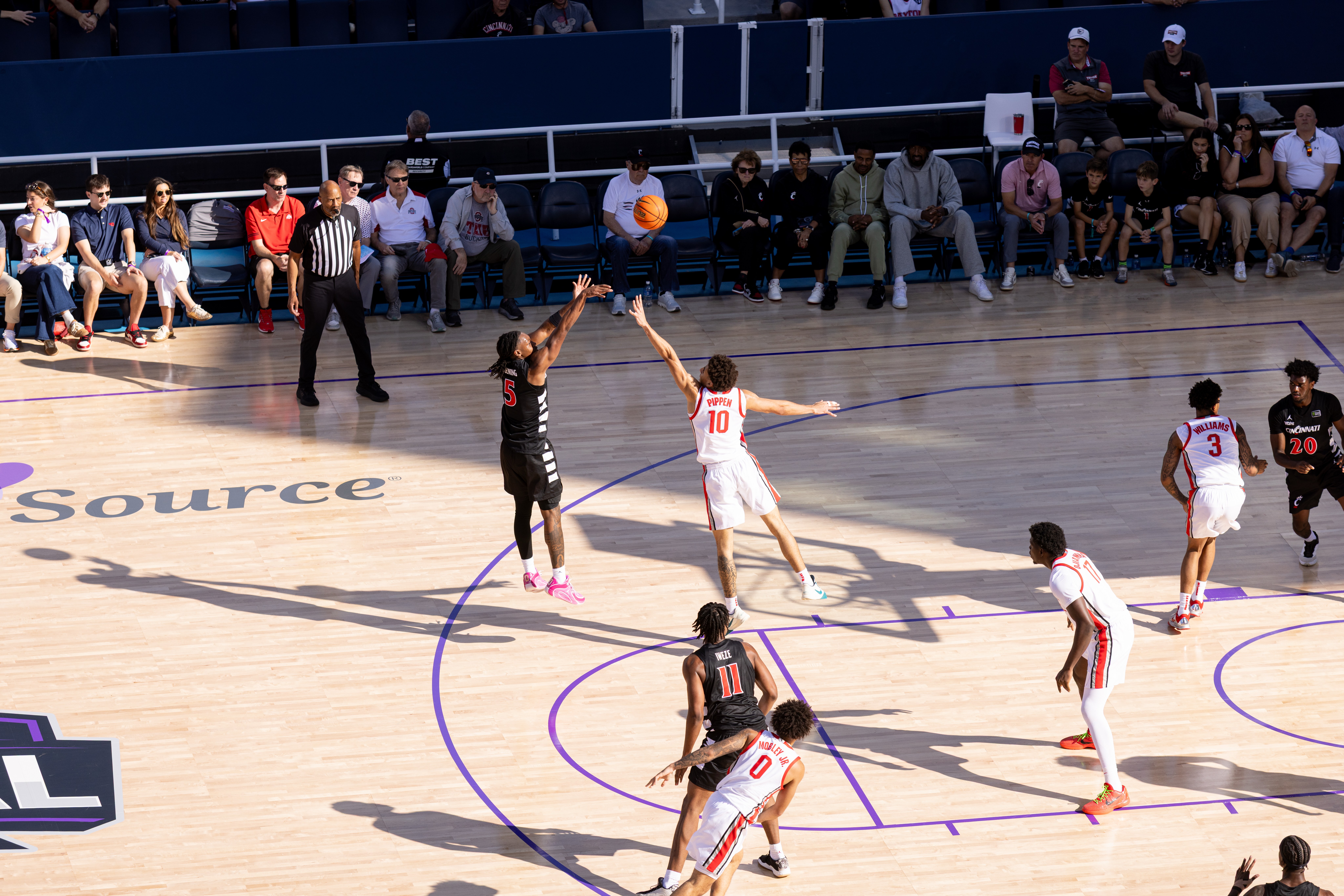
Among the players assembled, Calhoun has plenty of company in climbing to the Power 4 level. Remarkably, there are eight new players who averaged double-figure scoring at their previous programs, all Division I. But only guard Akai Fleming (Georgia Tech) and wing Myles Colvin (Wake Forest) were at major programs.
Can it work? Well, just as Calhoun earned high-major experience on the coaching staffs at Cincinnati and West Virginia, guard MJ Collins played in the past for both Virginia Tech and Vanderbilt and averaged 16 points for Utah State in NCAA Tournament games last March against Vanderbilt and Arizona. Guard Javontae Campbell scored 17 points in a win at Kansas State, his only high-major game last season. Guard Tylen Riley scored 20 for Tulsa in an overtime NIT final loss to Auburn.
How does a coaching staff sort through all these productive scorers and such promising young players as wing Evan Mahaffey (transfer from Akron), forward Adlan Elamin (Utah State) and Jaden Hastings (Boston College), and establish roles in a proper rotation?
Boston Celtics head coach Joe Mazzulla, who led the franchise to its 18th NBA title in 2024, is a former assistant under Calhoun at Fairmont and thus agreed to be a guest speaker at the UC dinner. He also talked with the team beforehand about what is required to become a successful team.
“I thought he gave a great talk,” Calhoun said. “Like what a team means, role identity is going to be critical, and I think that’s getting harder in the ‘me” society. Everyone goes on Twitter, and they want to look up themselves. We’ve got to get the kids to buy in.
“We tell them after about 2-3 months: We have the three ‘Cs’: creators, cutters and connectors. We want them to play fast but efficient … If you can create off the bounce, we need you to create. If you’re a cutter, we need you to cut.”
Utah State was ranked No. 25 in offensive efficiency at KenPom last season — one of only two in the top 30 that did not play in a power conference. The Aggies passed the ball effectively, ranking 33rd in assist rate, and were top-20 in effective field goal percentage even though they were not an elite long-distance shooting team. Their ball movement was so sharp, they created an abundance of high-quality shots.
Calhoun grew up in northeast Ohio and played two years at Cleveland State for Rollie Massimino. He transferred to Cincinnati for his final two college years and went to work under Bob Huggins as a student assistant. After graduating UC, he became an assistant at Walsh University in Ohio, the school where Huggins had his first head coaching job and emerged as a force in the profession.
Calhoun spent three years there, then took a job under Huggins at West Virginia. There, he coached Mazzulla and was part of the staff that got the Mountaineers to the 2010 Final Four. Calhoun later became a head coach at Fairmont State, where he reached the 2017 Division II national championship game.
“To say this is a dream come true would be an understatement,” Calhoun said. “I grew up on the Bearcats.”
There are things the athletic department could do to better connect to the Cincinnati basketball brand. This may be the only college basketball program in America that has nearly as many national championships as it does honored or retired numbers. UC has only three jerseys on the wall of the Shoe: Martin and Naismith Hall of Famers Jack Twyman and Oscar Robertson.
The heroes of the 1961 and 1962 NCAA championship teams remain unrecognized in this manner, though four gained at least some All-America recognition during their careers and three won two titles. It has been a while since that degree of success visited this building. The challenges evident in the past half-dozen seasons demonstrate how rare these sorts of players and achievements can be, how even the most successful programs can be thrown off course. Calhoun was an ideal choice to restore Cincinnati to that level, but any excellence achieved is likely to look different during his tenure than Bearcats basketball ever has.
Meet your guide